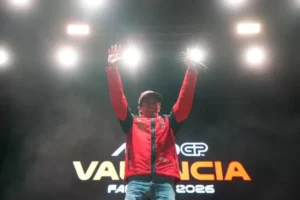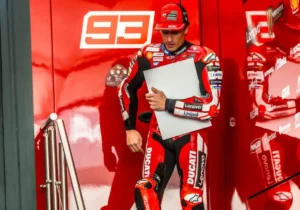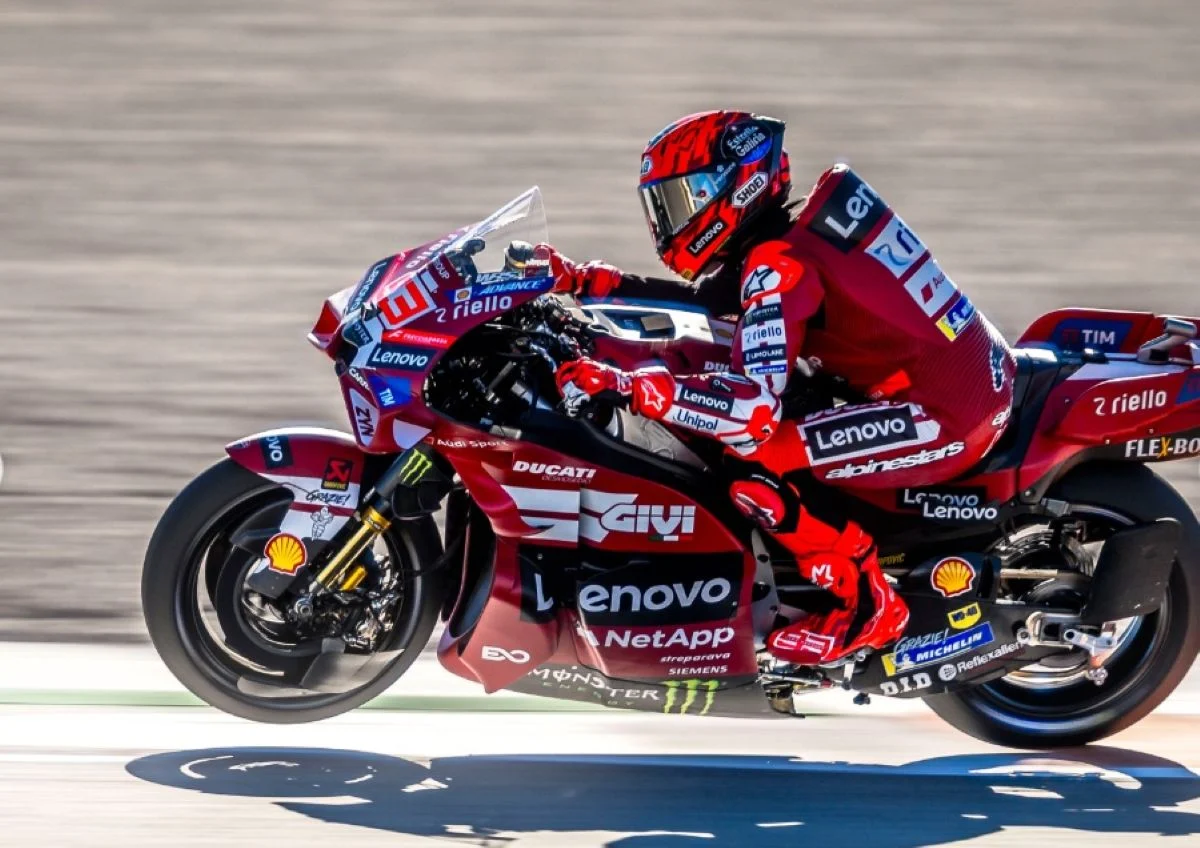
VALENCIA — In a poignant revelation that has sent shockwaves through the international motorsport community, Ducati Lenovo megastar Marc Marquez has candidly addressed the underlying motivation behind his sudden decision to retire from the MotoGP World Championship at the conclusion of the 2026 season. Speaking at a specially convened press conference ahead of the season-ending Grand Prix of Valencia on Friday, November 27, 2026, the Spanish veteran clarified that his departure from the premier class is not rooted in a decline in competitiveness or apprehension regarding the technical regulations slated for the 2027 season. Instead, the eight-time world champion admitted that an accumulation of physical trauma and the haunting prospect of suffering another debilitating, career-threatening injury ultimately forced his hand.
The announcement marks the definitive chapter in the storied career of one of the most dominant and influential figures in modern motorcycle Grand Prix history. Marquez, who turned 33 earlier this year, explained that while his competitive fire and work ethic remain entirely intact, the psychological weight of enduring repeated surgical interventions and harrowing physical recoveries has fundamentally altered his perspective on risk management.
The Anatomy of Fear: A Shift in Perspective
Addressing an international contingent of journalists inside the paddock media center at the Circuit Ricardo Tormo, Marquez articulated the nuance behind his emotional decision. For a rider renowned for his absolute fearlessness on a motorcycle—often pushing machinery past its designated physical limits through sheer force of will—the admission of fear represents a profound psychological pivot.
"Tentu saja Anda bisa bekerja, tentu saja Anda bisa berjuang, saya seorang petarung, tetapi ada hal lain, yaitu rasa takut. Saya mulai merasakan ketakutan itu. Dan ini bukan ketakutan terhadap sepeda motor. Bukan pula ketakutan terhadap kecepatan," Marquez stated during the briefing, referencing the intrinsic joy of riding that initially propelled him to the pinnacle of the sport.
Marquez emphasized that the apprehension he references is entirely distinct from the competitive anxiety felt by athletes worried about losing their edge against younger rivals. Rather, it is a calculation of physical vulnerability. Having experienced the harrowing consequences of high-speed motorcycle accidents, the cost-benefit analysis of extracting tenths of a second from a lap time shifted permanently. When the potential price of an error is permanent physical impairment rather than simply a lost championship point, the calculus for a veteran athlete changes irrevocably.
A Chronology of Physical Trauma: Seven Surgeries and Beyond
To fully comprehend the gravity of Marquez’s decision, one must examine the grueling physical ledger of his career, particularly the turbulent second half. The pivotal turning point occurred on July 19, 2020, at the season-opening Spanish Grand Prix at Jerez, where a devastating crash resulted in a fractured right humerus.

What followed was a protracted medical nightmare that tested the limits of orthopedic medicine and human endurance. Over a span of roughly six years, Marquez underwent a staggering seven surgical procedures on his right arm and shoulder. Complications involving bone non-union, multiple infections, and subsequent corrective osteotomies turned his career into a cyclical battle against biology. Each recovery demanded arduous months of physical therapy, forcing him to relearn basic functional movements while watching adversaries battle for championships from the sidelines.
Beyond the orthopedic trauma, Marquez also battled recurrent bouts of diplopia, or double vision—a particularly terrifying ailment for a professional motorcycle racer navigating blind corners at speeds exceeding 300 kilometers per hour. A severe training crash in late 2021 triggered a recurrence of the condition that had previously plagued him during his early years in the Moto2 and 125cc classes, casting prolonged doubt over his ability to ever safely pilot a prototype racing motorcycle again.
Even as recently as the 2026 championship campaign, the physical toll manifested vividly. Marquez suffered brief episodes of diplopia lasting 48 hours following an accident earlier in the year, alongside a terrifying highside crash during the Sprint race at the French Grand Prix at Le Mans in May 2026, which resulted in a 12-hour neurological monitoring period. Although he successfully recovered from each physical setback through sheer resilience, the cumulative psychological erosion of these consecutive body blows proved insurmountable.
The Context of the 2027 Technical Regulations
The timing of Marquez’s retirement carries profound implications for the MotoGP landscape, arriving precisely on the eve of a sweeping technical overhaul scheduled for the 2027 season. Dorna Sports and the FIM have mandated massive regulatory changes designed to reduce aerodynamic downforce, decrease engine displacement from 1,000cc to 850cc, and significantly restrict ride-height devices.
In the weeks leading up to the Valencia GP, paddock speculation was rampant regarding how veteran riders would adapt to the new, less aero-dependent, and physically demanding machines. Analysts frequently debated whether champions like Marquez would embrace the reset or choose to step aside rather than adapt to a fundamentally altered riding style.
By clarifying that his retirement is entirely divorced from the 2027 regulations, Marquez effectively silenced narratives suggesting he feared being outpaced by the next generation of riders on the forthcoming machinery. His speed, racecraft, and analytical prowess remained evident throughout the 2026 season, where he consistently fought at the sharp end of the grid aboard the factory Ducati Desmosedici GP. The decision to walk away while still competitive underscores a desire to preserve his long-term health over the pursuit of a record-equaling ninth world title.
Reactions from the Paddock and Motorsport Authorities
The announcement sent immediate shockwaves through the MotoGP paddock, prompting an outpouring of respect, gratitude, and reflection from competitors, team management, and series organizers.

Ducati Corse General Manager Luigi "Gigi" Dall’Igna expressed deep admiration for the Spaniard’s transparency and accomplishments during their tenure together. "Marc brought a level of intensity and data-driven feedback to Ducati that elevated our entire engineering program," Dall’Igna remarked. "While we are saddened to lose a rider of his caliber on the track, health and human longevity must always supersede racing. His choice requires immense courage, perhaps even more courage than racing at 350 kilometers per hour."
Rival riders, many of whom grew up idolizing the Cervera native before battling him wheel-to-wheel on the world stage, echoed similar sentiments. Prominent figures within the grid noted that Marquez redefined the physical limits of modern motorcycle racing, popularizing riding techniques involving extreme lean angles and elbow-dragging styles that inspired an entire generation of racers currently populating the Moto3 and Moto2 feeder categories.
Dorna Sports CEO Carmelo Ezpeleta released an official statement highlighting Marquez’s monumental contribution to the globalization and commercial appeal of MotoGP over the past decade and a half. From his rookie championship victory in 2013 to his heroic comebacks through adversity, Marquez has been the undisputed marquee attraction of the sport.
Broader Impact and Implications for Ducati Lenovo
The departure of Marc Marquez leaves a substantial vacuum within the premier class and initiates a high-stakes transition period for the Ducati Lenovo factory team heading into the 2027 development cycle. Securing a replacement capable of matching both the developmental feedback and psychological presence of a multi-time world champion will be among the primary challenges facing Ducati management in the coming months.
Furthermore, Marquez’s retirement underscores an ongoing cultural shift within motorsport regarding athlete safety and mental well-being. Historically, riders were expected to conceal physical vulnerabilities and psychological hesitation behind a facade of relentless toughness. By openly discussing the intersection of trauma, risk assessment, and fear, Marquez has legitimized conversations surrounding rider health that extend far beyond physical rehabilitation into psychological preservation.
As the checkered flag falls on the 2026 Valencia Grand Prix, Marc Marquez will officially complete his final competitive laps in the premier class. He departs the grid not as a rider defeated by speed or age, but as a cerebral veteran who recognized the ultimate boundary line—choosing a healthy future beyond the gravel traps over the relentless, unforgiving pursuit of absolute velocity.