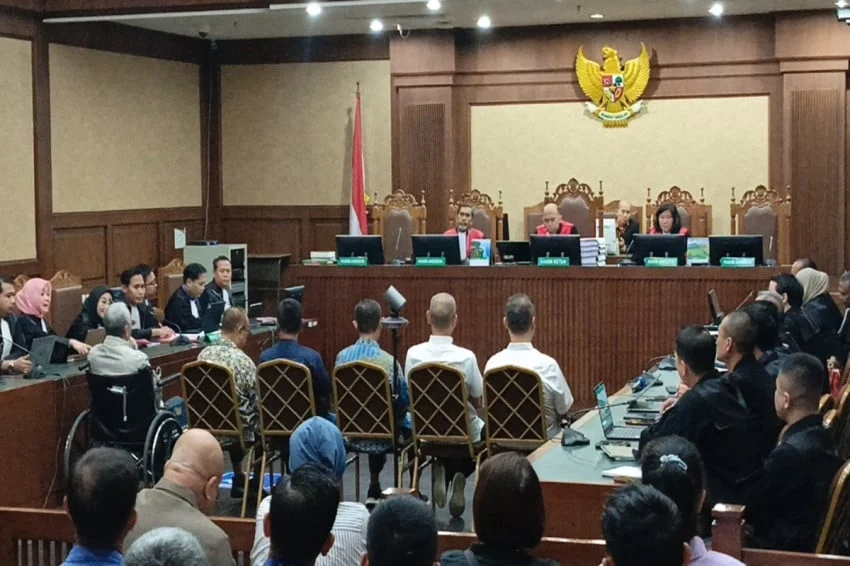
The Corruption Eradication Court at the Central Jakarta District Court opened a high-profile corruption trial involving the procurement and governance of crude oil and refinery products within state-owned energy giant PT Pertamina (Persero) and its former trading arm, Pertamina Energy Trading Ltd (Petral). During the hearing, prosecutors formally indicted six high-ranking former energy executives for systematic unlawful acts that allegedly caused staggering state financial losses amounting to USD544,897,013, equivalent to approximately IDR 6.12 trillion.
The case centers on decades-long governance issues within Indonesia’s upstream and downstream petroleum supply chain, shining a harsh spotlight on transparency, internal controls, and accountability in national energy management. The prosecution team detailed how the defendants allegedly conspired to manipulate crude oil and petroleum product procurement tenders, favoring specific brokers and corporate entities to the severe detriment of the state budget.
Key Figures and Indictments in the Petral Governance Scandal
The indictment names six prominent figures who once held strategic positions within Pertamina, Petral, and its Singapore-based subsidiary, Pertamina Energy Services Pte Ltd (PES). The defendants include:
- Bambang Irianto, former President Director of Pertamina Energy Trading Ltd (Petral).
- Agus Bactiar, former Head of Trading at Pertamina Energy Services Pte Ltd (PES).
- Mulyono, former Senior Trader at Pertamina Energy Services Pte Ltd (PES).
- Nurdin Prayitno, former Crude Trading Manager at Pertamina Energy Services Pte Ltd (PES).
- Tafkir Husni, former Vice President of Integrated Supply Chain (ISC) at PT Pertamina (Persero).
- Irawan Prakoso, former Director of Global Energy Resources Ltd.
According to the state prosecutors, these individuals acted in concert with Muhammad Riza Chalid, a prominent and politically connected businessman identified as the beneficial owner of several corporate entities, namely Global Energy Resource Private Limited, Gold Manor International Limited, and Veritail Oil Limited. Riza Chalid, who has long been a shadowy figure in Indonesia’s oil trading ecosystem, is currently listed as a fugitive (DPO, Daftar Pencarian Orang) by the Attorney General’s Office after failing to cooperate with investigators.
The prosecutors argued that the defendants abused their corporate authority, bypassed standard procurement protocols, and undermined independent oversight mechanisms to grant undue privileges to companies linked to Riza Chalid. This deliberate subversion of internal governance structures allegedly allowed private intermediaries to extract exorbitant margins at the expense of Indonesia’s state coffers.
Chronology of the Investigation and Judicial Proceedings
The road to the courtroom has been long, marked by years of political debate, corporate restructuring, and meticulous investigative work by law enforcement agencies.
The origins of public scrutiny over Petral date back to 2014 and 2015, when the Indonesian government, under newly elected President Joko Widodo, initiated a comprehensive audit of the country’s energy sector. Petral, which was originally established to handle crude oil and fuel imports outside of Indonesia’s domestic jurisdiction, had long been criticized as an opaque entity prone to broker-driven inefficiencies. In 2015, the Ministry of Energy and Mineral Resources and Pertamina management officially dissolved Petral, absorbing its functions back into Pertamina’s Integrated Supply Chain (ISC) division to promote transparency.
However, legal accountability for past practices took significantly longer to materialize. Investigative audits by the Supreme Audit Agency (BPK) and subsequent probes by the Attorney General’s Office gradually uncovered systemic irregularities in tender awards dating back to the late 2000s and early 2010s.
Investigators spent years untangling complex offshore corporate webs, tracing financial flows across multiple jurisdictions, and examining thousands of pages of crude oil procurement contracts. Key breakthroughs occurred as investigators secured testimonies from former mid-level insiders and financial analysts who detailed how trading tenders were routinely rigged through tailored specifications, artificial bidding competition, and compromised evaluation committees.

By late 2025 and early 2026, the Attorney General’s Office finalized its dossiers, leading to the formal detention of the key suspects. The naming of Muhammad Riza Chalid as a fugitive marked a major escalation in the case, signaling the state’s intent to pursue not only corporate executives who facilitated the corruption, but also the ultimate beneficiaries who amassed vast fortunes from the illicit arrangements.
Supporting Data and Financial Magnitude of the Loss
The financial losses cited in the indictment—pegged at USD544.897 million or approximately IDR 6.12 trillion—represent one of the largest corporate corruption scandals in Indonesia’s modern history. Financial experts and forensic accountants assisting the prosecution calculated these figures by comparing the prices paid by Petral and PES for crude oil and refined products against benchmark market values during the active contracting periods.
The discrepancies highlight the high cost of intermediary markups. Rather than procuring crude oil directly from national oil companies or reputable international producers, Petral and PES frequently relied on a layer of third-party traders and specialized private entities controlled by private brokers. These middlemen added little to no logistical or technical value yet commanded substantial premiums, effectively siphoning off public funds that should have contributed to national energy security and economic development.
Furthermore, the impact of these inflated procurement costs extended beyond direct financial losses to the state budget. Because Pertamina’s procurement expenditures directly influenced domestic fuel pricing formulas and government subsidy calculations during periods of high global oil prices, inefficiencies within Petral indirectly strained the national fiscal balance, forcing taxpayers to bear the burden of inflated energy import bills.
Broader Implications for Indonesia’s State-Owned Enterprises
The commencement of the trial against the former Pertamina and Petral executives carries profound implications for corporate governance within Indonesia’s state-owned enterprise (SOE) sector.
First and foremost, the case reinforces a growing trend of zero-tolerance enforcement regarding white-collar crime in strategic state institutions. The Ministry of SOEs, under successive administrative reforms, has increasingly emphasized the need for transparent procurement, stringent compliance standards, and ethical leadership. The prosecution of former high-level executives sends an unmistakable warning that corporate tenure does not confer immunity from retroactive accountability.
Second, the trial highlights the ongoing vulnerability of commodity-dependent emerging economies to complex supply chain manipulation. Crude oil and refined petroleum products represent some of the highest-value imports managed by the Indonesian state. Ensuring that these multi-billion-dollar procurements remain free from political interference and broker capture is vital for maintaining public trust and fiscal health.
Legal analysts observing the trial note that the proceedings will likely set important legal precedents regarding corporate liability, the definition of state financial losses in commercial settings, and the legal responsibilities of corporate directors versus beneficial owners. The handling of the absent co-defendant, Muhammad Riza Chalid, will also serve as a test of the Indonesian legal system’s capacity to extradite or prosecute high-profile fugitives hiding behind international legal shields and complex corporate shells.
As the Corruption Eradication Court continues its hearings, calling additional witnesses and examining extensive documentary evidence, the trial promises to lay bare the inner workings of an era in Indonesian energy trade that many reformers have long sought to consign to the past. The outcome will be closely watched by investors, policymakers, and the public as a barometer of Indonesia’s commitment to institutional integrity and the rule of law.