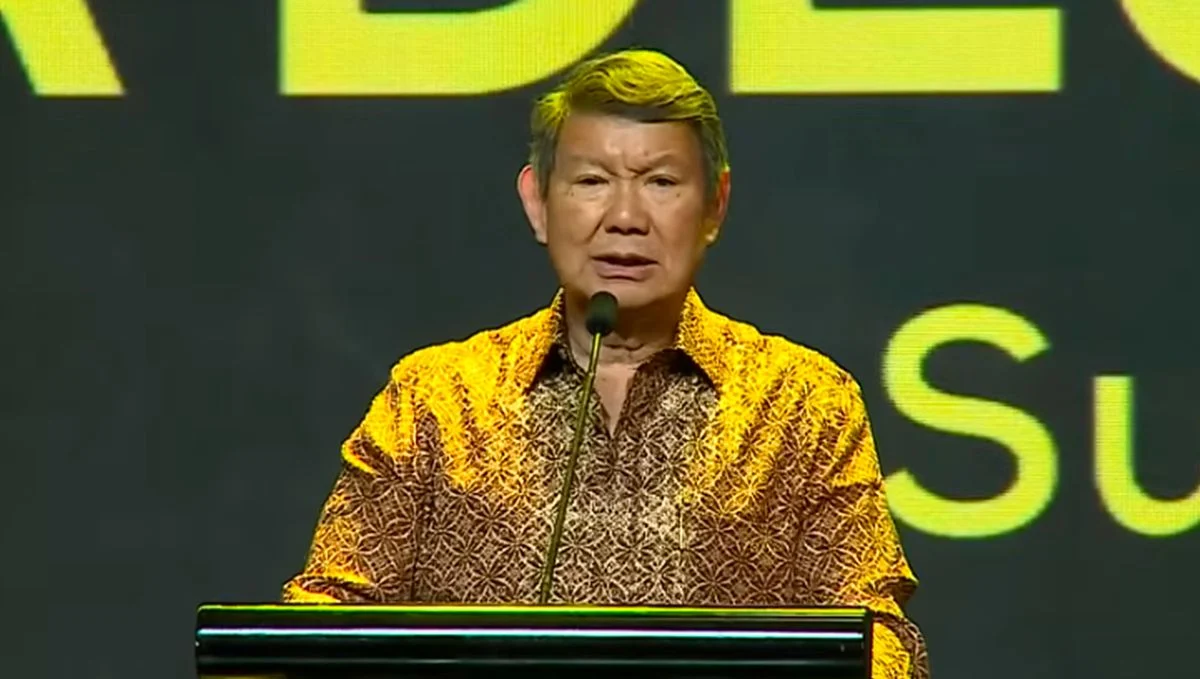
JAKARTA – Hashim Djojohadikusumo, the President’s Special Envoy for Climate and Energy, delivered a stark warning on Sunday, April 19, 2026, regarding the escalating prevalence of intolerance across Indonesia, specifically condemning disturbances targeting places of worship. Speaking via the ABPEDNAS YouTube channel, Djojohadikusumo underscored that such acts constitute serious criminal offenses, emphasizing the imperative for the Attorney General’s Office (Kejaksaan Agung) and the National Police (Polri) to rigorously uphold legal provisions designed to protect religious practices and ensure societal harmony. His remarks come amidst growing concerns over social cohesion and the fundamental right to religious freedom in the diverse archipelago nation.
Djojohadikusumo, who is also the younger brother of President Prabowo Subianto, highlighted a recent incident in Tangerang where a place of worship was reportedly disrupted by a specific group, calling it a symptom of a broader, troubling trend. "Almost every day we hear about cases of intolerance. Last week in Tangerang, a place of worship was disturbed by a certain group," he stated, bringing national attention to localized incidents that often ripple through communities. He stressed that any interference with religious activities is a direct violation of the law, carrying penal consequences as stipulated in the Indonesian Criminal Code (KUHP). "Every time an act of worship is disturbed, it is a criminal act," Djojohadikusumo asserted, reiterating the legal gravity of such transgressions and the clear mandate for law enforcement to act decisively.
Escalating Concerns Over Religious Intolerance in Indonesia
Indonesia, a nation celebrated for its motto "Bhinneka Tunggal Ika" (Unity in Diversity), has long prided itself on its pluralistic society, where various religions and ethnic groups coexist. However, the past two decades have witnessed a discernible increase in incidents of religious intolerance, ranging from difficulties in obtaining permits for places of worship to outright intimidation and disruption of religious ceremonies. These incidents, though often localized, collectively erode the fabric of interfaith harmony and challenge the constitutional guarantees of religious freedom. Human rights organizations and civil society groups have consistently reported on these issues, cataloging a variety of grievances that disproportionately affect religious minorities.
Data from several non-governmental organizations, while varying slightly in methodology, consistently point to dozens, if not hundreds, of documented cases of religious freedom violations annually. For instance, reports from organizations like the Setara Institute and the Wahid Foundation have, in recent years, consistently recorded over a hundred incidents of religious freedom violations per year across the archipelago. These incidents often include forced closures of houses of worship, obstruction of religious gatherings, and discriminatory practices at local administrative levels, frequently driven by hardline groups or bureaucratic inaction. The latest incident in Tangerang, as cited by Djojohadikusumo, serves as another poignant reminder of the persistent nature of this challenge, highlighting how localized disputes can quickly escalate into national concerns.
The context of Djojohadikusumo’s statement is particularly significant given his close familial ties to the current President. While his official portfolio as Special Envoy for Climate and Energy might seem unrelated to social affairs, his intervention signals that issues of religious freedom and national unity are central concerns for the Prabowo administration. His public address can be interpreted as a directive from the highest echelons of government, urging state apparatus to take a firmer stance against acts of intolerance. It implicitly communicates the administration’s commitment to protecting constitutional rights and maintaining social stability, which is crucial for overall national development and investor confidence. By speaking out, Djojohadikusumo not only amplifies the seriousness of the issue but also places the weight of the presidency behind the call for action, indicating that the new government views religious harmony as a cornerstone of national resilience.
Indonesia’s Legal Framework for Religious Freedom and the Call for Strict Enforcement
Indonesia’s legal framework provides robust protections for religious freedom. Article 29 of the 1945 Constitution explicitly states that "the State shall guarantee all persons the freedom to worship according to his/her own religion or belief." This fundamental right is further elaborated and protected under various laws, including the Criminal Code (KUHP). Djojohadikusumo specifically referred to provisions within the KUHP that criminalize acts disturbing religious ceremonies. Articles 175 and 176 of the KUHP, for instance, directly address offenses related to the disruption of religious services or ceremonies.
Article 175 stipulates that: "Anyone who intentionally causes a disturbance during a religious service or ceremony that is being held in public, or that is allowed to be attended by the public, shall be punished with a maximum imprisonment of one year and four months or a maximum fine of three hundred rupiah." This article is crucial as it directly targets those who physically or audibly disrupt ongoing acts of worship. Article 176 further extends this protection by criminalizing those who obstruct or prevent a religious ceremony from taking place, carrying similar penalties. These provisions underscore the state’s legal obligation to ensure that citizens can practice their faith without fear of interference.
The Special Envoy’s emphasis on these specific legal articles serves to remind both the public and law enforcement agencies that the problem is not a lack of legal instruments, but rather an issue of consistent and impartial enforcement. He directly called upon the Attorney General’s Office and the National Police to fulfill their duty without hesitation. The Kejaksaan Agung, as the public prosecutor, plays a crucial role in bringing perpetrators to justice, while Polri is responsible for maintaining public order, investigating crimes, and protecting citizens. A coordinated and firm response from these institutions is vital to deter future incidents, reinforce the rule of law, and rebuild public trust in the state’s capacity to protect its most fundamental freedoms. The efficacy of these legal provisions, therefore, hinges entirely on the political will and operational capacity of law enforcement to act decisively and without bias.
A Recurring Chronology of Intolerance: The Tangerang Incident in Context

While the precise details of the Tangerang incident were not fully elaborated in Djojohadikusumo’s statement, similar events have a recurring pattern in Indonesia, often following a predictable, troubling chronology. The typical sequence often begins with an initial request for a building permit for a house of worship, which can face bureaucratic hurdles or local community opposition, sometimes fueled by extremist groups. If a permit is eventually obtained, or if a community decides to proceed with worship activities without a permit (often due to prolonged permit denials and the absence of suitable alternatives), resistance can escalate. This resistance may manifest as protests, intimidation of worshippers, or even physical disruptions during services.
A generalized chronology often unfolds as follows:
- Phase 1: Permit Application & Bureaucracy (Often Years Long): Religious minority groups frequently face significant obstacles in obtaining permits for places of worship, governed by the Joint Ministerial Decree (SKB) No. 9 and No. 8 of 2006. This decree, intended to regulate the establishment of houses of worship, requires complex procedures, including obtaining approval from a certain number of local residents (typically 60 non-worshippers) and recommendations from local religious harmony forums (FKUB). This process is frequently exploited by opposition groups to obstruct construction or renovation, leading to delays that can span years or even decades. Many communities resort to worshiping in private homes or temporary structures due to permit impasses.
- Phase 2: Local Opposition & Intimidation: Even with permits, or more commonly in cases where communities worship in private homes, local groups, often hardliners, may mobilize opposition. This can involve organized protests outside worship locations, verbal threats against congregants or religious leaders, property damage, or social ostracization. Social media campaigns are also increasingly used to spread misinformation and incite hatred against specific religious groups.
- Phase 3: Direct Disruption: The most severe form, as highlighted by Djojohadikusumo, involves the direct interference with ongoing religious services. This can include shouting, using loudspeakers to drown out prayers, blocking access roads, vandalizing property, or even physical altercations. These acts create an atmosphere of fear and insecurity, directly violating the peace and sanctity of worship. The Tangerang incident falls squarely into this phase, representing a direct challenge to the fundamental right of assembly for religious purposes.
- Phase 4: Law Enforcement Response: The crucial point, as stressed by Djojohadikusumo, is how law enforcement responds. Historically, responses have been varied. Some cases see swift action against perpetrators, demonstrating the state’s commitment to justice. However, in other instances, law enforcement has been criticized for inaction, delayed responses, or, worse, pressuring the victims to relocate or cease their activities in the interest of "public order" or "maintaining harmony," effectively penalizing the victims rather than the perpetrators.
The Tangerang incident, therefore, is not an isolated event but rather a manifestation of this broader, persistent pattern of challenges to religious freedom in Indonesia. Djojohadikusumo’s statement signals a push for a more consistent and robust law enforcement response to prevent such incidents from becoming normalized and to ensure that the rule of law prevails.
Broader Impact and Implications for the Prabowo Administration
The persistence of intolerance cases poses significant challenges to Indonesia’s national unity and its international standing. A country’s ability to protect the rights of all its citizens, regardless of their faith, is a key indicator of its democratic health and commitment to human rights. For the newly inaugurated Prabowo administration, addressing these issues is not merely a matter of upholding the law but also a critical test of its leadership in fostering a truly inclusive and harmonious society.
Djojohadikusumo’s statement suggests a proactive stance from the President’s office on this sensitive issue. By having a special envoy, even one primarily focused on climate and energy, speak out so forcefully, it elevates the discussion beyond local grievances to a matter of national policy and presidential concern. This approach could be aimed at signaling to both local authorities and extremist groups that the central government will not condone such actions. The administration is likely aware that any perceived weakness or inaction on this front could undermine its legitimacy and foster an environment where extremist elements feel emboldened.
The implications extend to several critical areas:
- National Unity and Social Cohesion: Unchecked intolerance can sow deep discord, create divisions, and undermine the sense of shared national identity that "Bhinneka Tunggal Ika" represents. It breeds mistrust among communities and can lead to radicalization on various sides, threatening the very fabric of the nation.
- Economic Stability and Investment Climate: Social instability, even localized, can deter foreign investment and tourism. International businesses seek stable, predictable environments where the rule of law is consistently applied and social harmony prevails. Incidents of religious conflict can generate negative headlines, impacting Indonesia’s image as a safe and reliable destination for capital and visitors.
- International Image and Diplomacy: Indonesia has long been admired for its unique brand of moderate Islam and its pluralistic society, often serving as a model for interfaith dialogue in other parts of the world. Repeated incidents of intolerance, especially those targeting minorities, can tarnish this image and invite international scrutiny from human rights bodies, foreign governments, and international media. This could complicate Indonesia’s diplomatic efforts and its role on the global stage.
- Rule of Law and Governance Credibility: The failure to enforce laws against religious intolerance undermines the credibility and legitimacy of state institutions. It sends a dangerous message that certain groups can act with impunity, leading to a breakdown in public trust, increased vigilantism, and a weakening of the state’s authority to maintain order and justice.
Anticipated Reactions from Key Stakeholders
While Djojohadikusumo’s statement did not include direct reactions from other parties, it is possible to infer the anticipated responses from various key stakeholders:
- Religious Minority Groups: Many would likely welcome Djojohadikusumo’s firm stance, seeing it as a glimmer of hope for stronger state protection. They would expect concrete actions from Polri and Kejaksaan Agung, rather than just rhetoric, to address long-standing grievances. However, a degree of skepticism might remain, given past experiences where strong statements were not always followed by consistent enforcement on the ground, particularly at the local level.
- Civil Society Organizations (CSOs) and Human Rights Advocates: Groups such as the Wahid Foundation, Setara Institute, and the National Commission on Human Rights (Komnas HAM) would likely commend the statement, viewing it as an important step towards acknowledging and addressing the problem. They would likely call for the establishment of clearer protocols for law enforcement, increased training on religious freedom, and transparent reporting on intolerance cases. They might also reiterate the need to review existing regulations, like the Joint Ministerial Decree on houses of worship, which many see as a root cause of disputes.
- Interfaith Dialogue Forums: Organizations dedicated to promoting interfaith harmony would likely leverage Djojohadikusumo’s statement to further their advocacy for mutual respect and understanding. They might call for more proactive community-level initiatives to build bridges between different religious groups and counter extremist narratives that often fuel intolerance.
- Law Enforcement Agencies (Polri and Kejaksaan Agung): Internally, Djojohadikusumo’s explicit directive would place significant pressure on these institutions to review their procedures for handling intolerance cases, ensure swift investigations, and prosecute perpetrators vigorously. It might also prompt them to reiterate their commitment to upholding the law and protecting all citizens, potentially leading to more visible actions in the short term.
Moving Forward: The Challenge of Implementation and Sustained Effort
Hashim Djojohadikusumo’s unequivocal condemnation of religious intolerance and his direct call for law enforcement action represent a significant and timely intervention. However, the true test lies in the consistent and impartial implementation of these directives across the vast Indonesian archipelago. Addressing the deeply entrenched roots of intolerance requires a multi-pronged approach that goes beyond law enforcement alone. It necessitates:
- Education and Awareness: Fostering a culture of tolerance, empathy, and respect for diversity from an early age through educational curricula and widespread public awareness campaigns. This includes promoting critical thinking to counter extremist ideologies and misinformation.
- Community Engagement and Interfaith Dialogue: Promoting constructive interfaith dialogue and cooperation at the grassroots level, empowering local leaders and religious figures to mediate disputes and build understanding between different communities. The role of local religious harmony forums (FKUB) needs to be strengthened and made more inclusive.
- Policy Review and Reform: Examining and potentially revising regulations, such as the Joint Ministerial Decree on places of worship, to ensure they facilitate, rather than hinder, the constitutional right to religious practice. Reforming these regulations could remove a significant source of friction and discrimination.
- Sustained Political Will: A continuous and unwavering commitment from all levels of government—from the presidency down to district administrations—to prioritize religious freedom and consistently hold accountable those who seek to undermine it. This includes providing adequate resources and support to law enforcement.
The incident in Tangerang, though one of many, serves as a powerful reminder that the fight against intolerance is ongoing and demands constant vigilance. Djojohadikusumo’s statement, coming from such a prominent figure within the presidential circle, injects new urgency into the matter. It places the onus firmly on the nation’s legal and security apparatus to demonstrate that in Indonesia, the freedom to worship is not merely a constitutional ideal but a protected and enforceable right for all. The coming months will reveal the extent to which this strong declaration translates into tangible improvements on the ground, ensuring that all citizens can practice their faith free from fear and intimidation, thereby strengthening Indonesia’s foundational principle of unity in diversity.