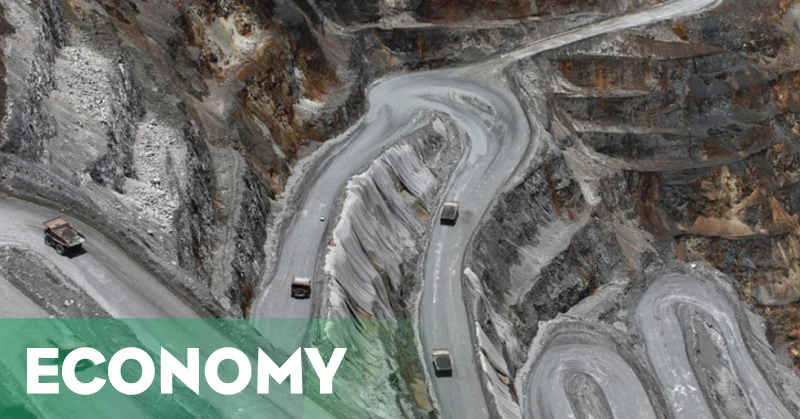
The Indonesian government has expressed firm confidence in the capability of State-Owned Enterprises (BUMN) to take over and manage the operations of PT Freeport Indonesia (PTFI) as the divestment process continues to unfold. Sonny Loho, the Director General of State Assets at the Ministry of Finance, emphasized that there is no reason to doubt the technical or managerial competence of Indonesia’s national mining entities. As the negotiations for the divestment of shares progress, two major state-owned players, PT Aneka Tambang (Persero) Tbk (ANTM) and PT Inalum (Persero), have been positioned as the primary vehicles for the acquisition.
The discourse surrounding the divestment of PT Freeport Indonesia has long been a focal point of national economic policy. Speaking at the Ministry of Finance in Jakarta on Wednesday, November 11, 2015, Sonny Loho dismissed concerns regarding whether Indonesian firms possess the sophisticated expertise required to operate one of the world’s largest and most complex copper and gold mines. He asserted that Indonesia’s mining sector has matured significantly, with state-owned firms demonstrating world-class standards in various extraction and processing projects across the archipelago. According to Loho, the skepticism regarding domestic capability is largely unfounded and stems from an unnecessary lack of national confidence.
The Strategic Context of the Freeport Divestment
The divestment of PT Freeport Indonesia is not merely a commercial transaction but a significant move toward asserting national sovereignty over natural resources. Under Government Regulation (PP) No. 77 of 2014, which amended the implementation of mineral and coal mining business activities, foreign mining companies operating in Indonesia are required to gradually divest their shares to Indonesian participants. For underground mining operations like those managed by Freeport in Papua, the regulation mandates a divestment of up to 30 percent.
In 2015, the immediate focus was on the divestment of a 10.64 percent stake, which was part of a broader schedule to increase Indonesian ownership. PT Freeport Indonesia, a subsidiary of the Phoenix-based Freeport-McMoRan (FCX), has operated the Grasberg mine in the highlands of Mimika, Papua, for decades under a Contract of Work (CoW). As the expiration of the current contract looms in 2021, the Indonesian government has utilized the divestment process as a prerequisite for contract extensions and as a means to ensure that a greater share of the mining wealth remains within the country.
The Ministry of State-Owned Enterprises, led by Rini Soemarno during this period, had been preparing a consortium of BUMNs to absorb the offered shares. The logic behind involving PT Inalum and PT Aneka Tambang is rooted in their respective strengths. Inalum, which transitioned from a joint venture with Japanese investors to a fully state-owned entity in 2013, possesses significant financial leverage and experience in aluminum smelting. Meanwhile, Antam is a diversified mining company with a long history of extracting nickel, gold, and bauxite.
Assessing the Capabilities of PT Inalum and PT Antam
The primary question raised by critics involves the technical transition of the Grasberg mine. The site is currently transitioning from a massive open-pit operation to a complex network of underground block-caving mines. This transition is considered one of the most challenging engineering feats in the global mining industry, requiring billions of dollars in investment and highly specialized technical knowledge.
However, the Ministry of Finance maintains that Indonesian engineers and professionals are already the backbone of Freeport’s operations in Papua. A vast majority of the workforce at PTFI consists of Indonesian nationals who have gained decades of experience in high-altitude, large-scale mining. By transferring ownership to BUMNs, the government aims to marry this existing technical talent with state-led strategic management.
PT Aneka Tambang (Antam) has already proven its mettle in managing diverse mining portfolios. As a publicly-traded company, Antam adheres to international standards of transparency and operational efficiency. Its experience in managing precious metals provides a solid foundation for overseeing Freeport’s gold output. On the other hand, PT Inalum serves as a strategic holding entity. The government’s vision is to transform Inalum into a national mining holding company that can provide the necessary capital and strategic direction to manage assets of the scale of Grasberg.
A Chronology of the Freeport-Indonesia Relationship
To understand the weight of the current divestment proceedings, one must look at the historical trajectory of Freeport’s presence in Indonesia:
- 1967: Freeport Sulphur (now Freeport-McMoRan) signs the first Contract of Work (CoW) with the Indonesian government under the Foreign Investment Law. This was the first major foreign investment under the New Order administration.
- 1973: Production begins at the Ertsberg mine.
- 1988: The discovery of the massive Grasberg deposit transforms the operation into one of the most valuable mining assets globally.
- 1991: A second Contract of Work (CoW II) is signed, granting Freeport a 30-year term with the possibility of two 10-year extensions.
- 2009: Indonesia passes Law No. 4/2009 on Mineral and Coal Mining, which introduces the requirement for domestic processing (smelting) and the transition from Contracts of Work to Special Mining Business Licenses (IUPK).
- 2014: Government Regulation No. 77/2014 sets the specific divestment requirements for foreign miners.
- 2015: Negotiations intensify regarding the valuation of the 10.64 percent stake and the terms for the contract extension beyond 2021.
The statement by Sonny Loho in November 2015 came at a critical juncture when the government was under pressure to prove that its "Indonesia-centric" resource policy would not lead to a decline in production or a loss of investor confidence.
Economic Implications and Data Analysis
The stakes involved in the management of Freeport are enormous. The Grasberg mine is not just a source of copper and gold; it is a vital pillar of the Papuan economy and a major contributor to the Indonesian national treasury.
- Production Volume: In 2015, Freeport’s production targets were approximately 1.2 billion pounds of copper and 1.6 million ounces of gold. Managing such volumes requires a seamless logistics chain and stable operational management.
- Fiscal Contribution: PTFI is often the single largest taxpayer in Indonesia. Between 1992 and 2015, the company contributed over $15 billion in taxes, royalties, and dividends to the Indonesian state.
- Reserves: The remaining reserves at Grasberg are estimated to be worth tens of billions of dollars, with the potential for production to continue well into the 2040s if the underground transition is successful.
For the BUMNs to succeed, they must navigate the high capital expenditure (CAPEX) required for the underground development. The government’s plan involves using the combined balance sheets of the mining SOEs to secure financing. Analysts suggest that by forming a holding company, the BUMNs can achieve a higher credit rating, allowing them to borrow at lower interest rates to fund the acquisition and ongoing operations.
Official Responses and Stakeholder Perspectives
The push for BUMN management has received mixed but generally supportive reactions from various sectors of the Indonesian government. While the Ministry of Finance focuses on the asset management and fiscal aspects, the Ministry of Energy and Mineral Resources (ESDM) is tasked with the technical and regulatory oversight.
Sudirman Said, the Minister of Energy and Mineral Resources at the time, had previously noted that the divestment is a non-negotiable legal mandate. He emphasized that while the government values its partnership with Freeport-McMoRan, the transition to increased local ownership is a natural progression for a maturing economy.
From the perspective of the SOE Ministry, the focus is on "hilirisasi" or downstreaming. By having BUMNs in a controlling position at Freeport, the government can more effectively mandate the construction of domestic smelters. This would ensure that Indonesia does not just export raw concentrates but moves up the value chain by producing refined copper and gold locally.
On the other hand, Freeport-McMoRan has historically raised concerns regarding the valuation of the shares. The company argues that the price should reflect the market value of the reserves through 2041, whereas the Indonesian government has often argued for a valuation based on replacement costs or the value of the investment made up to the end of the current contract in 2021.
Overcoming National Anxiety
Sonny Loho’s comments specifically addressed the "national anxiety" that often accompanies large-scale takeovers of foreign-managed assets. He urged the public and the business community to "be brave" and trust in the capabilities of Indonesian professionals.
"Don’t worry. Indonesians are too worried; we must be brave. We must be able to manage it," Loho stated. This sentiment reflects a broader shift in Indonesian economic policy toward "Resource Nationalism," a trend seen in other emerging economies where the state seeks greater control over strategic commodities.
The success of PT Timah in the tin sector and PT Bukit Asam in coal are often cited as precedents. These companies have successfully competed on the global stage, modernizing their operations and delivering consistent dividends to the state. The government believes that with the right corporate structure, PT Inalum and PT Antam can replicate this success with the Freeport assets.
The Path Forward: Challenges and Opportunities
As the divestment process continues, several key challenges remain for the BUMNs:
- Valuation Agreement: Reaching a consensus on the price of the shares remains the most significant hurdle. A price that is too high could burden the BUMNs with excessive debt, while a price that is too low could lead to international arbitration or a diplomatic rift.
- Operational Continuity: Ensuring that the transition of ownership does not disrupt the sensitive underground development at Grasberg is crucial. Any significant drop in production would impact both the local Papuan economy and national tax revenues.
- Environmental Stewardship: Freeport has faced criticism over its management of tailings (mining waste). A BUMN-led management team would be under intense scrutiny to improve environmental standards and address the concerns of local indigenous communities in Papua.
- Corporate Governance: Managing a global-scale asset requires insulation from political interference. The government must ensure that the BUMNs operate on a professional, commercial basis to maintain the mine’s efficiency.
Despite these challenges, the potential rewards are substantial. Greater control over Freeport would provide Indonesia with a strategic hedge in the global commodities market. It would also serve as a catalyst for the development of Papua, provided that the increased state revenue is reinvested into local infrastructure, education, and healthcare.
In conclusion, the statements from the Ministry of Finance serve as a signal of intent. The Indonesian government is committed to ensuring that BUMNs play a central role in the future of PT Freeport Indonesia. By leveraging the expertise of PT Antam and the strategic positioning of PT Inalum, Indonesia aims to turn the Freeport divestment into a landmark achievement for national economic development. As Sonny Loho suggested, the era of doubting domestic capability is coming to an end, replaced by a mandate for bold, state-led industrial growth.