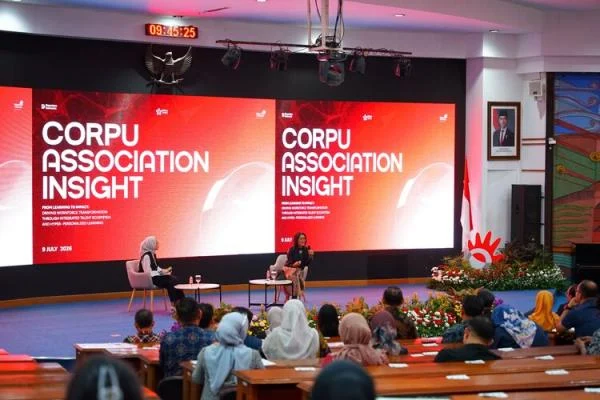
JAKARTA, iNews.id – PT Telkom Indonesia (Persero) Tbk, through its dedicated learning arm, Telkom Corporate University (Telkom CorpU), convened a landmark event, the CorpU Association Insight forum, under the theme "From Learning to Impact: Driving Workforce Transformation through Integrated Talent Ecosystem and Hyper-Personalized Learning." The influential gathering took place at the Telkom Corporate University campus in Bandung on Thursday, July 9, 2026, marking a significant step in advancing human capital development strategies within Indonesia and beyond.
The forum served as a critical nexus for collaboration, bringing together a diverse assembly of human resources practitioners, visionary leaders from various corporate universities, and talent development managers representing a wide spectrum of organizations. Its primary objective was to foster a dynamic environment for sharing invaluable insights, showcasing best practices, and exploring innovative approaches essential for constructing and nurturing integrated talent ecosystems that are resilient, agile, and future-ready. By facilitating such dialogues, Telkom CorpU aimed to underscore its commitment to evolving human resource development from mere learning initiatives to programs that generate tangible and measurable impact on talent capabilities and overall organizational performance.
The Imperative for Transformation: A Global and National Context
The convening of the CorpU Association Insight forum by Telkom Indonesia is not an isolated event but rather a strategic response to the profound shifts occurring in the global and national economic landscapes. The relentless march of digital transformation, coupled with the accelerating adoption of Artificial Intelligence (AI) across industries, has fundamentally reshaped the demands on the modern workforce. Companies, particularly large state-owned enterprises like Telkom, are increasingly recognizing that sustained competitiveness and innovation hinge directly on their ability to cultivate a workforce that is not only skilled but also adaptable, continuously learning, and strategically aligned with business objectives.
Indonesia, with its rapidly expanding digital economy and ambitious goals outlined in initiatives like "Making Indonesia 4.0," faces a unique challenge and opportunity in human capital development. The nation’s digital economy is projected to reach significant valuations in the coming years, driven by e-commerce, fintech, and digital services. This growth necessitates a robust pipeline of digitally literate and skilled professionals. Corporate universities, therefore, play a pivotal role in bridging existing skill gaps, fostering new competencies, and ensuring that the national workforce remains relevant in an increasingly automated and data-driven world. Telkom, as a telecommunications giant and a key enabler of digital infrastructure in Indonesia, bears a significant responsibility in setting the standard for workforce readiness and transformation. Its internal talent development strategies often serve as a benchmark for other large corporations and SOEs within the country.
Telkom CorpU: A Strategic Enabler of Human Capital Excellence
Telkom Corporate University stands as a testament to Telkom Indonesia’s long-term commitment to human capital development. Established with a vision to be a strategic partner in driving business transformation through talent excellence, Telkom CorpU has evolved beyond a traditional training center. It operates as a comprehensive learning ecosystem designed to cultivate leadership, foster innovation, and build specialized technical and digital skills across Telkom’s vast workforce. Its curriculum is dynamic, integrating global best practices with localized needs, and leveraging advanced learning methodologies. The university’s strategic importance has grown exponentially as Telkom navigates its own comprehensive digital transformation journey, shifting from a legacy telco to a more diversified digital telecommunications company. This internal transformation requires a workforce equipped with new capabilities in areas such as cloud computing, big data analytics, cybersecurity, and advanced networking, all of which are central to CorpU’s mandate.
Willy Saelan on Agile Talent and Business Strategy

Willy Saelan, Director of Human Capital Management at Telkom, articulated the core philosophy underpinning the forum and Telkom’s broader talent strategy. He emphasized that the current era of business transformation demands a workforce capable of fluid adaptation to rapid technological advancements and evolving competency requirements. "In this era of digital transformation and AI," Saelan stated, "organizations require agile talent ready to confront change head-on. It is imperative that learning, talent development, and career progression are seamlessly integrated within a single, cohesive ecosystem. This integration is key to accelerating capability enhancement, elevating talent readiness, and ultimately delivering tangible impact on the achievement of our business strategies."
Saelan’s remarks highlighted a crucial paradigm shift: from viewing learning as a standalone activity to understanding it as an embedded, continuous process intrinsically linked to career growth and directly contributing to strategic business outcomes. This holistic approach ensures that investments in human capital translate directly into improved organizational performance, enhanced innovation capacity, and a stronger competitive edge in the marketplace. The emphasis on "agile talent" reflects the need for individuals who can quickly acquire new skills, unlearn outdated methods, and adapt to changing roles and responsibilities—a critical trait in dynamic digital environments.
Forum Insights: Deconstructing the Integrated Talent Ecosystem and Hyper-Personalized Learning
The "From Learning to Impact" forum delved deep into the mechanics of building an "Integrated Talent Ecosystem" and implementing "Hyper-Personalized Learning."
An Integrated Talent Ecosystem refers to a comprehensive framework where all aspects of an employee’s journey—from recruitment and onboarding to continuous learning, performance management, career pathing, and succession planning—are interconnected and aligned. This eliminates silos often found in traditional HR functions, ensuring that talent development is a continuous, data-driven process. Key components discussed likely included:
- Data-Driven Talent Analytics: Leveraging big data and AI to identify skill gaps, predict future talent needs, and personalize development paths.
- Seamless Onboarding and Continuous Development: Integrating initial training with ongoing learning modules that are relevant to current roles and future career aspirations.
- Performance-Learning Linkage: Connecting performance reviews with personalized learning recommendations to address specific areas for improvement and growth.
- Internal Mobility and Career Pathing: Creating clear pathways for employees to move within the organization, supported by targeted learning interventions.
- Leadership Development: Nurturing future leaders through structured programs that emphasize digital literacy, strategic thinking, and adaptive leadership.
Hyper-Personalized Learning, on the other hand, moves beyond generic training programs to deliver highly customized learning experiences tailored to an individual’s specific needs, learning style, pace, and career goals. This approach is heavily enabled by AI and machine learning, which can:
- Assess Skill Gaps Automatically: AI-powered tools can diagnose an individual’s current competencies and recommend precise learning modules.
- Adaptive Learning Paths: Content adjusts in real-time based on learner progress and comprehension, ensuring optimal engagement and retention.
- Microlearning and Gamification: Delivering bite-sized content through engaging, interactive formats that fit into busy work schedules.
- Personalized Content Curation: AI algorithms suggest relevant courses, articles, and videos from a vast library, aligning with individual development plans.
- Virtual Reality (VR) and Augmented Reality (AR) for Experiential Learning: Immersive simulations for hands-on training in complex or high-risk scenarios.
Discussions during the forum likely explored how these advanced learning methodologies can be deployed effectively within large organizations, addressing challenges such as scalability, technological infrastructure requirements, and fostering a culture of continuous learning. Participants would have shared case studies and practical insights on successful implementations and lessons learned from their own organizational journeys.
Supporting Data and Industry Trends
The strategic focus of Telkom’s forum aligns with broader global trends in corporate learning and development. According to a 2023 LinkedIn Workplace Learning Report, 89% of L&D professionals agree that proactively building employee skills will help navigate the evolving future of work. Furthermore, 72% of companies globally are increasing their investment in learning and development, recognizing it as a key driver for business resilience and growth.

The World Economic Forum’s Future of Jobs Report consistently highlights that rapid technological adoption will continue to reshape job roles, with a significant portion of the global workforce requiring reskilling or upskilling by 2030. Skills related to AI, machine learning, data analysis, digital marketing, and complex problem-solving are experiencing exponential demand. Corporate universities are at the forefront of addressing these emerging skill gaps. The market for corporate learning management systems (LMS) and related technologies is also expanding, driven by the need for more sophisticated, personalized, and data-driven learning platforms. Estimates suggest this market will continue to grow robustly, reflecting increased organizational investment in digital learning infrastructure.
In Indonesia specifically, the Ministry of Manpower has consistently emphasized the importance of improving human resource quality to support economic transformation. Government initiatives often encourage partnerships between educational institutions, industry, and corporate entities to develop a skilled workforce. Telkom’s efforts through Telkom CorpU directly contribute to this national agenda, positioning the company as a leader not just in telecommunications, but also in human capital innovation.
Broader Implications and Future Outlook
The CorpU Association Insight forum, orchestrated by Telkom Indonesia, carries significant implications, extending beyond the immediate participants and Telkom itself.
For Telkom Indonesia, this event reinforces its position as a thought leader in human capital development within the Indonesian corporate landscape. By actively fostering collaboration and sharing best practices, Telkom strengthens its internal capabilities and enhances its ability to attract and retain top talent. A highly skilled and adaptable workforce is paramount for Telkom to execute its ambitious digital transformation roadmap, which includes expanding its fiber optic network, developing new digital platforms, and exploring emerging technologies. The insights gained and shared during the forum will directly inform Telkom’s future talent strategies, ensuring they remain at the cutting edge of learning innovation.
For Other State-Owned Enterprises (SOEs) in Indonesia, Telkom’s initiative sets a high benchmark. The Indonesian government has been actively pushing for SOE reform and transformation, emphasizing efficiency, innovation, and global competitiveness. Effective human capital management is a cornerstone of this agenda. By demonstrating a sophisticated approach to talent development, Telkom provides a valuable model for other SOEs to emulate, potentially catalyzing a broader uplift in human resource capabilities across the public sector. This collective effort is crucial for Indonesia to achieve its long-term economic development goals.
On a National Talent Landscape level, such forums contribute to building a more robust and future-ready workforce for Indonesia. By facilitating the exchange of ideas among various organizations, the event helps to standardize and elevate the quality of talent development practices across industries. This ultimately enhances Indonesia’s overall competitiveness in the global economy, making the country a more attractive destination for foreign direct investment and fostering a culture of innovation. A workforce equipped with in-demand digital and soft skills is essential for driving economic growth and creating sustainable job opportunities for the nation’s large youth population.
Looking ahead, the event underscores the evolving role of HR and learning functions. They are no longer merely administrative departments but strategic partners critical to business success. As AI continues to automate routine tasks, the demand for uniquely human skills such as creativity, critical thinking, emotional intelligence, and complex problem-solving will only intensify. Corporate universities, therefore, will become even more vital in cultivating these intangible yet invaluable competencies. The future of work will be characterized by continuous learning, reskilling, and upskilling, and organizations that invest proactively in integrated talent ecosystems and hyper-personalized learning will be best positioned to thrive amidst constant disruption.
The "From Learning to Impact" forum serves as a powerful reminder that in an age defined by rapid technological advancement, human capital remains the most critical asset. Telkom Indonesia, through its Telkom Corporate University, is not just adapting to this reality but actively shaping the future of workforce transformation, cementing its role as a key enabler of Indonesia’s digital future.