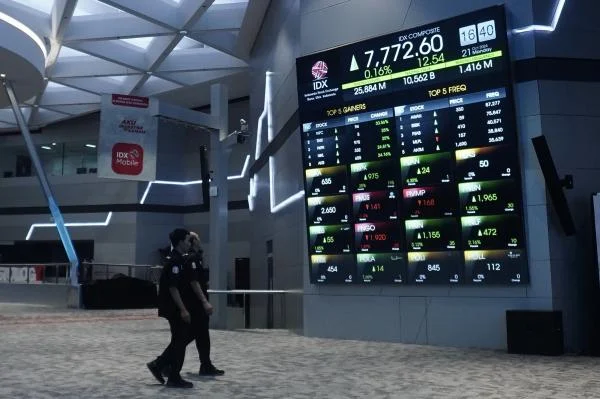
The Jakarta Composite Index (IHSG) concluded the trading day on Monday, July 20, 2026, with a notable ascent into positive territory, marking a significant gain in the final session. The benchmark index surged by 56.25 points, or 0.91 percent, to close at a robust level of 6,231. This upward movement underscored a day of heightened investor confidence and active participation across the Indonesian stock market, reflecting broader economic optimism and specific sectoral tailwinds.
The day’s trading saw a significant majority of stocks advancing, with 421 counters registering gains, outperforming the 220 stocks that experienced declines. An additional 324 stocks remained unchanged, indicating a clear bullish sentiment dominating the market. The total value of transactions reached an impressive IDR 16.0 trillion, stemming from the trade of 29.7 billion shares. This substantial trading volume and value signal strong liquidity and active investor engagement, often seen as a healthy indicator for market depth and resilience. The day’s performance built upon a foundation of positive momentum observed in the preceding week, where the IHSG had demonstrated a consistent upward trend, bolstering overall market capitalization and investor sentiment.
A Deeper Dive into Market Performance and Sectoral Dynamics
The positive performance of the IHSG was mirrored across several key sub-indices, illustrating a broad-based rally. The LQ45 index, which tracks the 45 most liquid and largest market capitalization stocks, rose by 0.94 percent to 627. Similarly, the Jakarta Islamic Index (JII), comprising sharia-compliant stocks, posted the strongest sectoral gain, climbing 1.96 percent to 374, indicating strong investor interest in ethical investments. The IDX30, which encompasses 30 stocks with high liquidity and large market capitalization, also advanced by 0.84 percent to 354, while the MNC36 index saw a 0.71 percent increase, reaching 274. These concurrent gains across various indices highlight a widespread positive sentiment rather than an isolated rally in a few specific large-cap stocks.
Sectoral performance on July 20, 2026, painted a largely optimistic picture, with most sectors closing in the green. Leading the charge were sectors such as energy, raw materials, industry, cyclical consumption, infrastructure, property, transportation, non-cyclical consumption, finance, and health. Each of these sectors contributed significantly to the overall index gain, driven by a mix of specific catalysts and broader economic trends. For instance, the energy sector’s strength could be attributed to a sustained uptick in global commodity prices, benefiting Indonesia’s resource-rich economy. Similarly, a positive outlook on consumer spending, potentially fueled by stable inflation and improving employment figures, likely propelled the cyclical and non-cyclical consumption sectors. The robust performance of the financial sector often indicates confidence in the banking system and economic stability, while infrastructure and property gains could reflect ongoing government development projects and renewed investor interest in real estate.
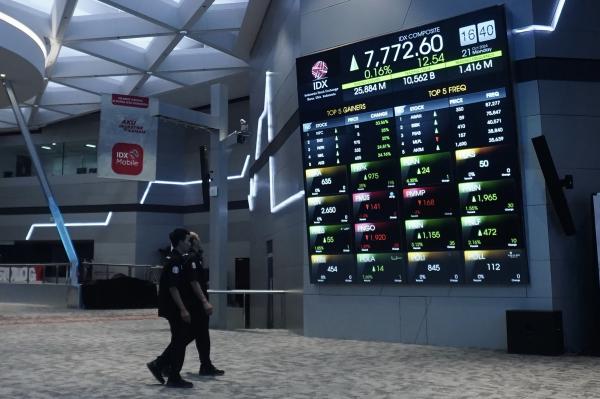
In contrast, the technology sector was the sole outlier, experiencing a decline during Monday’s trading session. This dip in technology stocks could be a reflection of global trends, where higher interest rates or concerns about future growth prospects for tech giants might lead to investor reallocation towards more traditional, value-oriented sectors. Alternatively, it could be a sector-specific correction after a period of rapid growth, or a response to particular company news within the Indonesian tech landscape. Analysts often observe that while technology offers high growth potential, it can also be more susceptible to volatility and shifts in market sentiment compared to more mature industries.
Chronology of the Trading Day
The trading day began with a strong opening, carrying momentum from the previous week’s positive close. The IHSG opened significantly higher, immediately reflecting optimistic investor sentiment. This early surge saw the index jump to levels around 6,197, with a substantial number of stocks already in positive territory from the start. Throughout the morning session, the index maintained its upward trajectory, albeit with some minor fluctuations as profit-taking occurred in certain counters.
By mid-day, the IHSG had solidified its gains, demonstrating resilience against any selling pressure. The afternoon session saw a renewed push, with the index gradually climbing towards its closing high. The final hours of trading were characterized by strong buying interest, particularly in key sectors, which propelled the IHSG to its impressive closing level of 6,231. This consistent performance throughout the day, from opening strength to a strong close, underscores a confident market environment. The high transaction values and volumes suggest that both institutional and retail investors were actively participating, contributing to the overall market depth and liquidity.
Key Economic Context and Drivers
The strong performance of the IHSG on July 20, 2026, cannot be viewed in isolation; it is deeply intertwined with prevailing global and domestic economic conditions. Globally, 2026 has been marked by a nuanced economic landscape. While major central banks in developed economies may have largely concluded their interest rate hiking cycles, the specter of inflation, albeit moderating, continues to influence monetary policy discussions. Geopolitical stability, or the lack thereof, in various parts of the world also plays a role, affecting commodity prices, supply chains, and overall investor confidence. For Indonesia, as a significant player in the global commodity market, stable or rising commodity prices would naturally bolster its export revenues and, consequently, the performance of its energy and raw materials sectors.

Domestically, Indonesia’s economic resilience has been a key factor. The government’s fiscal policies, aimed at supporting economic growth while maintaining fiscal discipline, provide a stable foundation. Infrastructure development projects, for instance, not only stimulate economic activity but also create jobs and improve logistics, benefiting sectors like construction, property, and transportation. Furthermore, Bank Indonesia’s (BI) monetary policy decisions, particularly regarding interest rates, are crucial. A stable interest rate environment or expectations of future rate cuts could encourage borrowing and investment, boosting corporate earnings and making equity investments more attractive compared to fixed-income assets. The Rupiah’s stability against major currencies is also a critical factor for foreign investors, as it impacts the repatriated value of their investments.
Analysts at major financial institutions noted that the prevailing domestic consumption strength, coupled with robust exports, has been instrumental in supporting Indonesia’s GDP growth. "Indonesia’s domestic economy continues to show remarkable resilience, driven by a burgeoning middle class and effective government stimulus," commented a senior economist from a leading Jakarta-based research firm. "This fundamental strength provides a solid underpinning for corporate earnings and, by extension, for the stock market."
Top Movers: Gainers and Losers
Understanding the individual stock movements provides granular insight into market dynamics. On Monday, July 20, 2026, the top gainers were led by:
- PT Aracord Nusantara Group Tbk (RONY): This stock soared by an impressive 24.72 percent, closing at IDR 1,690. While specific details of the company’s recent announcements are not available, such a significant jump often indicates positive corporate news, strong earnings expectations, or strategic developments that have caught investor attention. RONY, likely a diversified conglomerate or an industrial player, could have benefited from renewed optimism in manufacturing or specific project wins.
- PT Bima Sakti Pertiwi Tbk (PAMG): Experiencing a gain of 23.53 percent, PAMG closed at IDR 63. Companies like Bima Sakti Pertiwi, often associated with property or resource management, could have seen a boost from favorable sector-specific policies, land development news, or rising commodity prices that impact their underlying assets.
- PT Bakrie & Brothers Tbk (BNBR): A well-known conglomerate, BNBR saw its shares rise by 25.53 percent, closing at IDR 105. Such a substantial gain for a diversified group can sometimes be driven by positive developments in one of its key business units, strategic restructuring news, or broader market sentiment favoring cyclical stocks where conglomerates often have significant exposure.
Conversely, the top losers on the day included:
- PT Prodia Diagnostic Line Tbk (PRDL): This healthcare-related stock declined by 13.99 percent to IDR 332. While the health sector as a whole was in the green, specific company news, such as disappointing earnings forecasts, increased competition, or regulatory changes affecting diagnostic services, could lead to such a sharp decline.
- PT Niramas Utama Tbk (JELI): Shares of JELI dropped by 12.29 percent, closing at IDR 785. Companies like Niramas Utama, often in the consumer goods or food and beverage sector, can be impacted by shifts in consumer preferences, raw material cost increases, or competitive pressures that affect their profit margins.
- PT Multipolar Technology Tbk (MLPT): This technology company’s shares fell by 11.21 percent, closing at IDR 25,950. As the technology sector was the only one in the red, MLPT’s decline is consistent with broader sector weakness. Factors could include investor concerns about valuation, a slowdown in IT spending by corporate clients, or specific company performance issues that have led to a re-evaluation by the market.
Implications and Future Outlook
The robust close of the IHSG on July 20, 2026, carries several important implications for investors and the broader Indonesian economy. Firstly, it signals strong investor confidence in Indonesia’s economic prospects, suggesting that market participants believe in the country’s ability to navigate global headwinds and sustain domestic growth. This confidence is crucial for attracting both domestic and foreign investment, which are vital for capital formation and job creation.
Secondly, the high transaction volume indicates healthy market liquidity. A liquid market allows investors to enter and exit positions efficiently, reducing price volatility and enhancing market attractiveness. This can encourage more participation from diverse investor groups, including institutional funds and individual retail investors, further deepening the market.
Looking ahead, market analysts anticipate continued volatility, but with an underlying positive bias for the IHSG, assuming key macroeconomic indicators remain stable. Factors to watch include:
- Global Economic Developments: Any significant shifts in global growth forecasts, commodity prices, or monetary policies from major central banks could influence capital flows into emerging markets like Indonesia.
- Domestic Policy Stability: The consistency and effectiveness of government policies in areas such as fiscal management, infrastructure development, and investment facilitation will be crucial.
- Corporate Earnings: The upcoming earnings season will provide further clarity on the financial health of listed companies, which is a primary driver of stock performance. Strong corporate earnings reports could provide the next catalyst for the index’s upward movement.
- Inflation and Interest Rates: Bank Indonesia’s stance on interest rates, influenced by inflation trends, will continue to play a pivotal role in shaping investor sentiment, particularly regarding the attractiveness of equities versus other asset classes.
- Foreign Investor Flows: The Indonesian market remains sensitive to foreign capital movements. Sustained net foreign buying would be a strong indicator of international confidence in Indonesia’s economic trajectory.
In conclusion, the IHSG’s strong performance on July 20, 2026, reflects a dynamic and resilient Indonesian market. While individual sector and stock performances vary, the overall upward trend, supported by significant trading activity and favorable economic conditions, underscores a period of optimism. Investors will continue to monitor a confluence of global and domestic factors to gauge the sustainability of this positive momentum in the coming weeks and months.