The conceptual boundaries of "home" have long been a subject of intense scrutiny within the contemporary art world, often serving as a lens through which artists examine the complexities of migration, heritage, and the passage of time. At the forefront of this dialogue is the recent group exhibition titled I Will Tell You When I Am Home, hosted by ara Contemporary. This exhibition brings together a diverse cohort of six international artists, each navigating the intersections of place, displacement, and the fluid nature of belonging. Central to the exhibition is the work of Mar Kristoff, whose practice challenges the traditional notion of the archive as a static repository of truth. Instead, Kristoff and his contemporaries present memory as a living, breathing entity—one that is perpetually rewritten and recontextualized by new experiences and external narratives.
The Fluidity of the Archive: Mar Kristoff’s Vision
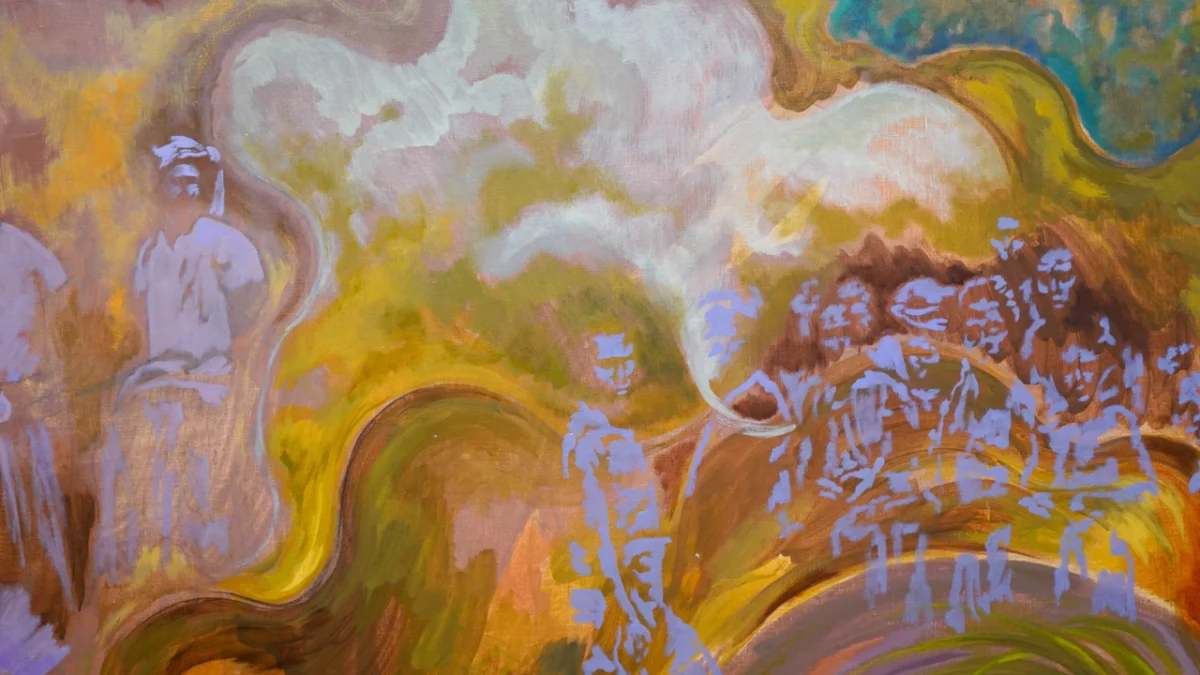
Mar Kristoff’s contribution to the exhibition serves as a profound meditation on the instability of personal history. His latest works utilize a multi-layered approach to visual storytelling, drawing from two distinct temporal and social archives. The foundational layer consists of Kristoff’s own family history: silhouettes traced from his parents’ wedding photographs in Jakarta and snapshots of family vacations in Bali during the early 2000s. These images represent the artist’s "private" reality, a collection of moments that define his personal lineage.
However, Kristoff complicates this narrative by overlaying these intimate silhouettes with photographs sourced from the archives of a completely unrelated foreign family who vacationed in Bali during the 1970s. This juxtaposition creates a visual dialogue between different eras and identities. By merging his family’s private memories with the public or "found" memories of strangers, Kristoff suggests that human experiences are rarely isolated. He posits that we often inhabit multiple realities simultaneously, finding a sense of familiarity in the experiences of others, even those separated by decades and cultural divides.
In his own words, Kristoff emphasizes that memory is not something to be preserved in amber. "Memory is something we constantly rewrite," he observes. "It is something we bring back to life, regardless of whether it is our own memory or the memory of someone else." This perspective reframes the photograph not as a definitive record of what was, but as a malleable object that changes meaning every time it is viewed, edited, or integrated into a new artistic context.
Technical Evolution: From Monochrome to Color
For much of his career, Mar Kristoff has been known for a disciplined use of monochrome, a choice that often emphasizes the structural and haunting qualities of archival imagery. I Will Tell You When I Am Home marks a significant departure in his technical trajectory, representing only the second time he has integrated a broader color palette into his work. This shift is not merely aesthetic; it reflects a deeper exploration of how the "vibrancy" of memory can be both illuminating and deceptive.
The introduction of color serves to bridge the gap between the faded past of the 1970s archives and the more contemporary recollections of the early 21st century. By experimenting with these new visual layers, Kristoff highlights the "editing" process inherent in both photography and human cognition. Just as a digital image can be manipulated and color-graded, our minds select, highlight, and obscure certain details of our past to fit our current understanding of ourselves. This process of "editing the archive" is a central pillar of Kristoff’s artistic philosophy, asserting that the act of remembering is, in itself, a creative act.
Global Perspectives on Displacement and Belonging
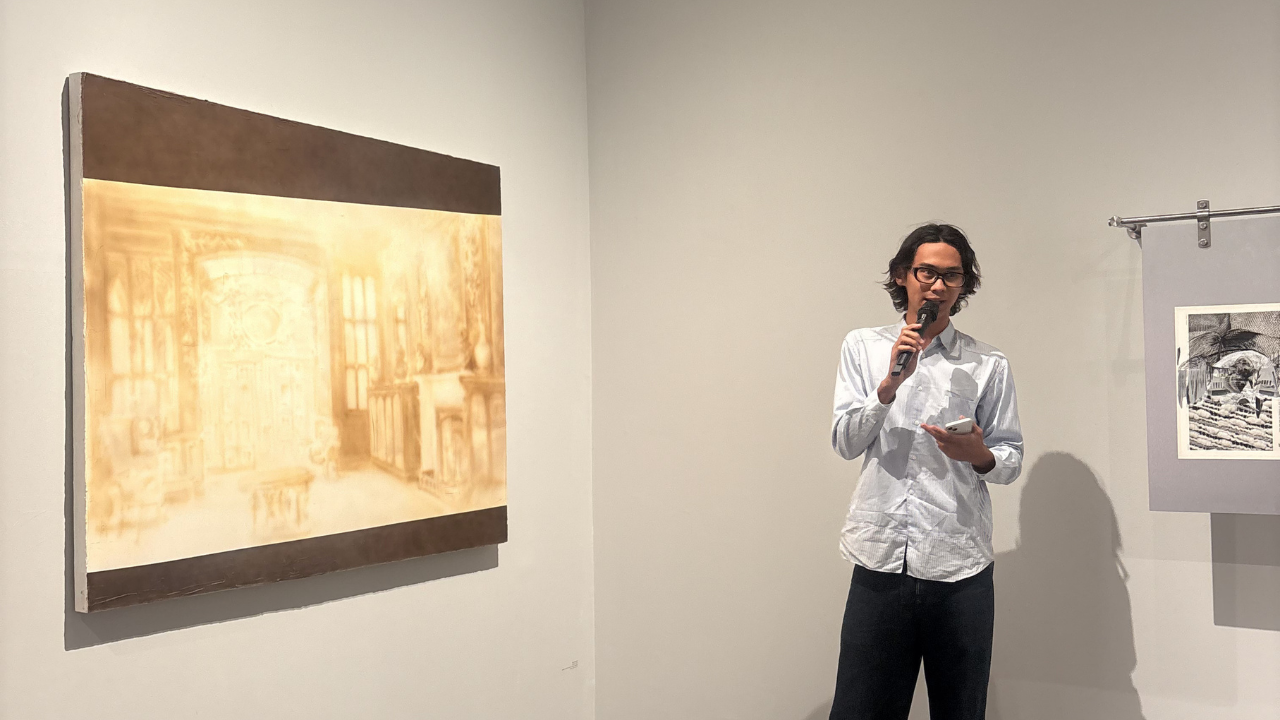
While Kristoff focuses on the internal architecture of memory, other artists in the exhibition expand the scope to include ecological, historical, and socio-political dimensions of "home." The exhibition curates a conversation that spans from the labor markets of Vietnam to the colonial plantations of Southeast Asia, illustrating that the feeling of home is often dictated by external forces beyond an individual’s control.
Shuyi Cao: Ecology and Material Research
Based in New York, artist Shuyi Cao brings a multidisciplinary approach to the exhibition, blending archaeology, ecology, and technology. Her work is the result of an intensive residency at Ruang Arta Derau in Bali, where she conducted material-based research into the island’s unique environmental and cosmological landscape. Cao’s practice explores how materials—whether organic or synthetic—carry their own histories and "memories." Her installations serve as a bridge between the ancient past and a speculative future, questioning how our sense of place is rooted in the physical earth and the scientific structures we use to understand it.
Nguyễn Phương Linh: The Labor of Identity
Nguyễn Phương Linh, a prominent figure in the Southeast Asian art scene who recently participated in the Uzbekistan Pavilion at the 2026 Venice Biennale, contributes a poignant look at the lives of working-class Vietnamese women. Her work examines the homogenization of labor, specifically how the "home" for many migrant workers is a transient space defined by repetitive tasks and economic necessity. By highlighting the uniform nature of the jobs held by these women across various global cities, Linh critiques the capitalist structures that strip individuals of their unique identities, turning the concept of "home" into a site of labor rather than a sanctuary of belonging.
Khairulddin Wahab: Colonial Legacies and Environmental History
From Singapore, Khairulddin Wahab offers a historical perspective, investigating the lasting impact of colonial-era plantations on the Southeast Asian landscape. Using a blend of cultural geography and environmental history, Wahab’s paintings and installations map the way colonial powers reshaped the land to suit economic interests. For Wahab, "home" is a territory that has been physically and psychologically altered by history. His work suggests that to understand our current identity, we must first unearth the layers of colonial intervention that have defined the very soil we stand on.
Arlette Quỳnh-Anh Trần: AI and the Translation of Knowledge
Arlette Quỳnh-Anh Trần, a recipient of the prestigious Graham Foundation Grant, explores the intersection of modernism and local tradition. Her work utilizes an innovative mix of Bauhaus journal pages, hand-drawn sketches, and images generated by artificial intelligence. By doing so, she questions how Western-centric "modern" knowledge is translated and transformed when it encounters local experiences in Southeast Asia. Her use of AI serves as a metaphor for the way knowledge is synthesized and rewritten over time, echoing Kristoff’s themes of the fluid archive.
Institutional Context and Curatorial Intent
The exhibition at ara Contemporary arrives at a pivotal moment for the Southeast Asian art market, which has seen a surge in interest regarding archival and research-based practices. Galleries like ara Contemporary are increasingly serving as platforms for "discursive" art—work that prioritizes the investigation of history and identity over purely decorative appeal.
The title I Will Tell You When I Am Home acts as a linguistic bridge between the six artists. It implies a state of transition—a promise of arrival that remains unfulfilled. This reflects the reality of the modern global citizen, for whom "home" is often a destination that exists only in the future or a memory that is constantly being reconstructed.
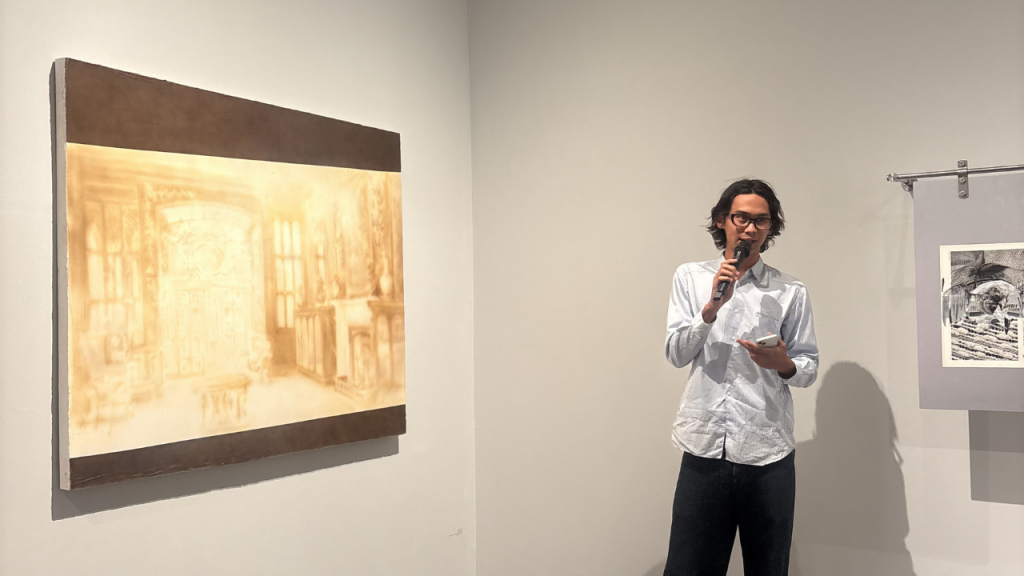
The inclusion of artists with high-profile international credentials, such as Nguyễn Phương Linh and Arlette Quỳnh-Anh Trần, underscores the gallery’s commitment to placing Southeast Asian narratives within a global dialogue. The 2026 Venice Biennale, mentioned in relation to Linh’s work, serves as a significant backdrop, indicating that the themes explored in this exhibition are currently at the center of the world’s most prestigious artistic debates.
Analysis: The Implications of Rewriting History
The collective impact of these works suggests a shift in how we value historical "truth." In the digital age, where information is easily manipulated and archives are often digitized and decontextualized, the artists in I Will Tell You When I Am Home argue that the subjective experience of history is just as valid as the objective record.
Mar Kristoff’s work, in particular, highlights a growing trend in contemporary art where the "found object" or "found photograph" is used to build empathy. By placing himself in the shoes of a stranger from the 1970s, Kristoff practices a form of radical empathy, suggesting that the barriers we build around our personal histories are more porous than we think.
Furthermore, the integration of AI by Arlette Quỳnh-Anh Trần and the material science of Shuyi Cao indicate that the future of "memory" will be increasingly tied to technology. As we use machines to help us remember or to simulate the past, the act of "rewriting" history becomes even more literal.
Conclusion: Home as a Continuous Process
Ultimately, I Will Tell You When I Am Home at ara Contemporary offers a complex, multifaceted definition of what it means to belong. For Mar Kristoff, home is not a static location on a map or a fixed date in a family album; it is a condition of the mind that allows for the constant reconstruction of one’s own story.
The exhibition succeeds in demonstrating that whether through the lens of ecology, labor, colonial history, or digital technology, the search for home is an ongoing journey. As these six artists show, the archives of our lives are never truly closed. They remain open to interpretation, waiting to be edited, colored, and lived in once again. The "home" we speak of is not something we return to, but something we are perpetually building through the stories we choose to tell and the memories we choose to keep alive.