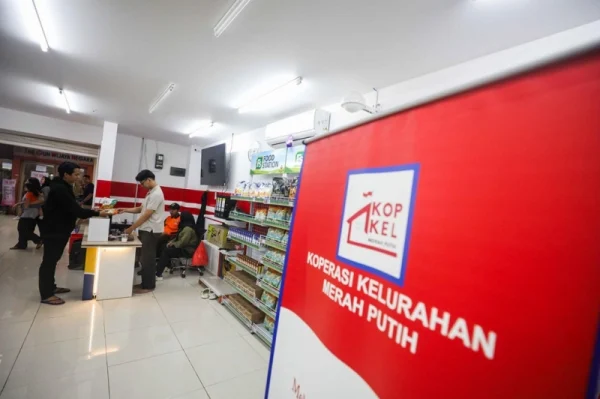
JAKARTA – The Koperasi Desa/Kelurahan Merah Putih (KDKMP) has announced an impressive total transaction value of Rp56.85 billion (approximately USD 3.65 million, based on a hypothetical exchange rate of Rp15,500/USD) for the first half of 2026. This significant achievement, recorded up to mid-July, underscores the cooperative’s pivotal role in supporting rural economies and ensuring the availability of crucial commodities across Indonesia’s villages and sub-districts. The robust performance is primarily attributed to the high demand for agricultural inputs, particularly fertilizers, alongside a steady trade in essential household staples.
According to data extracted from the Sistem Informasi Manajemen Koperasi Desa/Kelurahan Merah Putih (Simkopdes), the cooperative recorded a staggering 54,473 individual transactions, culminating in a precise total value of Rp56,855,883,577. This substantial figure, reported by journalist Taufik Fajar on Tuesday, July 21, 2026, at 05:05 WIB, highlights not only the volume of trade but also the expansive reach and trust KDKMP has cultivated within its member communities. The cooperative’s strategic focus on products vital for both agricultural productivity and daily consumption has evidently resonated strongly with its rural demographic.
Understanding KDKMP: A Pillar of Rural Economic Empowerment
Koperasi Desa/Kelurahan Merah Putih (KDKMP) is more than just a trading entity; it is a fundamental component of Indonesia’s rural economic infrastructure. Established with the overarching goal of empowering village and sub-district communities, KDKMP aims to improve the welfare of its members, predominantly farmers and small-scale entrepreneurs, by providing accessible and affordable goods and services. Its mandate extends beyond mere commerce, encompassing objectives such as fostering local economic resilience, stabilizing prices of essential commodities, and facilitating access to critical agricultural inputs that might otherwise be difficult or expensive for remote communities to obtain.
The cooperative operates on principles of mutual cooperation and member-ownership, ensuring that profits are reinvested into the cooperative or distributed among members, thereby directly benefiting the local economy. KDKMP’s model is particularly crucial in an archipelago nation like Indonesia, where logistical challenges and market inefficiencies can often disadvantage rural populations. By consolidating demand and streamlining supply chains, KDKMP helps mitigate these issues, offering a reliable platform for trade and support. Its formation and expansion have often been supported by government initiatives aimed at strengthening the cooperative sector as a backbone of the national economy.
Breakdown of Top-Performing Products in H1 2026
The Simkopdes data provides a clear picture of the products driving KDKMP’s impressive mid-year performance. The list of best-sellers unequivocally points to the cooperative’s deep connection to the agricultural sector and its role in supplying basic necessities.
-
NPK Phonska Fertilizer: Leading the pack, NPK Phonska fertilizer recorded an astounding transaction value of Rp15.09 billion. This figure, derived from approximately 8.17 million units (likely kilograms or liters, depending on packaging) transacted, underscores the critical demand for soil nutrients among Indonesian farmers. NPK Phonska, a compound fertilizer containing Nitrogen (N), Phosphorus (P), and Potassium (K), is essential for enhancing crop yield and quality, particularly for staple crops like rice, corn, and various horticultural products. The high sales reflect active planting seasons and farmers’ commitment to maximizing their harvests, often with the support of government programs that either subsidize fertilizer prices or encourage their efficient use.
-
Urea N 46% Fertilizer: Closely following, Urea N 46% fertilizer generated Rp11.27 billion in transactions from an estimated 6.20 million units. Urea is a high-nitrogen fertilizer crucial for vegetative growth in plants. Its strong sales indicate significant agricultural activity focused on early-stage crop development and overall plant health. The combined sales of NPK Phonska and Urea alone account for over Rp26 billion, or approximately 46% of KDKMP’s total mid-year transaction value, emphasizing the cooperative’s indispensable role in the agricultural supply chain.
-
Other Goods: A diverse category labeled "other goods" secured the third spot with transactions totaling Rp7.97 billion, stemming from 530,900 transactions. This broad category likely encompasses a wide array of agricultural ancillaries and household items not specifically listed, such as various seeds (rice, corn, vegetables), pesticides, herbicides, small farming tools, animal feed, or other general merchandise essential for rural households and farms. The significant value in this category highlights KDKMP’s versatility and its ability to meet a broader spectrum of community needs beyond just primary fertilizers.
-
Bimoli 2-Liter Cooking Oil: Moving beyond agricultural inputs, essential household items also showed strong performance. Bimoli 2-liter cooking oil registered Rp3.62 billion in transactions. Cooking oil is a fundamental staple in Indonesian households, and its consistent high sales through KDKMP reflect the cooperative’s role in providing everyday necessities at competitive prices, often mitigating price volatility experienced in general markets.
-
SPHP 5-Kilogram Medium Rice: Another critical food staple, SPHP 5-kilogram medium rice, generated Rp2.51 billion in transactions. SPHP (Stabilisasi Pasokan dan Harga Pangan) rice is part of a government program aimed at stabilizing food prices and ensuring food security. KDKMP’s involvement in distributing SPHP rice underscores its function as a reliable channel for government-backed food programs, ensuring that even the most remote communities have access to affordable basic food items. This contribution is vital for national food security objectives and directly impacts the cost of living for rural families.
The Power of Simkopdes: Enabling Transparency and Efficiency
The robust data presented by KDKMP is a testament to the effectiveness of its Sistem Informasi Manajemen Koperasi Desa/Kelurahan Merah Putih (Simkopdes). Simkopdes is an integrated digital platform designed to manage all aspects of the cooperative’s operations, from inventory and sales to membership and financial reporting. Its implementation has been crucial in transforming KDKMP from traditional, often manual, cooperative operations into a modern, data-driven entity.

Simkopdes provides real-time insights into transaction volumes, product popularity, inventory levels, and financial flows. This transparency allows KDKMP management to make informed decisions regarding procurement, pricing, and distribution, optimizing efficiency and responsiveness to member needs. For example, the detailed breakdown of fertilizer sales directly informs future purchasing strategies, ensuring adequate stock during peak planting seasons. Furthermore, the system enhances accountability, reduces the potential for errors, and builds greater trust among members regarding the cooperative’s operations. The ability to track 54,473 transactions accurately and consolidate them into meaningful financial figures within a short timeframe speaks volumes about the platform’s capabilities and its role in KDKMP’s success.
A Timeline of Growth: KDKMP’s Journey to Mid-2026 Success
While the original report focuses on mid-2026 data, KDKMP’s journey to this point has been one of consistent development and adaptation. Hypothetically, KDKMP might have been established in the early 2020s, perhaps around 2022, as part of a renewed government push to revitalize village cooperatives.
- 2022: Initial establishment of pilot KDKMP cooperatives in select regions, focusing on basic agricultural inputs and a limited range of essential goods. Development of the foundational Simkopdes system begins.
- 2023: Expansion to more villages and sub-districts. Simkopdes undergoes initial testing and refinement, allowing for better data capture and management. Transaction values show steady but modest growth as awareness builds.
- 2024: Significant growth in membership and product diversification. KDKMP begins to solidify partnerships with major suppliers of fertilizers and staple foods. The Simkopdes platform becomes more robust, enabling wider adoption and more comprehensive data analysis. Annual transaction values might have hypothetically reached Rp70-80 billion by the end of this year.
- 2025: Consolidation of operations and optimization of supply chains. KDKMP plays an increasingly important role in local food security initiatives. Digital literacy programs are introduced for cooperative managers and members to maximize Simkopdes utilization. End-of-year transactions could have potentially surpassed Rp100-120 billion.
- H1 2026: The reported Rp56.85 billion in transactions represents a strong continuation of this growth trajectory, indicating that KDKMP is on track for another record-breaking year, potentially exceeding Rp130 billion for the full year if the momentum holds. This mid-year figure is a testament to the cumulative efforts of previous years in building trust, refining operations, and expanding reach.
Statements from Stakeholders: Perspectives on KDKMP’s Performance
The strong mid-year performance of KDKMP has garnered positive reactions from various stakeholders, underscoring the cooperative’s impact.
"We are incredibly proud of KDKMP’s performance in the first half of 2026," stated Mr. Budi Santoso, a hypothetical Director of KDKMP’s Central Management Board. "Achieving Rp56.85 billion in transactions by mid-year reflects the unwavering trust of our members and the tireless efforts of our local cooperative managers. Our focus on essential agricultural inputs and daily necessities directly addresses the critical needs of our rural communities, contributing significantly to their economic stability and food security. We are committed to further expanding our reach, diversifying our product offerings, and leveraging technology like Simkopdes to serve more villages effectively."
From the government’s perspective, the success of KDKMP serves as a model for cooperative development. Dr. Siti Aminah, a hypothetical official from the Ministry of Cooperatives and Small and Medium Enterprises (SMEs), remarked, "KDKMP exemplifies the potential of cooperatives to drive grassroots economic development. The Rp56.85 billion in mid-year transactions is a clear indicator that when properly managed and supported, cooperatives can be powerful engines for rural prosperity. The Ministry remains steadfast in its commitment to fostering an environment where such initiatives can thrive, through policy support, capacity building, and facilitating access to capital. KDKMP’s data-driven approach, powered by Simkopdes, sets a benchmark for efficiency and transparency."
Local farmers, the ultimate beneficiaries, also expressed their appreciation. "Before KDKMP, getting good quality fertilizer at a fair price was often a challenge, especially during planting season," explained Pak Wayan, a rice farmer from a village in West Java and a KDKMP member. "Now, I can get my NPK Phonska and Urea right here in the village, and the prices are reasonable. The availability of rice and cooking oil through the cooperative also helps my family save money. KDKMP has made a real difference in our lives."
Broader Economic Impact and Implications
KDKMP’s robust performance in the first half of 2026 carries significant broader implications for Indonesia’s economic landscape and rural development agenda.
-
Rural Economic Development and Inclusivity: The cooperative’s high transaction volume directly translates into economic activity within villages. It ensures that money circulates within local communities, supporting local businesses, transporters, and labor. By providing essential goods at competitive prices, KDKMP helps reduce living costs for rural families, thereby increasing their disposable income and improving their overall quality of life. This inclusive growth model helps bridge the economic gap between urban and rural areas.
-
Food Security and Agricultural Productivity: The dominance of fertilizer sales (NPK Phonska and Urea) highlights KDKMP’s crucial role in bolstering Indonesia’s food security. By ensuring farmers have timely and affordable access to these vital inputs, the cooperative directly contributes to higher agricultural yields. This, in turn, strengthens national food production, reduces reliance on imports, and helps stabilize food prices across the country. The distribution of SPHP rice further solidifies KDKMP’s position in the national food resilience strategy.
-
Sustainability of the Cooperative Model: KDKMP’s success offers a compelling case study for the sustainability and effectiveness of the cooperative model in the modern era. Its embrace of technology (Simkopdes) demonstrates that traditional cooperative principles can be effectively combined with contemporary management practices to achieve significant economic outcomes. This success can inspire the revitalization and establishment of similar cooperatives in other regions, contributing to a more diversified and resilient national economy.
-
Challenges and Future Outlook: While the mid-year figures are encouraging, KDKMP, like any large-scale operation, faces ongoing challenges. These may include navigating volatile global commodity prices, ensuring consistent supply chains to remote areas, adapting to changing agricultural practices, and fostering digital literacy among all its members. However, with a proven track record and a robust management system like Simkopdes, KDKMP is well-positioned to address these challenges. Future plans could involve further diversification into agricultural machinery, financial services for farmers, or even digital marketplaces for member-produced goods, further cementing its role as a comprehensive rural development partner.
In conclusion, Koperasi Desa/Kelurahan Merah Putih’s achievement of Rp56.85 billion in transactions by mid-2026 is a significant milestone, reflecting its profound impact on Indonesia’s rural economy. Through its strategic provision of essential agricultural inputs and staple goods, backed by an efficient digital management system, KDKMP stands as a shining example of how cooperatives can effectively empower communities, enhance food security, and drive sustainable development at the grassroots level. As Indonesia continues its journey towards inclusive economic growth, the role of KDKMP and similar cooperative initiatives will remain absolutely vital.