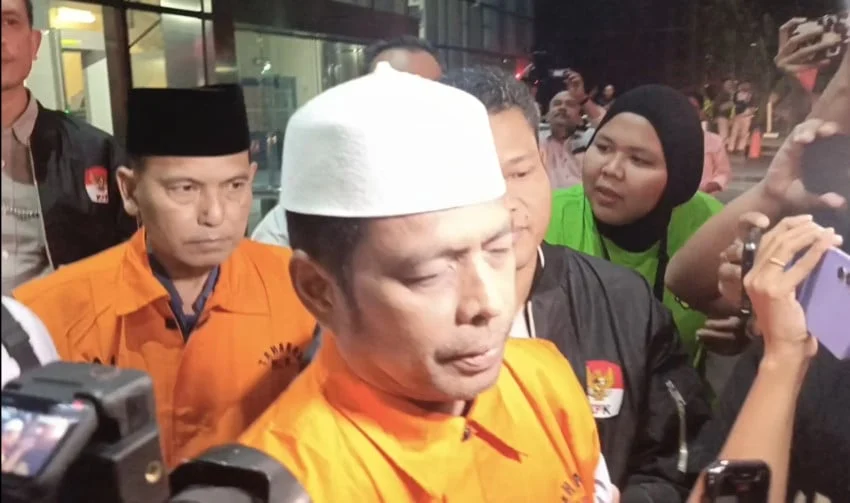
The Corruption Eradication Commission (KPK) has recently taken decisive action, detaining three individuals suspected of involvement in an alleged bribery scheme totaling Rp6.9 billion. This significant development pertains to the manipulation of community grant funds (Pokmas) sourced from the East Java Provincial Budget (APBD) for the fiscal years 2021-2022. The funds were purportedly intended for various community development projects, but investigators allege they were instead used as leverage in a corruption scheme that implicates a current member of the House of Representatives (DPR), identified by the initials AS, who previously served as a member of the East Java Regional House of Representatives (DPRD Jatim). The arrests underscore the KPK’s unwavering commitment to combating corruption, particularly in the allocation of public funds designated for grassroots initiatives, which are often vulnerable to such illicit practices.
The three individuals placed under detention are Achmad Yahya (AY) and M. Fathullah (MF), both private sector individuals hailing from Pasuruan Regency, and Ra. Wahid Ruslan (RWR), also from the private sector, originating from Bangkalan Regency. According to the KPK’s preliminary findings, these three suspects allegedly provided the substantial sum of Rp6.9 billion to AS. The alleged purpose of this considerable payment was to secure preferential access and an advantageous share of the community grant allocations that were under the influence or direct control of AS. These grants, once secured, were then allegedly channeled to specific regions, notably Pasuruan and Bangkalan, where the suspects presumably had vested interests or connections, allowing them to benefit from the misappropriated funds. The details surrounding the alleged transactions and the specific mechanisms through which the funds were diverted form a critical part of the ongoing investigation, as the KPK seeks to fully unravel the intricate web of corruption.
Understanding the Pokmas Grant System and its Vulnerabilities
Community Grant Funds, or "Pokmas" (Kelompok Masyarakat), are a crucial mechanism within Indonesia’s regional budgeting system designed to empower local communities and stimulate grassroots development. These grants typically originate from the provincial or regency/city budgets (APBD) and are allocated to various community groups or organizations for specific projects, ranging from infrastructure improvements like road repairs and irrigation systems to social programs, economic empowerment initiatives, and environmental conservation efforts. The intention behind these grants is noble: to foster participatory development, allow communities to address their most pressing needs, and ensure that public funds directly benefit the populace.
However, the very nature of Pokmas grants, particularly their allocation process, often renders them susceptible to abuse and corruption. Legislators, whether at the provincial (DPRD) or national (DPR) level, frequently act as "aspirators" or facilitators for these grants. This means they propose or champion certain community groups and projects within their constituencies to receive funding, ostensibly based on the needs of their constituents. While this mechanism is designed to connect legislative power with community needs, it can easily be exploited. The discretionary power or influence wielded by legislators over these allocations creates an opportunity for illicit dealings, where funds are siphoned off, or grants are conditioned upon payments or political favors. This vulnerability is often exacerbated by a lack of robust oversight mechanisms, opaque selection processes for recipient groups, and limited accountability once funds are disbursed, making it challenging to track the true beneficiaries and project outcomes. The case involving AS and the three suspects highlights precisely this systemic weakness, where the pursuit of personal gain allegedly overshadowed the intended public good.
A Pattern of Corruption in Regional Grant Allocations
This incident in East Java is not an isolated case but rather indicative of a recurring pattern of corruption in the allocation of regional grants across Indonesia. Over the years, the KPK and other law enforcement agencies have uncovered numerous similar schemes involving provincial and regency/city budgets. East Java, in particular, has seen its share of high-profile corruption cases related to grant funds. Previous investigations have implicated various public officials, including former governors, DPRD members, and even heads of regional work units (SKPDs), in schemes involving the fraudulent channeling or kickbacks from grant allocations. These cases often involve intricate networks of private individuals, civil servants, and legislators collaborating to manipulate the system for personal enrichment.
The modus operandi typically involves legislators using their authority to secure a "quota" or "share" of the grant budget, which they then direct towards specific Pokmas. These Pokmas may either be genuine community groups that are then coerced into paying a "fee" or "cut" to the legislator, or they may be fictitious or shell organizations created solely for the purpose of receiving and laundering the illicit funds. The scale of such corruption can be significant, diverting billions, or even trillions, of rupiah annually from essential public services and development projects. The cumulative effect of such widespread corruption not only depletes public coffers but also erodes public trust in democratic institutions and governance, hindering genuine progress and perpetuating socio-economic disparities. The KPK’s relentless pursuit of these cases, even years after the alleged offenses, demonstrates a long-term commitment to dismantling these corrupt networks.
Chronology of Allegations and Investigation
The alleged bribery scheme is said to have transpired between 2021 and 2022, a period during which the East Java Provincial Budget allocated significant sums for community empowerment initiatives. The timeline of the alleged corruption begins with the legislative process of budget allocation, where AS, then a member of the East Java DPRD, allegedly exerted influence over the distribution of Pokmas grants. It is during this period that Achmad Yahya (AY), M. Fathullah (MF), and Ra. Wahid Ruslan (RWR) purportedly engaged with AS, offering the substantial sum of Rp6.9 billion. This payment was allegedly made with the explicit understanding that AS would facilitate the allocation of a favorable portion of the grant funds to regions and specific Pokmas linked to the three suspects.
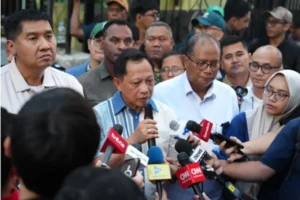
The KPK’s investigation into this complex network likely spanned several months, if not longer, involving meticulous evidence gathering, including financial transaction analysis, witness interviews, and potentially digital forensics. While the exact inception date of the investigation remains undisclosed, the recent detentions signal a mature phase in the KPK’s efforts, indicating that sufficient preliminary evidence has been amassed to warrant the apprehension of the suspects. The announcement of the detentions was made by Plt. Director of Investigation at KPK, Achmad Taufik Husein, during a press conference held recently on Wednesday, July 26, where he outlined the core allegations against the three individuals. He explicitly stated, "Following the grant allocation secured by AS, AY, RWR, and MF orchestrated the conditions to obtain a portion of these funds for their respective regions." This statement provides a critical insight into the alleged operational mechanism of the bribery and fund diversion. The detentions are a critical step in bringing the alleged perpetrators to justice and uncovering the full extent of the scheme.
KPK’s Stance and Legal Framework
The detention of Achmad Yahya, M. Fathullah, and Ra. Wahid Ruslan signifies the KPK’s firm resolve in upholding its mandate to eradicate corruption in Indonesia. As an independent anti-corruption agency, the KPK operates under specific legal frameworks designed to tackle corruption, including Law No. 31 of 1999 as amended by Law No. 20 of 2001 on the Eradication of Criminal Acts of Corruption. This legal framework provides the KPK with broad powers, including investigation, prosecution, and prevention of corruption, and allows for the imposition of severe penalties on those found guilty.
Plt. Director of Investigation Achmad Taufik Husein’s statement during the press conference underscored the gravity of the allegations. The KPK is particularly concerned with cases involving public funds, especially those intended for community development, as their misuse directly impacts the welfare of ordinary citizens. The agency’s approach in this case, by targeting both the alleged bribe-givers and pursuing the alleged bribe-recipient (AS), demonstrates a comprehensive strategy to dismantle corrupt networks from multiple angles. The legal process will now move forward with further investigations, potential indictments, and eventual trials, where the suspects will have the opportunity to present their defense. The KPK’s commitment extends beyond mere arrests, aiming for successful prosecutions and the recovery of state assets lost to corruption. This robust legal framework and the KPK’s diligent enforcement are crucial for fostering a culture of integrity and accountability within public service.
Implications for Public Trust and Regional Development
The alleged bribery scheme in East Java carries significant implications for public trust in government institutions and the integrity of regional development programs. When funds specifically earmarked for community empowerment are diverted through illicit means, it directly undermines the public’s confidence in the fairness and transparency of governance. Citizens, especially those in rural and underserved areas, rely on these grants for vital services and infrastructure. The revelation of such corruption can breed cynicism, discourage public participation in development initiatives, and foster a perception that political power is primarily used for personal gain rather than public service.
Furthermore, the diversion of Rp6.9 billion represents a substantial loss for East Java’s development agenda. These funds could have been utilized for critical projects such as improving educational facilities, enhancing healthcare access, developing local economies through small and medium-sized enterprise support, or implementing environmental sustainability programs. Instead, they were allegedly funneled into private pockets, effectively robbing communities of much-needed resources and hindering their progress. This case serves as a stark reminder of how corruption directly impedes socio-economic development, widens inequality, and perpetuates cycles of poverty in regions that are most dependent on government support. The successful prosecution of such cases is not just about punishing criminals but also about restoring the integrity of public service and ensuring that development funds reach their intended beneficiaries.
Broader Political and Legal Ramifications
The unfolding scandal also has broader political and legal ramifications, particularly concerning AS, the current DPR member allegedly at the center of the bribery scheme. While AS has not been named among the three detained individuals, the allegations against them as the recipient of the Rp6.9 billion bribe place them under intense scrutiny. As a sitting member of the national legislature, any formal charges or conviction against AS would have significant implications for their political career, their party, and the integrity of the DPR itself. Such an event would inevitably trigger calls for accountability, potentially leading to ethical investigations by the DPR’s ethics council and, if warranted, further legal action by the KPK.
The case also highlights the ongoing challenge of maintaining ethical standards within legislative bodies and ensuring that public officials, regardless of their position, are held to the highest standards of integrity. The legal proceedings will not only focus on proving the bribery allegations but also on tracing the flow of the illicit funds, identifying any other individuals involved, and potentially recovering the ill-gotten gains through asset forfeiture. This comprehensive approach is vital for delivering justice and acting as a deterrent against future acts of corruption. The outcome of this case will undoubtedly send a strong message about the perils of misusing public office for personal enrichment and will contribute to the ongoing national effort to foster good governance and a clean bureaucracy in Indonesia.