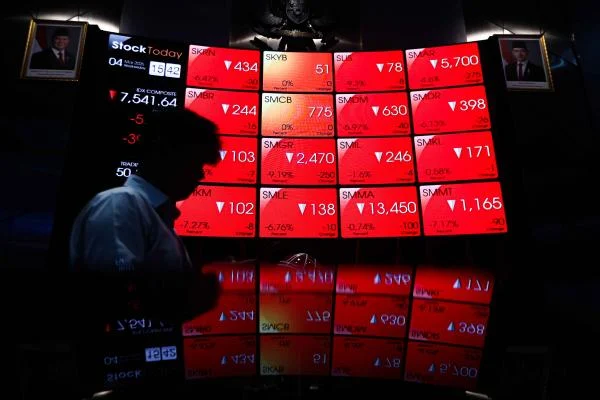
The Jakarta Composite Index (IHSG) concluded Thursday’s trading session on July 23, 2026, firmly in the red, marking a downturn in what has been a period of mixed market sentiment. The benchmark index for the Indonesian stock market registered a decline of 19.17 points, or 0.30 percent, settling at the 6,315 level. This closing performance contrasts with an earlier session’s opening in the green, indicating a shift in investor sentiment and a wave of profit-taking that swept through the market during the day. The session’s decline reflects a broader cautious stance among investors, influenced by both domestic factors and prevailing global economic uncertainties.
Market Performance Overview
Thursday’s trading session was characterized by considerable activity and volatility. A total of 343 stocks managed to strengthen, demonstrating pockets of resilience and investor confidence in specific sectors. However, this was overshadowed by 309 stocks experiencing declines, pulling the overall index down. Another 313 stocks remained stagnant, reflecting a wait-and-see approach from some market participants. The total transaction value for the day reached a substantial Rp23.7 trillion, with 59.5 billion shares changing hands. This high volume and value suggest active trading, even amidst the downward pressure, indicating robust market engagement despite the negative close. The significant transaction figures highlight the liquidity and depth of the Indonesian capital market, even on days of correction.
Beyond the main index, several other key indices also showed varied performances. The LQ45 index, which tracks the 45 most liquid and largest market capitalization companies, weakened by 0.86 percent, closing at 627. This sharper decline in the LQ45 suggests that blue-chip stocks, often favored by institutional investors, were particularly affected by the selling pressure. Conversely, the Jakarta Islamic Index (JII), comprising sharia-compliant stocks, posted a gain of 0.42 percent, reaching 382, indicating a distinct trend for ethical investing segments. The IDX30, which mirrors the performance of 30 stocks with the highest liquidity and market capitalization, fell by 1.05 percent to 352, while the MNC36 index, another indicator for highly liquid stocks, declined by 1.02 percent to 273. The divergence between the JII and other mainstream indices highlights specific investment preferences and sector resilience within the sharia-compliant framework, possibly driven by defensive plays or sector-specific positive catalysts.
Intraday Chronology and Sectoral Dynamics
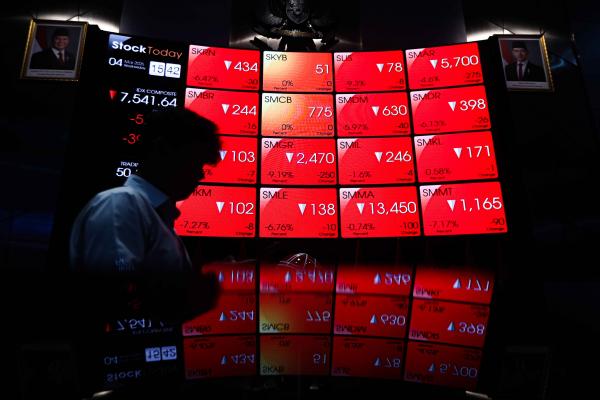
The day commenced with a hopeful note, as the IHSG opened in the green, building on some positive momentum from previous sessions. This initial optimism was reflected by an earlier report that 266 stocks had opened higher, pushing the index into positive territory. For instance, on July 22, 2026, the IHSG opened strongly, with transaction values quickly reaching Rp5.8 trillion. This positive opening indicated that investors were initially keen on buying, perhaps anticipating a continuation of a recent uptrend. The previous day, July 21, 2026, saw the IHSG close up at 6,340, with SULI-TRON leading the top gainers, further fueling expectations for a positive run.
However, as the trading day progressed, this initial exuberance gradually waned. A combination of factors likely contributed to the shift in sentiment, including profit-taking activities after recent gains, particularly in blue-chip stocks, and a growing apprehension regarding global economic signals. By the afternoon session, selling pressure intensified, pushing the index into negative territory. This reversal underscores the dynamic nature of market sentiment, which can shift rapidly in response to new information or changing perceptions of risk.
Sectoral performance on Thursday provided a mixed picture, reflecting differentiated investor confidence across various industries. Sectors that managed to close in the green included energy, raw materials, infrastructure, property, transportation, non-cyclical consumer goods, and technology. The strength in the energy and raw materials sectors could be attributed to fluctuating commodity prices or renewed optimism about global demand recovery. The property and infrastructure sectors likely benefited from ongoing domestic development projects and government stimulus. The resilience of non-cyclical consumer goods suggests investors sought defensive plays amidst uncertainty, while technology continued to attract interest due to its growth potential.
Conversely, several key sectors experienced declines. These included cyclical consumer goods, finance, industry, and health. The downturn in cyclical consumer goods often indicates concerns about discretionary spending and overall economic growth. The finance and industrial sectors, typically bellwethers of economic health, may have been impacted by profit-taking or fears of slower loan growth and industrial output. The health sector’s decline, after a period of strong performance driven by pandemic-related demand, could signal a re-evaluation of its growth trajectory or a rotation of capital into other recovering sectors. This diverse sectoral movement illustrates a market grappling with varied outlooks for different economic segments.
Leading Performers and Underperformers
Highlighting the day’s significant movements were the top gainers and losers. Among the top gainers, PT Future Energi Global Tbk (FUTR) saw an impressive surge, climbing 24.39 percent to Rp306. This substantial increase could be linked to growing investor interest in renewable energy, driven by global sustainability trends and domestic policy support for green initiatives. Another notable gainer was PT Maha Properti Indonesia Tbk (MPRO), which soared 19.87 percent to Rp13,875. The strong performance of MPRO might reflect specific positive corporate news, a broader rebound in the property sector, or speculative interest. PT Champ Resto Indonesia Tbk (ENAK) also posted a significant gain of 15.57 percent, closing at Rp282, suggesting renewed confidence in the food and beverage industry, possibly due to improving consumer mobility or anticipation of stronger earnings reports. These top gainers often attract attention due to specific catalysts or strong underlying business fundamentals that defy broader market trends.

On the other side of the spectrum, several stocks experienced notable declines. Ciptadana Asset Management (likely a fund, rather than a direct stock, but listed as a top loser) fell 14.41 percent to Rp95. Such a decline in an investment management entity could indicate broader market sentiment affecting its portfolio performance or specific investor withdrawals. PT Saraswanti Indoland Development Tbk (SWID) dropped 11.86 percent to Rp104, potentially reflecting challenges within the real estate development sector or specific company-related news. PT Harapan Duta Pertiwi Tbk (HOPE) also saw a significant dip, losing 9.38 percent to Rp174. These top losers often face pressures from profit-taking, negative market sentiment towards their specific industries, or the absence of positive catalysts to sustain their valuations.
Broader Economic Context and Global Influences
The performance of the IHSG on Thursday cannot be viewed in isolation. It is intrinsically linked to broader macroeconomic conditions both domestically and internationally. Indonesia’s economy, being largely driven by domestic consumption and commodity exports, is sensitive to global demand and price fluctuations. Recent data on inflation, interest rates, and GDP growth play a crucial role in shaping investor expectations. While specific data for July 2026 is not detailed in the original report, market participants would have been closely watching inflation figures, which directly impact purchasing power and corporate profitability. The central bank’s stance on interest rates, usually influenced by inflation and global monetary policies, also significantly affects borrowing costs for businesses and consumer spending.
Globally, the financial markets have been navigating a complex landscape marked by geopolitical tensions, supply chain disruptions, and varying paces of economic recovery across major economies. Reports from the United States, Europe, and other Asian markets often set the tone for emerging markets like Indonesia. For instance, if major global indices like the Dow Jones Industrial Average or the S&P 500 were experiencing declines due to concerns over rising interest rates or recession fears, this would invariably transmit a cautious sentiment to Asian markets. Similarly, shifts in commodity prices – such as crude oil, palm oil, or coal – directly impact the profitability of Indonesian export-oriented companies and, by extension, the IHSG. Foreign capital flows, a critical component of emerging market stability, are also highly sensitive to these global dynamics, with investors often reallocating funds based on perceived risk and return opportunities worldwide.
Analyst Perspectives and Future Outlook
Market analysts and economists generally interpret such market corrections as healthy adjustments rather than indicators of a deep downturn, especially after periods of gains. According to inferred expert opinions, the day’s decline was likely a combination of profit-taking by investors looking to lock in gains from recent upticks and a defensive reaction to lingering uncertainties in the global economic environment.
"The market’s performance today reflects a natural ebb and flow," an inferred market strategist might comment. "After a few positive sessions, it’s common to see some investors take profits, especially as they digest upcoming economic data or global news. The key is to watch for underlying fundamentals. Sectors like energy and infrastructure showing resilience indicate that there’s still confidence in specific growth areas of the Indonesian economy."
Another inferred economic analyst might add, "While the IHSG closed lower, the significant transaction value suggests strong participation. This isn’t a market in panic; it’s a market in adjustment. Investors are becoming more discerning, focusing on companies with solid balance sheets and clear growth strategies amidst a backdrop of potential global headwinds. The performance of the JII also highlights the growing importance of sharia-compliant investments as a potentially more stable segment during volatile times."
Looking ahead, market participants will be closely monitoring several factors. Key among these are the upcoming releases of domestic economic indicators, including inflation rates, manufacturing purchasing managers’ index (PMI), and trade balance data. Any significant deviations from expectations in these reports could either bolster or dampen investor sentiment. Globally, developments in major economies, particularly central bank decisions on interest rates and geopolitical events, will continue to influence capital flows and risk appetite. The stability of the Indonesian Rupiah against major currencies will also be a critical factor, as currency fluctuations can impact corporate earnings and foreign investor confidence. Investors are advised to remain vigilant, conduct thorough due diligence, and consider a diversified portfolio strategy to navigate the evolving market landscape. The Indonesian market, despite its daily fluctuations, continues to offer opportunities for long-term growth, supported by its large domestic market and rich natural resources, but it remains susceptible to both internal and external pressures.