Apple Inc. has officially introduced its flagship smartphone lineup for the upcoming cycle, unveiling the iPhone 18 Pro and iPhone 18 Pro Max during a high-profile global launch event held at Apple Park in Cupertino, California. Breaking from its traditional product introduction schedule, the technology giant chose to debut its premium tier devices ahead of the standard iPhone 18 models, which industry analysts project will enter the market in subsequent years. The announcement immediately captured the attention of the global technology sector, driven by major hardware breakthroughs, including variable aperture camera technology, the debut of a 2-nanometer processor, historic battery longevity gains, and deeply integrated artificial intelligence capabilities.
Global Launch Timeline and Availability
The launch event, broadcast worldwide from the Steve Jobs Theater, set in motion a tightly coordinated commercial rollout. Pre-orders for both the iPhone 18 Pro and the larger iPhone 18 Pro Max officially opened to consumers on September 12, with the initial wave of retail availability beginning on September 18 across key international markets and regional territories.
For the US market, Apple announced pricing structures that position the devices competitively within the ultra-premium category. The iPhone 18 Pro starts at $1,199, while the iPhone 18 Pro Max carries a starting price of $1,299. Notably, both devices abandon lower storage tiers, commencing their respective lineups at a generous 256GB baseline capacity. This strategic shift reflects the growing data storage demands of modern mobile computing, high-resolution photography, and on-device machine learning models.
Groundbreaking Camera Architecture: The Introduction of Variable Aperture
The most substantial hardware evolution in the iPhone 18 Pro series centers on its upgraded imaging system, anchored by a newly engineered 48-megapixel Fusion primary camera. For the first time in the history of the iPhone lineup, Apple has incorporated a variable aperture mechanism into its main smartphone lens.
This mechanical advancement gives users unprecedented physical control over light entry, offering selectable aperture stops at f/1.48, f/1.8, f/2.8, and f/4.0. By manipulating the physical size of the opening, mobile photographers can directly manage exposure levels across widely varying lighting conditions while exercising precise command over the optical depth of field. This reduces the heavy reliance on computational algorithms for background separation and background blur, delivering a more natural photographic quality traditionally reserved for dedicated mirrorless and DSLR cameras.
Complementing the variable aperture main sensor, Apple has introduced native professional-grade manual controls directly within the stock Camera application. Users can now fine-tune shutter speed, white balance, and aperture parameters in real-time, catering directly to content creators and mobile photography enthusiasts who demand granular control without installing third-party software.
The optical suite is further bolstered by enhancements tailored for low-light environments. The physical flexibility of the variable aperture, paired with the larger Fusion Ultra Wide and 48-megapixel Fusion Telephoto lenses, yields significant gains in signal-to-noise ratio and detail retention during nighttime or indoor shooting. Furthermore, videographers gain the ability to capture 4K time-lapse recordings rendered in Dolby Vision HDR, preserving dynamic range and tonal accuracy during extended capture sessions of dynamic landscapes or urban environments.
Unprecedented Processing Power: The 2-Nanometer A20 Pro Chip
Underneath the titanium chassis, the iPhone 18 Pro and Pro Max house Apple’s next-generation silicon: the A20 Pro chip. Manufactured using an advanced 2-nanometer fabrication process, this processor represents a monumental leap in transistor density and energy efficiency.
To sustain peak computational output during prolonged workloads—such as complex ray-traced gaming, professional video rendering, and heavy on-device artificial intelligence processing—Apple has integrated a redesigned vapor chamber thermal architecture. This active and passive cooling system dissipates heat far more efficiently than previous graphite or foil configurations, ensuring sustained performance without thermal throttling.
Refined Design and Enhanced Display Real Estate
Aesthetically, Apple has refined its design language by trimming the physical footprint of the Dynamic Island. While occupying less physical screen space, the interface has been upgraded to support up to three simultaneous Live Activities, allowing users to track multiple ongoing processes—such as ride-sharing, sports scores, and food delivery timers—at a glance.
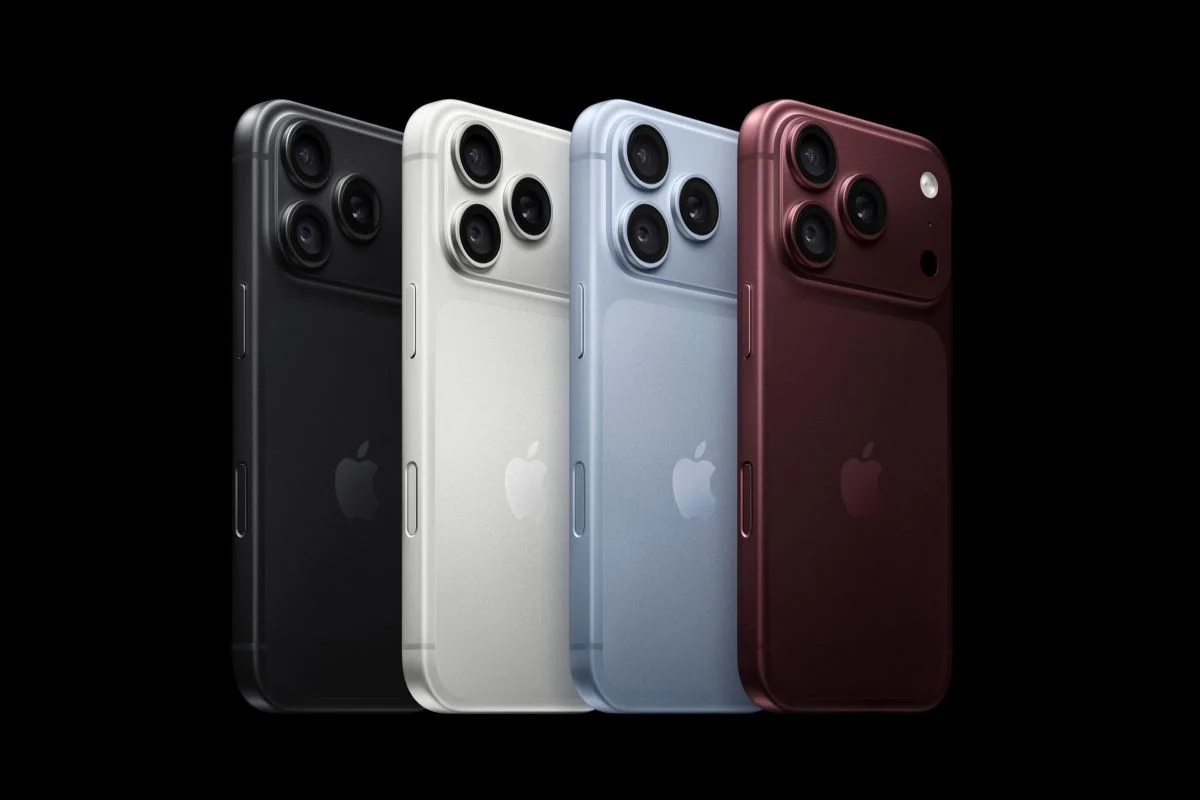
The device’s exterior finish is available in four distinct colorways: Classic Black, Silver, Glacier, and a striking new deep Burgundy tone. The chassis features color-matched framing that creates a seamless visual transition between the aerospace-grade metal sides and the textured matte glass back panel.
Historic Battery Longevity and Storage Expansion
Battery performance has historically been a primary purchase driver for consumers evaluating ultra-premium smartphones, and the iPhone 18 Pro Max establishes a new benchmark for the industry. Driven by the extreme energy efficiency of the 2-nanometer A20 Pro chip and optimized power management systems within iOS, the iPhone 18 Pro Max delivers up to 45 hours of continuous video playback. This figure represents the longest battery lifespan ever recorded in an iPhone, effectively addressing the power demands of modern 5G connectivity and continuous background AI processing. Additionally, wired fast-charging protocols have been accelerated, minimizing downtime when replenishment is required.
For power users, professionals, and enterprise clients requiring massive local archives, the lineup introduces storage configurations scaling up to 2 terabytes (2TB). Consumers can select from 256GB, 512GB, 1TB, and 2TB options, ensuring ample room for raw video files, lossless audio libraries, and expansive offline application databases.
Software Integration: iOS 27 and Next-Generation Siri AI
The hardware advancements of the iPhone 18 Pro series are harmonized by the debut of iOS 27, which introduces the most advanced iteration of Apple Intelligence to date. At the forefront of this software suite is an overhauled, highly contextual Siri AI.
Unlike previous voice assistants, the new Siri is deeply integrated into the operating system’s semantic index. It analyzes contextual cues drawn seamlessly from incoming messages, emails, photo metadata, and real-time screen content to anticipate user needs and execute complex multi-step tasks autonomously. By processing these requests primarily on-device via the Neural Engine embedded in the A20 Pro, Apple reinforces its commitment to user data privacy while delivering instantaneous response times.
Market Implications and Industry Analysis
Industry observers note that the strategic decision to lead with the Pro tier highlights Apple’s confidence in its high-end consumer base, who have increasingly favored premium models over standard variants in recent years. By introducing transformative upgrades—such as the mechanical variable aperture, 2nm processing architecture, and record-breaking battery life—Apple is attempting to widen the technological gap between standard smartphones and professional-grade mobile computing devices.
As pre-orders process and initial units reach consumers globally, the iPhone 18 Pro and Pro Max are positioned to dictate competitive standards across the high-end mobile sector throughout the remainder of the decade.