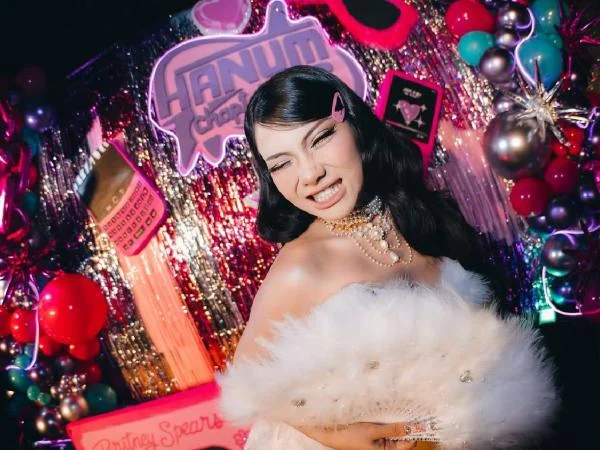
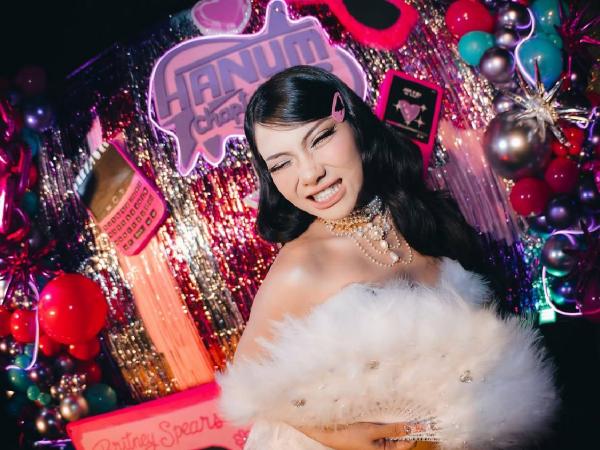
Popular Indonesian influencer Hanum Mega has found herself at the center of a public firestorm following a lavish birthday celebration held at the prestigious Gelora Bung Karno (GBK) Main Stadium complex in Jakarta on Sunday, September 20, 2026. The extravagant event, characterized by grand decorations, extensive catering, and a high-profile guest list, quickly drew the ire of social media users. Critics branded the celebration as "tone-deaf," arguing that such ostentatious displays of wealth are insensitive given the current economic climate and financial hardships faced by many citizens.
The backlash highlights a growing tension between public figures and their audiences in the digital age, where displays of immense wealth during times of economic uncertainty frequently invite intense scrutiny. As public dissatisfaction mounted across various social media platforms, Hanum Mega broke her silence, pushing back fiercely against the criticisms and defending the economic rationale behind her grand celebration.
The Chronology of the Controversy and Social Media Backlash
The controversy began shortly after the conclusion of Hanum Mega’s birthday party on September 20, 2026. Attendees and the influencer herself shared numerous photos and videos of the event on platforms such as Instagram, TikTok, and X (formerly Twitter). The scale of the party, set against the backdrop of one of Indonesia’s most iconic national landmarks, immediately caught the public’s attention.
While supporters initially flooded her comment sections with congratulatory messages and well-wishes, a counter-narrative quickly gained momentum. Netizens began pointing out the stark contrast between the multi-million rupiah festivities and the broader economic challenges impacting ordinary Indonesians, including inflation, shifting job markets, and rising costs of living. Critics utilized the phrase "in this economy" to describe the celebration as out-of-touch and overly indulgent.
By Monday, September 21, 2026, the topic was trending across multiple social media networks, transforming what was meant to be a private celebration into a wider public debate regarding the social responsibilities of prominent digital creators and influencers.
Hanum Mega’s Defiant Response to Critics
Facing mounting accusations of being insensitive to the economic struggles of the everyday public, Hanum Mega issued a sharp and uncompromising response on Tuesday, September 22, 2026. Rather than issuing a standard celebrity apology or downplaying the scale of the event, the influencer confronted her critics directly.
Hanum argued that the framing of her birthday party as a purely self-indulgent exercise was fundamentally flawed. She emphasized that the planning and execution of the event required the services of a massive network of small-to-medium enterprises, independent contractors, and event production workers. According to the influencer, more than 50 distinct vendors were directly involved in bringing the celebration to life, ranging from decorators and caterers to technical crew and entertainment providers.
"I organized an event like this, and more than 50 vendors participated in the production that I created," Hanum stated in her response, defending the commercial activity generated by her party.
She further criticized her detractors for overlooking the financial ripple effects of such large-scale private events on the local creative and service economy, asserting that the commercial injection provided direct livelihoods to dozens of businesses and their employees. In a particularly blunt follow-up remark aimed at silencing online detractors, she added dismissively, "I don’t need to explain what they received; your brains wouldn’t be able to process it. There’s no need to hide behind the phrase ‘in this economy’."
To substantiate her claims, Hanum subsequently published a comprehensive list of the vendors and businesses contracted for the celebration. By highlighting the operational scale of the event, she aimed to reframe the narrative from an extravagant personal display to a commercially productive enterprise that supported local workers and event-industry professionals.
The Broader Socio-Economic Context of Influencer Culture in Indonesia

The backlash faced by Hanum Mega is not an isolated incident within the broader ecosystem of Indonesian influencer culture. In recent years, as the digital creator economy has matured into a multi-billion rupiah industry, prominent influencers have frequently faced public scrutiny over their lifestyles and spending habits.
Economic analysts note that public sensitivity toward displays of wealth has heightened amid global economic fluctuations and local financial pressures. When public figures showcase high-end lifestyles, luxury goods, or expensive events, they often walk a fine line between inspirational content and perceived alienation from their follower base, the majority of whom may be navigating tight household budgets.
However, defenders of the influencer economy often align with Hanum’s perspective, pointing out that high-net-worth individuals and digital creators serve as vital economic drivers for the service, hospitality, and event-planning sectors. Private spending by public figures trickles down to countless independent workers, makeup artists, lighting technicians, caterers, and venue operators who rely heavily on large-scale events for their income.
The Economic Ripple Effect: Analyzing the Vendor Argument
Hanum Mega’s defense raises a complex question often debated by economists and cultural critics alike: Do lavish private events contribute positively to the economy, or do they exacerbate social inequality through visible consumption?
Event management and creative industry associations have often highlighted that private celebrations, product launches, and influencer gatherings provide critical cash flow to an industry that was severely impacted by the economic disruptions of recent years. When an influencer hires over 50 vendors for a single birthday celebration, the capital expenditure filters directly into the grassroots economy. This includes payments to florists, logistics providers, culinary staff, audiovisual technicians, and fashion designers.
From a microeconomic standpoint, proponents argue that such spending functions similarly to a stimulus package for specific creative sub-sectors, ensuring that small business owners and freelancers maintain a steady stream of contracts.

Conversely, sociologists point out that while the financial mechanism does distribute funds to participating vendors, the visual optics of extreme wealth concentration in public spaces can alienate the broader public. The friction lies in the perception of excess versus the underlying economic utility—a paradox that digital creators continue to navigate as their personal brands grow alongside their financial success.
Implications for Digital Creators and Public Relations Management
The controversy surrounding Hanum Mega’s GBK birthday bash underscores the evolving challenges of reputation management in the era of social media. For influencers and celebrities, public relations crises can erupt rapidly, fueled by real-time commentary and collective social outrage.
Historically, standard crisis management in the entertainment industry involved issuing formal, conciliatory apologies to appease the public and de-escalate tensions. However, Hanum Mega’s approach reflects a modern shift among digital-native personalities who often choose direct confrontation and counter-argumentation over traditional public relations diplomacy. By leaning into the specifics of her spending—namely, job creation and vendor support—she attempted to anchor her defense in tangible economic contributions rather than emotional appeals.
Industry experts observe that while aggressive pushback may alienate a segment of the casual audience, it often solidifies loyalty among core supporters who appreciate authenticity and unvarnished reactions. Nevertheless, the incident serves as a cautionary case study for high-profile creators regarding the delicate balance between personal celebration and public perception.
As the digital economy continues to expand in Indonesia, the intersection of wealth, visibility, and social responsibility will remain a heavily scrutinized terrain. Creators with massive followings will increasingly find their private milestones subjected to public policy-style debates on economic equity, forcing them to weigh the scale of their celebrations against the potential societal reactions in an interconnected digital world.