The Indonesian National Board for Disaster Management (BNPB) has officially reported a significant surge in forest and land fires (karhutla) across four provinces, with at least 62 hectares of land decimated within a critical 24-hour window between September 26 and September 27, 2026. This alarming escalation of environmental hazards highlights the persistent vulnerability of Indonesia’s diverse landscapes to fire-related disasters, even outside of the traditionally peak dry season months. The affected regions span across Sulawesi Tengah, Sulawesi Selatan, Bali, and East Java, prompting immediate emergency response efforts from local authorities and disaster mitigation agencies.
Chronology of the Incident and Regional Impact
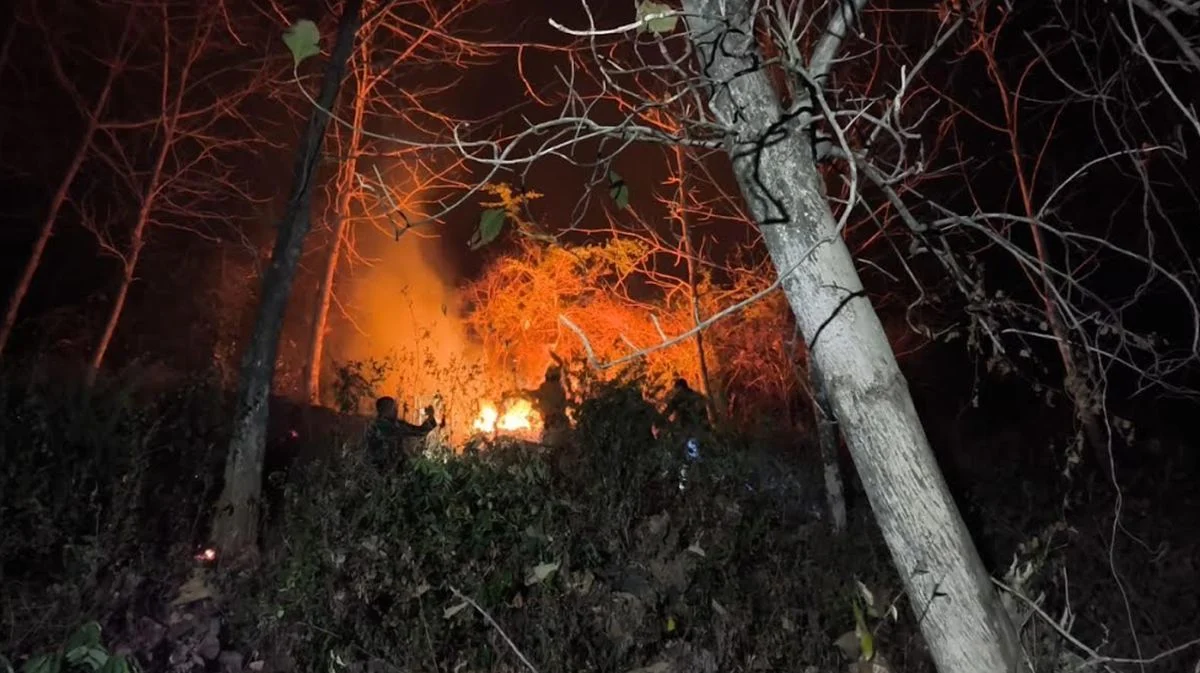
The rapid succession of fire incidents began in the early hours of September 26. According to the official report provided by the Acting Head of the BNPB Center for Disaster Data, Information, and Communication, Berton SP Panjaitan, the first blaze was detected at 01:00 WITA in Wanamukti Utara Village, Bolano District, Parigi Moutong Regency, Central Sulawesi. This initial incident resulted in the loss of three hectares of land. While the exact cause remains under investigation, the proximity to residential areas necessitated swift action from the Regional Disaster Management Agency (BPBD) of Parigi Moutong, which coordinated with local village and district officials to execute fire suppression tactics and create firebreaks to prevent the blaze from encroaching further into inhabited zones.
Shortly thereafter, a more severe incident was reported in Pinrang Regency, South Sulawesi. In Malimpung Village, located within the Patampanua District, a massive fire scorched 20 hectares of land. Although local authorities confirmed that there were no fatalities or injuries reported during the suppression operations, the sheer scale of the fire in Pinrang underscored the volatility of the dry brush in the region. BPBD Pinrang mobilized a joint task force to conduct rapid assessments and implement fire containment measures to mitigate the environmental fallout.
Expanding Scope of Environmental Vulnerability
While the primary reports focused on Sulawesi, the national monitoring grid indicated that the cumulative impact reached 62 hectares, with additional incidents noted in Bali and East Java. These fires, occurring simultaneously across geographically dispersed provinces, highlight a systemic challenge in land management and environmental protection.
The recurrence of forest and land fires in Indonesia is historically linked to a combination of climatic factors and human-induced activities. Even when the El Niño Southern Oscillation (ENSO) is not in a peak cycle, localized drought conditions—exacerbated by rising temperatures—create a landscape highly susceptible to ignition. Agricultural practices, such as land clearing for smallholder farming, often serve as the primary catalyst for these incidents, particularly when fires are left unattended or burn out of control due to prevailing winds and dry foliage.
Operational Challenges and Official Responses
BNPB’s response strategy has evolved to prioritize decentralized action through BPBDs. In the instances reported this weekend, the emphasis was placed on "fire containment and prevention of societal impact." This strategy involves not only the physical suppression of flames—utilizing water hoses, heavy machinery for firebreaks, and occasionally aerial surveillance—but also the proactive protection of public infrastructure and residential settlements.
Berton SP Panjaitan emphasized that while the fires are being addressed locally, the national government maintains a high-alert status. "The coordination between the local government, the community, and the emergency response units is vital to ensuring that these fires do not become catastrophic in scale," stated the report. The ongoing investigations into the causes of these specific fires are expected to provide insights into whether the incidents were purely accidental or resulted from negligence.
Socio-Economic and Ecological Implications
The implications of 62 hectares of forest and land burning within a single day are multifaceted. Ecologically, such fires contribute to the degradation of local biodiversity, the destruction of carbon sinks, and the potential for long-term soil erosion. Economically, the loss of agricultural land—even if small-scale—can disrupt local food security and household livelihoods.

Furthermore, the issue of smoke and air quality management remains a top priority. While these recent incidents have not yet resulted in widespread transboundary haze, they pose an immediate risk to the health of local populations. Respiratory issues, particularly among children and the elderly, are frequent byproducts of such fires, necessitating increased monitoring of air quality indices in the affected districts of Parigi Moutong and Pinrang, as well as the yet-to-be-disclosed specific locations in Bali and East Java.
The Broader Context of Fire Mitigation in Indonesia
Indonesia has made significant strides in reducing the frequency and intensity of forest fires over the past decade through stringent regulatory frameworks, such as the moratorium on new clearing of primary forests and peatlands. However, the 2026 incidents serve as a sobering reminder that the threat remains persistent.
Experts in disaster management often point to the "Human-Environment Interface" as the most critical factor in fire control. As population pressure grows and land usage shifts, the friction between traditional agricultural methods and modern conservation policies creates a complex environment. The government’s current approach, which blends law enforcement, community-led fire prevention programs, and rapid response deployment, is designed to address this. However, the effectiveness of these policies hinges on the speed of reporting and the readiness of local equipment.
Future Projections and Preventive Strategies
As the nation navigates the remainder of the year, meteorological agencies are closely monitoring rainfall patterns. Climate variability often dictates the intensity of the fire season. With the current incidents occurring in late September, the transition period between the dry and wet seasons remains a high-risk window where localized drying can still occur despite intermittent rainfall.
Moving forward, the Indonesian government is expected to continue its investment in remote sensing technology. Satellite monitoring, which allows for the real-time detection of thermal hotspots, has been a game-changer for early intervention. By integrating satellite data with ground-level intelligence, authorities can mobilize fire suppression units before small fires evolve into large-scale disasters.
Moreover, the role of public awareness cannot be overstated. Public education campaigns aimed at discouraging the use of fire as a tool for land clearing are continuous. The social cost of these fires—ranging from the cost of emergency mobilization to the medical costs associated with respiratory illnesses—far outweighs the short-term convenience of burning for land conversion.
Conclusion
The events of September 26–27, 2026, involving the destruction of 62 hectares of land, serve as a critical alert for provincial and district authorities across the archipelago. While the immediate danger in the affected areas of Sulawesi, Bali, and East Java appears to be under control through the efforts of the BPBDs, the underlying causes of these fires require sustained attention.
As Indonesia continues to balance economic development with environmental stewardship, the capacity to prevent and manage forest and land fires will remain a hallmark of effective governance. The rapid deployment of resources and the seamless coordination demonstrated by the BNPB and local agencies in this instance reflect a maturing emergency response system. Nevertheless, the goal remains the same: a significant reduction in the number of fire incidents through rigorous prevention, community engagement, and the enforcement of sustainable land-use practices. The nation remains on watch, cognizant that the fight against forest fires is an ongoing battle that requires vigilance at every level of society.