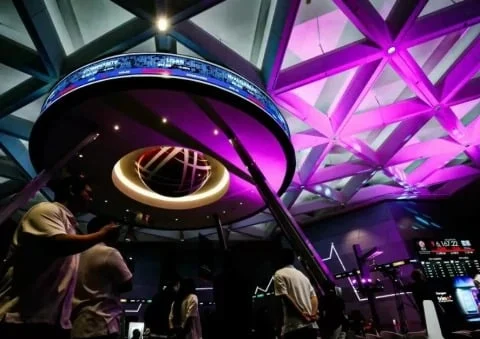
The Jakarta Composite Index (IHSG) is bracing for a challenging start to the trading week this Monday, September 28, 2026, as market participants grapple with lingering downward pressure and a significant shift in trading regulations. Analysts suggest that the index remains in a state of consolidation, with technical indicators pointing toward further potential corrections as the market absorbs the implications of the Indonesia Stock Exchange’s (IDX) latest policy adjustments.
Technical Outlook and Market Sentiment
Head of Research at MNC Sekuritas, Herditya Wicaksana, highlighted that the index is likely to face a testing period during the early session. According to his technical analysis, the IHSG is currently positioned in a precarious zone. "We anticipate that the IHSG remains vulnerable to further corrections on Monday, with support levels identified at 6,186 and resistance levels capped at 6,297," Wicaksana stated on Sunday.
The sentiment among institutional investors remains cautious, fueled by persistent net selling pressure, particularly from foreign investors who have been reducing their exposure to emerging markets amidst global macroeconomic uncertainty. The technical outlook suggests that if the index fails to hold the 6,186 support level, it may trigger a broader wave of selling, forcing investors to reassess their positions in the short term.
The Catalyst: Minimum Share Price Policy
A primary focal point for traders this week is the implementation of the new minimum share price policy, which allows stocks to trade at a floor of Rp1, down from the previous long-standing limit of Rp50. This policy, designed to streamline the market and enhance liquidity, has introduced a new layer of complexity to the trading environment.
For years, stocks hovering at the "gocap" level (Rp50) were essentially stagnant, trapped by the minimum price rule. By allowing these stocks to trade at a lower price point, the exchange aims to provide a more accurate valuation based on market supply and demand. However, this shift comes with significant trade-offs. While it opens the door for increased volume in previously illiquid stocks, it also introduces heightened volatility. Analysts warn that the ability for prices to move in smaller increments could lead to rapid price swings, potentially catching retail investors off guard.
Chronology of Recent Market Volatility
The pressure observed at the start of this week is not an isolated event but rather a continuation of a downward trend that intensified throughout the previous week. Between September 21 and September 25, 2026, the Indonesian capital market experienced a notable contraction.
- September 21, 2026: Markets opened the week with cautious optimism, but macroeconomic concerns began to weigh on sentiment.
- September 23, 2026: Mid-week trading saw a surge in foreign capital outflows, leading to a break below key psychological support levels.
- September 25, 2026: The week concluded on a sour note, with the IHSG closing at 6,241.25, marking a cumulative weekly decline of 3.09 percent.
- Total Impact: By the close of the week, the total market capitalization of the IDX had been eroded by approximately Rp361 trillion, reflecting widespread investor risk-off behavior.
This period of turbulence has forced a re-evaluation of portfolios across the board. Many investors have opted to move their capital into safer assets, or cash, while waiting for the volatility surrounding the new pricing mechanism to stabilize.
Economic Context and Structural Adjustments
The decision to lower the minimum share price is part of a broader, multi-year strategy by the Indonesia Stock Exchange to modernize its trading architecture. By aligning with international standards and promoting deeper liquidity, the IDX hopes to attract more diverse participants to the market.
However, the transition phase is often characterized by uncertainty. For small-cap stocks, the removal of the Rp50 floor means that price discovery will be more aggressive. Market participants are advised to be prepared for sudden adjustments in share prices, which may force many to trigger "cut-loss" orders to preserve capital. The increased flexibility of price movement, while theoretically beneficial for market efficiency, requires a more sophisticated approach to risk management.
The Role of Foreign Investors
Foreign institutional investors have played a significant role in the recent dip. Emerging market equities have faced headwinds globally due to fluctuating interest rate environments and shifting geopolitical dynamics. In the Indonesian context, foreign net selling has acted as a persistent drag on the IHSG.
When foreign investors pull capital from the Indonesian market, it creates a ripple effect. Domestic retail investors, who have been a pillar of strength for the IHSG in recent years, often find themselves forced to absorb the selling pressure. If this trend continues, the index may find it difficult to regain its footing in the short term, regardless of individual stock performance.
Implications for Investor Strategy
For the retail investor, the current market climate requires a disciplined strategy. Experts suggest focusing on companies with strong fundamentals and solid cash flows, which are better equipped to withstand periods of market correction.
"Investors must remain vigilant," Wicaksana added. "The change in the pricing structure implies that market participants need to adjust their stop-loss strategies. The old rule of thumb—where a stock couldn’t drop below Rp50—is gone, meaning that capital preservation must become a higher priority than ever before."
Key strategies for the current week include:
- Monitoring Liquidity: Watch for stocks that are seeing increased volume as they adjust to the new price floors.
- Risk Management: Revisit portfolio diversification to ensure that exposure to highly volatile, speculative stocks is kept to a minimum.
- Technical Vigilance: Keep a close watch on the 6,186 support level. A decisive break below this mark could signal a deeper correction phase.
Broader Implications for the IDX
The Indonesian capital market is currently in a transformative phase. While the current volatility is concerning, proponents of the new policy argue that it is a "growing pain" necessary for the long-term health of the exchange. By allowing the market to set prices more freely, the IDX is moving toward a more transparent and efficient price discovery mechanism.
Furthermore, the integration of new trading technologies and the ongoing efforts to enhance corporate governance standards among listed companies are expected to provide a buffer against future shocks. Despite the current dip of 3.09 percent over the past week, the long-term outlook for the Indonesian economy remains supported by strong domestic consumption and infrastructure development.
Conclusion
As the trading week unfolds, all eyes will be on how the market digests the new minimum price rule and whether the IHSG can find the necessary momentum to reverse its downward trajectory. With the index hovering near critical support levels, the coming days will be vital in determining the market’s direction for the remainder of the quarter.
The confluence of regulatory change, foreign capital outflows, and technical exhaustion creates a challenging environment. However, for the astute investor, this period of correction also provides an opportunity to reassess positions and identify high-value stocks that may have been oversold in the broader market panic. As always, market participants are encouraged to maintain a long-term perspective and avoid reactive trading based on short-term volatility. The Indonesia Stock Exchange continues to evolve, and while the path forward may involve significant turbulence, the structural improvements being implemented are designed to build a more resilient and dynamic market for the future.