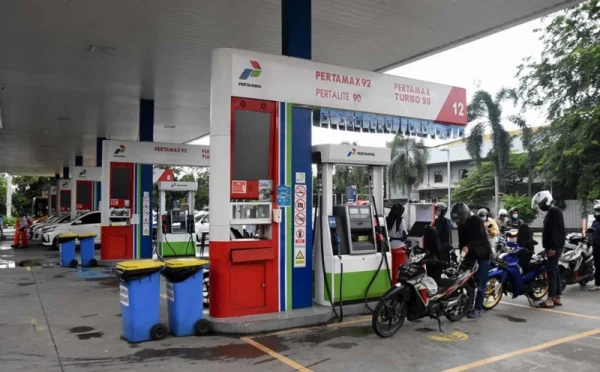
The Ministry of Energy and Mineral Resources (ESDM) has officially refuted circulating reports alleging that the retail price of Pertalite, Indonesia’s most widely consumed subsidized gasoline, would increase from Rp10,000 to Rp13,500 per liter effective September 26, 2026. This clarification comes in response to a surge of unverified content proliferating across various social media platforms, which has caused public anxiety regarding potential inflationary pressures on household budgets.
Dwi Anggia, the official spokesperson for the Ministry of ESDM, stated unequivocally that the information is entirely fabricated. "It is necessary for us to clarify the situation, as there has been a massive influx of social media content claiming a hike in Pertalite prices. We categorize this information as a hoax or deliberately misleading misinformation," Anggia noted in a formal statement issued on Saturday morning.
The Context of Global Energy Volatility
The confusion surrounding domestic fuel prices is largely rooted in the heightened volatility of global crude oil markets throughout 2026. Geopolitical tensions in major oil-producing regions and fluctuating production quotas set by OPEC+ have kept global energy markets in a state of flux. Historically, whenever international benchmarks such as Brent or West Texas Intermediate (WTI) experience sustained upward momentum, public speculation regarding a domestic subsidy adjustment inevitably follows.
Despite these global pressures, the Indonesian government has maintained a consistent policy stance. Minister of Energy and Mineral Resources Bahlil Lahadalia has repeatedly emphasized that the government is committed to shielding the domestic economy from the immediate shocks of international energy price spikes. According to the Ministry, the current retail price structure for Pertalite is a strategic fiscal decision intended to sustain the purchasing power of the lower-to-middle-income segments of the population, in alignment with the directive issued by President Prabowo Subianto.
Chronology of Misinformation
The digital campaign suggesting a price hike began gaining traction on social media platforms in the late hours of September 25, 2026. The posts, which utilized sophisticated editing to mimic the visual style of official government announcements, claimed that a cabinet-level decision had been finalized to adjust fuel subsidies to mitigate the state budget’s burden.
By the early morning of September 26, the rumors had reached a critical mass, prompting the Ministry of ESDM to mobilize its communication team to issue a swift correction. This incident highlights the growing challenges faced by government agencies in the digital age, where the rapid dissemination of false information can create immediate, albeit unfounded, market panic and social instability.
Government Policy and Fiscal Sustainability
The Indonesian government currently operates under a subsidy regime that allocates a significant portion of the State Revenue and Expenditure Budget (APBN) to keep energy prices affordable. Pertalite, classified as a "Special Assignment Fuel" (JBKP), is subject to price caps enforced by the government.
For the fiscal year 2026, the government has maintained a policy of price stability. Minister Bahlil Lahadalia has affirmed that the government’s commitment to keeping Pertalite prices at Rp10,000 per liter will remain in effect until the end of the year, regardless of the fluctuations seen in the international market. This decision is underpinned by a dual-track strategy: maintaining social welfare through subsidies while simultaneously exploring more efficient distribution mechanisms, such as the digital registration system for subsidized fuel users to ensure that benefits are received by those who are truly eligible.

Economic Implications of Fuel Subsidies
Fuel subsidies are a double-edged sword for the Indonesian economy. On one hand, they act as a vital buffer, preventing cost-push inflation that could severely impact the logistics sector, food prices, and public transportation. On the other hand, heavy reliance on subsidies places a significant strain on the national budget, potentially diverting funds from infrastructure development, education, and healthcare.
Economists observing the current landscape suggest that while the government’s decision to maintain the current price is beneficial for short-term consumption stability, it requires a robust fiscal management plan to offset the growing price gap between the market rate and the subsidized rate. Should the global price of crude oil continue to rise, the fiscal burden of maintaining the current subsidy level will inevitably become a subject of intense debate during future budget discussions.
The Role of Digital Literacy
The Ministry of ESDM has urged the public to exercise caution and prioritize information sourced from official government channels, such as the ministry’s official website and verified social media accounts. The proliferation of this particular hoax underscores a broader concern regarding digital literacy in Indonesia.
"We urge the public to be more discerning and not be easily provoked by information that has not been verified. Official policy changes regarding fuel prices are always announced through formal press conferences and official ministry documentation, not through viral images or unverified social media posts," Dwi Anggia added.
Analysis of Energy Security
Beyond the immediate price of Pertalite, the incident reflects the broader strategic challenge of ensuring energy security in a nation with a large, geographically dispersed population. As Indonesia transitions toward more sustainable energy sources, the management of fossil fuel subsidies remains a critical bridge policy.
The government’s decision to freeze the price of Pertalite at Rp10,000 for the remainder of 2026 suggests that policymakers prioritize social stability during the current economic cycle. However, long-term projections indicate that as the global energy transition accelerates, the necessity for a gradual reduction in fuel subsidies will likely be revisited in future legislative sessions, albeit with a focus on targeted social safety nets rather than blanket price hikes.
Conclusion and Future Outlook
As of September 26, 2026, the government remains firm in its commitment to the current fuel pricing structure. There are no pending cabinet decrees or administrative adjustments that would shift the price of Pertalite to Rp13,500.
For the Indonesian public, the primary takeaway from this incident is the importance of verifying information before participating in its dissemination. As the government continues to navigate the complexities of global energy markets, transparency and clear communication remain the most effective tools against the spread of misinformation. The Ministry of ESDM continues to monitor the situation and has indicated that it will take further measures to ensure that the public is not misled by unauthorized actors attempting to manipulate market sentiment through disinformation.
Moving forward, the stability of Indonesia’s energy sector will rely on the delicate balance between managing the fiscal impact of subsidies and supporting the economic recovery of the general population. While the rumors of a price hike have been successfully quelled, the underlying necessity for a transparent and predictable energy policy remains a cornerstone of the national discourse, essential for maintaining public trust and economic equilibrium in the coming months.