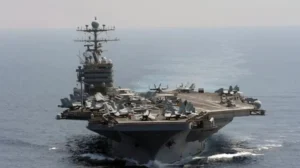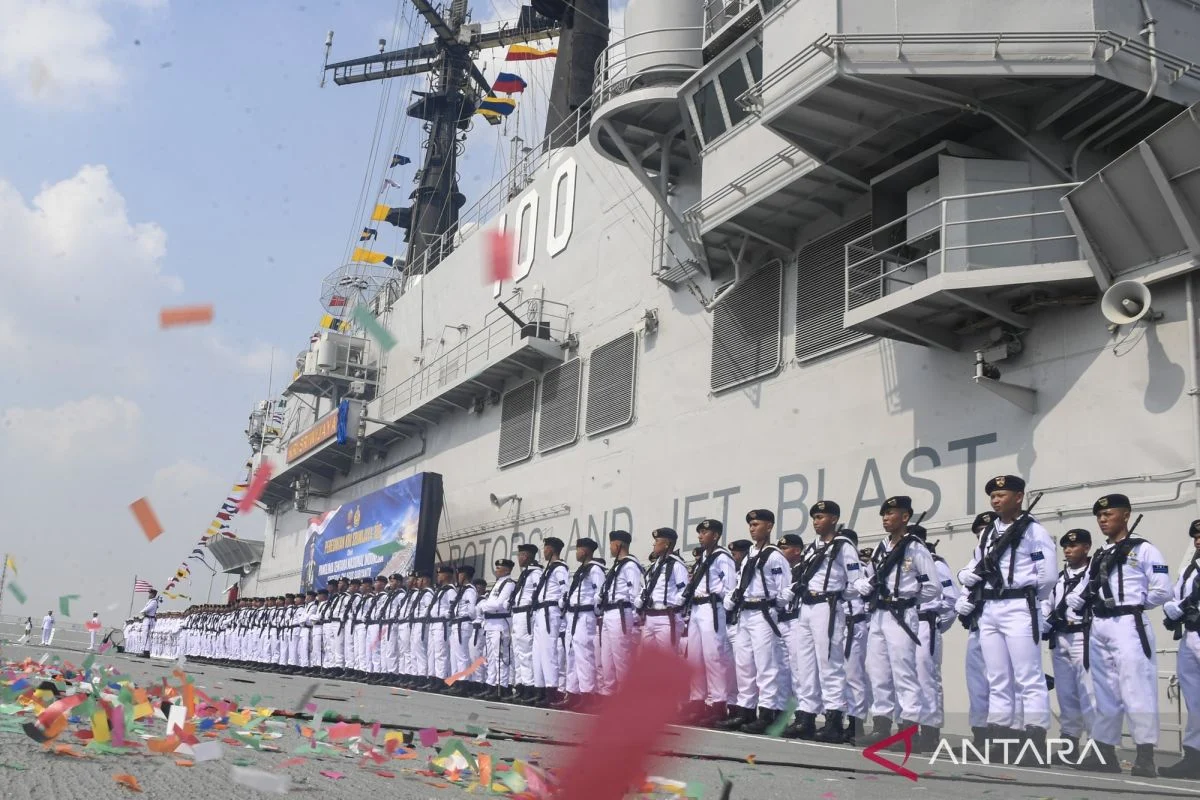
The arrival of the former ITS Giuseppe Garibaldi at Pier 107 of Tanjung Priok Port, North Jakarta, on Friday, September 18, 2026, signals a transformative moment for the Indonesian Navy (TNI AL). As the vessel prepares to be rechristened as KRI Sriwijaya, it stands as the first aircraft carrier in the nation’s history, marking a significant shift in regional power projection and maritime logistical capabilities. This acquisition, facilitated through a strategic defense cooperation agreement with the Italian government, places Indonesia among the select few nations in the Indo-Pacific capable of operating a mobile naval aviation platform.
The transfer of the vessel, which previously served as the flagship of the Italian Navy under the hull number C551, is the culmination of years of diplomatic negotiation and technical assessment. The formal handover ceremony, which will include the symbolic lowering of the Italian ensign and the hoisting of the Indonesian Merah Putih, is scheduled for September 24, 2026. This transition represents more than a simple change of command; it is a complex integration of a legacy platform into the Indonesian naval doctrine, requiring extensive refitting to align with the specific operational requirements of the archipelago.
The Strategic Significance of the Aircraft Carrier
An aircraft carrier is fundamentally defined not by its displacement or size, but by its utility as a mobile airbase. Unlike standard destroyers or frigates that rely on kinetic weapons—such as surface-to-surface missiles or naval guns—for their primary offensive output, an aircraft carrier serves as a launchpad for power projection. Its primary asset is its flight deck, which allows for the sustained operation of fixed-wing aircraft and rotary-wing assets far beyond the range of terrestrial airfields.
For a nation like Indonesia, which comprises over 17,000 islands, the strategic value of a mobile airbase cannot be overstated. The vessel allows the military to maintain an "aerial umbrella" in remote maritime zones where establishing permanent ground-based runways is geographically or economically unfeasible. By bringing flight operations directly into the theater of interest, the Indonesian Navy can drastically reduce response times for both combat operations and humanitarian assistance.
Historical Context and Technical Evolution
The vessel currently designated as the future KRI Sriwijaya was commissioned by the Italian Navy in 1985. Over the course of its four-decade service life, it served as a cornerstone of Mediterranean security. The ship was specifically designed to operate V/STOL (Vertical/Short Take-Off and Landing) aircraft, most notably the AV-8B Harrier II, as well as a diverse fleet of anti-submarine and utility helicopters.
The evolution of the platform is a testament to the changing nature of naval warfare. Initially conceived as a pure cruiser with limited aviation capabilities, the design was refined to maximize the flight deck area, effectively becoming an anti-submarine warfare (ASW) carrier. This versatility is what makes it particularly attractive to the Indonesian Navy, which faces a multifaceted maritime security environment ranging from piracy and illegal fishing to complex search-and-rescue (SAR) requirements.
Operational Philosophy: Beyond Combat
While the term "aircraft carrier" often conjures images of power projection and high-intensity conflict, the Indonesian government has signaled that the KRI Sriwijaya will be utilized primarily for Operations Other Than War (OOTW). TNI AL Chief of Staff Admiral Muhammad Ali has emphasized that the vessel will undergo significant refits to prioritize its role in maritime surveillance, disaster relief, and humanitarian aid.
The Indonesian archipelago is frequently subjected to seismic activity and natural disasters. In previous instances, the inability to reach remote islands due to damaged infrastructure has hampered the speed of disaster response. A vessel with the capacity to deploy heavy-lift helicopters and transport specialized medical teams directly to a disaster zone provides an unprecedented level of logistics support. Furthermore, the ship’s ability to act as a command-and-control center allows for the centralized management of disaster relief operations, bridging the gap between civilian government agencies and military support.
Technical Integration and Future Refits
The transition from an Italian vessel to an Indonesian KRI involves more than just a name change. Technical teams from both nations have been working in tandem to ensure that the ship’s radar, communications, and propulsion systems are compatible with Indonesian naval standards. The refit process, which will continue well after the formal handover, focuses on:
- System Modernization: Updating the combat management systems to ensure interoperability with the existing Indonesian naval fleet.
- Aviation Integration: Configuring the deck and hangar to accommodate current and future Indonesian helicopter assets and potentially unmanned aerial vehicles (UAVs).
- Logistical Sustainability: Ensuring that the ship’s supply chain, including fuel and spare parts, can be maintained within the domestic defense industrial ecosystem.
Experts suggest that the focus on UAV integration is particularly astute. Modern naval warfare is increasingly reliant on drone technology for reconnaissance and surveillance. By repurposing the hangar space for drone maintenance and launch, the KRI Sriwijaya can act as a persistent surveillance hub, monitoring vast stretches of the Exclusive Economic Zone (EEZ) without the need for constant, costly manned sorties.
Implications for Regional Stability
The entry of an aircraft carrier into the Indonesian inventory is being closely watched by neighboring nations. While the Indonesian government has maintained that the vessel is intended for regional stability and humanitarian roles, the presence of such a platform naturally influences the regional security calculus.
From a geopolitical perspective, the KRI Sriwijaya enhances Indonesia’s "soft power" in the region. The ability to deploy a rapid humanitarian response team to a neighboring country affected by disaster reinforces Indonesia’s role as a regional leader. This capability shifts the focus from purely territorial defense to active maritime stewardship.
Furthermore, the KRI Sriwijaya is expected to operate as part of a Carrier Strike Group (CSG) or at least a Task Force. By surrounding the carrier with frigates and corvettes, the Navy can provide a multi-layered defense. This integration forces a shift in the training and doctrine of the Indonesian Navy, moving from individual ship operations to complex, integrated fleet maneuvers. The personnel requirements—including highly trained flight deck crews, air traffic controllers, and specialized aircraft maintenance technicians—represent a significant investment in human capital that will raise the overall standard of the Indonesian Navy.
Chronology of the Transfer
- Early 2024: Preliminary discussions between Indonesian and Italian defense ministries regarding the transfer of decommissioned naval assets.
- Late 2025: Technical assessments and crew training programs initiated in Italy for Indonesian naval personnel.
- August 2026: The vessel departs Italian waters, beginning its long-range transit toward the Indonesian archipelago.
- September 18, 2026: Arrival at Tanjung Priok, Jakarta, signaling the start of the final integration phase.
- September 24, 2026: Formal decommissioning from the Italian Navy and commissioning into the Indonesian Navy as KRI Sriwijaya.
- Late 2026 – 2027: Scheduled period for dry-docking and extensive refitting to meet Indonesian operational requirements.
Addressing the Capability Gap
Critics have occasionally questioned the maintenance costs associated with operating a legacy carrier. However, the Indonesian government views this as a necessary investment to bridge a long-standing capability gap. Without an aviation-capable platform, Indonesia’s ability to conduct long-range maritime patrols was limited by the operational endurance of ground-based aircraft.
The acquisition of KRI Sriwijaya allows for a "floating airfield" that can remain on station for weeks at a time. This endurance is critical for the enforcement of sovereignty in the North Natuna Sea and other high-traffic maritime corridors. The presence of the ship acts as a deterrent against illegal activities, as it significantly increases the visibility of naval forces in areas that were previously difficult to monitor.
The Path Forward
As the Indonesian Navy prepares for the commissioning ceremony, the broader implication is clear: Indonesia is evolving into a blue-water navy. The KRI Sriwijaya is not merely a piece of hardware; it is a symbol of a nation recognizing its maritime identity and accepting the responsibilities that come with it.
The successful integration of this vessel will depend on the sustained commitment to training, maintenance, and strategic planning. While the ship currently serves as a vessel of legacy, with the right investment in modern avionics and sensor suites, it will serve as the flagship of the Indonesian fleet for years to come. By prioritizing humanitarian and disaster relief alongside its defense capabilities, Indonesia is setting a precedent for how a middle power can leverage high-end naval technology to foster regional peace and stability.
As the Merah Putih flag is hoisted on September 24, it will represent more than just a new ship; it will signal a new chapter in Indonesia’s maritime history—one defined by reach, resilience, and the strategic foresight to protect the nation’s vast waters.