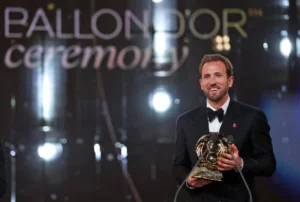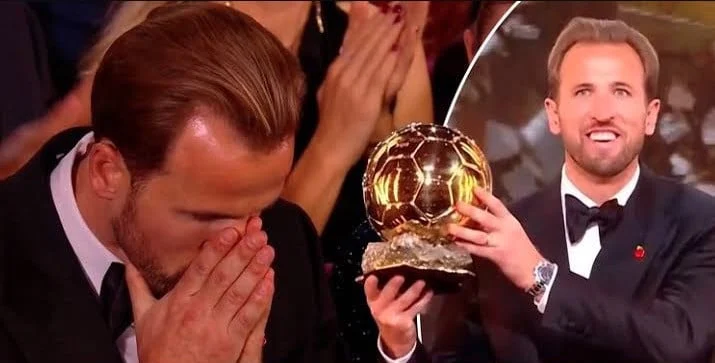
The Ballon d’Or stands as the undisputed pinnacle of individual achievement in global football. Since its inception in 1956, this golden sphere has served as the ultimate barometer for technical excellence, tactical influence, and professional conduct on the pitch. Awarded by France Football, the trophy is not merely a collection of statistics but a comprehensive recognition of a player’s holistic contribution to the sport. In 2026, the legacy of the award evolved once more as Harry Kane ascended to the throne, cementing his name alongside the pantheon of footballing deities who have defined the sport across seven decades.
The Evolution of Excellence: From Matthews to Kane
When the inaugural Ballon d’Or was presented in 1956, the landscape of football was vastly different. Stanley Matthews, the legendary English winger known for his longevity and elegance, became the first recipient. At the time, the award was exclusively for European players, a constraint that would remain until 1995, when the eligibility criteria expanded to include any player active in European leagues. By 2007, the scope became truly global, allowing the world’s best talents—regardless of their league—to compete for the accolade.
The 2026 ceremony marked a significant milestone, with Harry Kane emerging as the recipient. Kane’s victory is widely viewed as a culmination of his sustained elite performance, tactical versatility, and leadership. In an era where strikers are often judged by complex metrics beyond simple goal tallies, Kane’s ability to orchestrate play from deep, coupled with his lethal finishing, set him apart from his contemporaries. Analysts suggest that Kane’s consistency in high-pressure environments, both at the club level and on the international stage, was the decisive factor for the voting panel.
The Era of Titans: The Messi and Ronaldo Hegemony
While the 2026 award highlights a new chapter, the history of the Ballon d’Or remains inextricably linked to the epoch defined by Lionel Messi and Cristiano Ronaldo. Between them, they have amassed a combined total of 13 awards, a feat of dominance that reshaped modern football.
Lionel Messi currently leads the all-time standings with eight trophies. His victories in 2009, 2010, 2011, 2012, 2015, 2019, 2021, and 2023 represent the zenith of individual skill. Messi’s influence on the game transcends statistics; his vision, dribbling, and ability to dictate the tempo of a match remain the gold standard. Even as he reached the latter stages of his career in 2026, his presence remained significant enough to secure a fifth-place finish in the voting, a testament to his enduring genius.
Cristiano Ronaldo, the second most decorated player in the award’s history, claimed the prize five times (2008, 2013, 2014, 2016, and 2017). Ronaldo’s journey is often cited as a blueprint for physical conditioning and unwavering mental fortitude. His ability to adapt his game as he transitioned from a blistering winger to a clinical target man allowed him to remain at the summit of world football for nearly two decades. The rivalry between Messi and Ronaldo provided a compelling narrative arc for nearly 15 years, forcing both players to push the boundaries of what was considered humanly possible on a football pitch.
Historical Chronology: Defining Decades of Football
To understand the significance of the 2026 award, one must contextualize it within the historical progression of the game. The 1970s, for instance, were defined by the Total Football philosophy, spearheaded by Johan Cruyff and Franz Beckenbauer. Cruyff’s three wins (1971, 1973, 1974) mirrored the revolutionary style of Ajax and the Netherlands, while Beckenbauer’s two wins (1972, 1976) highlighted the tactical importance of the sweeper position.
The 1980s saw the rise of Michel Platini, who achieved an unprecedented feat of three consecutive Ballon d’Or wins (1983–1985). Platini’s elegance in midfield and his knack for scoring from set-pieces became the archetype for the modern playmaker. The 1990s and early 2000s introduced a more diverse pool of winners, including the power and precision of Ronaldo Nazário, the artistic brilliance of Zinedine Zidane, the flair of Ronaldinho, and the tactical intelligence of Kaká. Each decade brought a shift in how the sport was played, and the Ballon d’Or effectively captured those cultural and technical shifts.
Criteria and Voting: The Mechanics of the Award
The selection process for the Ballon d’Or has undergone several refinements to ensure objectivity. Voters, comprised of international journalists, national team captains, and coaches, evaluate players based on three primary pillars:
- Individual Performance and Decisiveness: This looks at goal contributions, defensive actions, and technical impact during the season.
- Collective Success: The importance of titles won (Champions League, domestic leagues, international tournaments) serves as a baseline for measuring a player’s influence on winning teams.
- Class and Fair Play: Sportsmanship and professional conduct are factored into the final scoring to ensure the award represents the values of the sport.
Critics often point out that the award has historically favored attacking players over defenders and goalkeepers. However, recent trends indicate a broader appreciation for tactical roles. The voting panel’s move toward rewarding players who provide high-level consistency across multiple competitions—a hallmark of Harry Kane’s 2026 campaign—suggests that the criteria are evolving to favor those who stabilize and lead their teams throughout a grueling calendar.
The 2026 Landscape: Analysis of the Current State of Play
The 2026 voting results provided a clear picture of the current state of world football. While the veterans still command respect, a new guard is emerging. The presence of younger, high-intensity players in the top ten rankings suggests that the game is shifting toward a faster, more physical, and more transitional style of play.
Harry Kane’s win serves as a victory for the "complete forward" archetype. In an age where tactical systems are increasingly restrictive, Kane’s ability to function as both a creator and a finisher has been praised by coaches and tactical analysts alike. His victory is expected to influence future voting trends, emphasizing that while flashy dribbling is appreciated, the "engine room" and the "decisive final touch" remain the most valued commodities in football.
Broader Implications and Legacy
The Ballon d’Or is more than just a trophy; it is a historical record. When a player wins the award, they are inscribed into a narrative that spans generations. For Harry Kane, the 2026 award validates a career defined by resilience and individual brilliance despite the changing tides of team fortunes.
Looking ahead, the footballing community remains curious about how the award will continue to adapt. With the introduction of new technologies in match analysis and the globalization of the scouting network, the pool of candidates is becoming larger and more competitive. The 2026 season was particularly noted for its intensity, with tight margins in the voting reflecting the extreme level of talent currently active in the top-tier European leagues.
Furthermore, the influence of the Ballon d’Or extends to the commercial and cultural spheres of the sport. Winning the award frequently leads to increased marketability and status for the recipient, turning football icons into global cultural figures. As the sport moves into the latter half of the 2020s, the challenge for future winners will be to replicate the consistency that defined the Messi-Ronaldo era, while bringing a new stylistic identity to the game.
Conclusion: A Living History
The history of the Ballon d’Or from 1956 to 2026 is a mirror held up to the evolution of football itself. It has moved from the black-and-white era of Stanley Matthews to the high-definition, data-driven, global spectacle of today. Harry Kane joins a list of winners that includes the greatest names to ever grace the pitch, a testament to his role in the current chapter of the sport. As the footballing world prepares for the years to come, the golden sphere remains the ultimate target—a symbol of excellence that continues to drive the world’s greatest athletes to achieve the impossible. The legacy of the award is secure, not just in the names etched on the trophy, but in the inspiration it provides to the next generation of players striving to leave their mark on history.