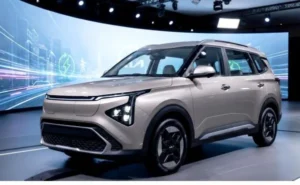
The automotive landscape is undergoing a profound transformation as iCAR, the dedicated electric vehicle (EV) brand, accelerates its commitment to merging high-performance engineering with sophisticated computational intelligence. Central to this evolution is the iCAR V23, a vehicle designed to bridge the gap between urban sophistication and rugged off-road versatility. By integrating the Qualcomm Snapdragon 8155 chipset, iCAR is setting a new benchmark for how electric vehicles process data, manage traction, and interact with drivers in the increasingly competitive Indonesian and global markets.
The Technological Backbone of the iCAR V23
At the core of the iCAR V23’s digital architecture lies the Qualcomm Snapdragon 8155, a System-on-Chip (SoC) specifically engineered for the demands of next-generation intelligent cockpits. In the context of modern automotive design, the cabin has transitioned from a simple control space into an interactive digital ecosystem. The Snapdragon 8155 provides the necessary computational overhead to manage high-resolution displays, seamless infotainment transitions, and complex real-time vehicle diagnostics without latency.
For the driver, this translates into an interface that remains fluid even when multiple applications—such as navigation, vehicle health monitoring, and multimedia streaming—are running concurrently. Beyond the aesthetic benefits of a responsive touch-screen experience, the chipset serves as the "brain" of the vehicle’s intelligent management system. It facilitates the coordination between the vehicle’s powertrain and its adaptive traction control systems, ensuring that power delivery is optimized based on real-time sensory input.
Bridging Urban Comfort and Off-Road Resilience
The versatility of the iCAR V23 is underpinned by a diverse suite of driving modes, including ECO, Comfort, Sport, Slippery, Off-Road, and Individual. These modes are not merely software settings but are dynamically supported by the vehicle’s high-speed processing capabilities.
In an urban environment, the system prioritizes energy efficiency and smooth acceleration, leveraging the chipset to monitor traffic patterns and road conditions to manage energy consumption. However, the true test of this technology manifests in off-road scenarios. When navigating uneven terrain, the vehicle must detect wheel slip and redistribute torque to the wheels with the most traction in a matter of milliseconds. The Snapdragon 8155 enables the vehicle’s Electronic Control Units (ECUs) to process these changes faster than human reaction time, providing a level of stability and safety that was previously unattainable in entry-level and mid-range electric SUVs.
Official Perspectives on Innovation
Tommy Hermansyah, Product Planning Manager at iCAR Indonesia, emphasizes that the strategic integration of high-end computing is central to the brand’s philosophy. "Through the iCAR V23, we are delivering a synthesis of smart technology and computational power to foster a more intuitive driving experience," Hermansyah stated. He further noted that the commitment to performance is not merely about raw acceleration, but about the reliability and responsiveness of the vehicle in diverse environmental conditions.
The decision to utilize the Snapdragon 8155 is a calculated move to ensure that the vehicle remains relevant in a rapidly evolving market where software-defined vehicles (SDVs) are becoming the norm. By prioritizing hardware that supports over-the-air (OTA) updates and advanced algorithmic management, iCAR is positioning the V23 to evolve alongside future software developments, thereby extending the lifecycle and utility of the vehicle for the end-user.
Market Context and Strategic Timeline
The introduction of the iCAR V23 occurs at a pivotal moment for the electric vehicle industry. Globally, manufacturers are shifting focus from simple electrification to the "intelligence" of the vehicle—how it interacts with the driver and the environment. This trend is particularly relevant in Indonesia, a market seeing a significant uptick in EV adoption, driven by government incentives and an expanding charging infrastructure.
Looking toward the near-term horizon, iCAR is preparing for a significant expansion of its global footprint. The company has announced its participation in the iCAR International Business Summit in Wuhu, which will coincide with the Beijing Auto Show 2026. This event is expected to be a milestone for the brand, as it seeks to showcase the "Born to Play" philosophy to a global audience. The summit will likely provide further insights into the company’s long-term roadmap, including potential iterations of the V23 and subsequent models designed to cater to different segments of the growing EV demographic.
Data-Driven Implications for the Automotive Industry
The reliance on advanced chipsets like the Snapdragon 8155 carries significant implications for the supply chain and manufacturing sectors. As automakers become increasingly dependent on semiconductor performance, the relationship between automotive OEMs and tech giants like Qualcomm has deepened. This integration signifies a departure from traditional mechanical engineering toward a model where software optimization is as critical as chassis rigidity or battery density.
From a performance standpoint, the data processing capabilities of the iCAR V23 allow for a more precise management of the battery’s State of Charge (SoC) and thermal regulation. By accurately predicting power demands based on driving style and terrain, the onboard computer can extend the vehicle’s range—a critical metric for consumers in Indonesia, where long-distance travel is common and charging station density remains a consideration.
Furthermore, the capability to switch between specialized modes like "Slippery" and "Off-Road" allows the vehicle to adapt its torque vectoring strategies. This level of granular control is usually reserved for luxury off-road vehicles. By democratizing this technology through the V23, iCAR is challenging the established hierarchy of the SUV market, potentially forcing competitors to accelerate their own digital transformation timelines.
The "Born to Play" Philosophy
The marketing narrative of "Born to Play" reflects a broader shift in how electric vehicles are being positioned to consumers. Rather than focusing solely on the utility of transportation, the iCAR V23 is marketed as a lifestyle accessory—a tool that is as capable of navigating a corporate parking garage as it is a remote trail.
This philosophy is reflected in the vehicle’s design language and its digital interface, which prioritizes user engagement. The responsiveness of the cockpit, powered by the Snapdragon chip, ensures that the "play" element—whether it be the entertainment system or the thrill of off-roading—is never hindered by lag or system failures. It is a strategic effort to cultivate a brand identity that resonates with younger, tech-savvy demographics who prioritize connectivity and experiential value over traditional automotive status symbols.
Future Outlook and Industry Challenges
While the technological achievements of the iCAR V23 are significant, the company faces the inherent challenges of the global automotive market, including the volatility of battery raw material prices and the need for standardized charging protocols. However, by investing in a robust digital architecture today, iCAR is insulating itself against future obsolescence.
As the industry moves toward 2026, the focus will likely shift toward autonomous driving features and more integrated vehicle-to-everything (V2X) communication. The hardware foundation laid by the Snapdragon 8155 provides the necessary headroom for these future developments. The upcoming Beijing Auto Show will be a critical juncture where iCAR will have the opportunity to prove that its "Born to Play" philosophy can scale across multiple markets and varying regulatory environments.
In conclusion, the iCAR V23 represents a confluence of high-performance computing and automotive engineering. By placing the Qualcomm Snapdragon 8155 at the heart of its vehicle, iCAR has successfully created a platform that is not only responsive and stable but also adaptable to the diverse demands of the modern driver. As the brand prepares for its international debut in 2026, its focus on digital intelligence and off-road capability is likely to redefine the expectations for electric vehicles in the mid-size SUV category, marking a new chapter in the ongoing electrification of the global transport sector.