For millions of commuters across Indonesia and beyond, the automatic motorcycle—or "matic"—has become the primary mode of personal transport due to its ease of operation and maneuverability in dense urban traffic. However, the convenience of the Continuously Variable Transmission (CVT) system comes with the responsibility of diligent maintenance. As these systems operate as closed units, mechanical degradation often occurs out of sight, leading to sudden, inconvenient, and potentially dangerous breakdowns if early warning signs are ignored.
At the heart of the automatic transmission lies the drive belt, commonly referred to as the v-belt. This component is the essential link that transfers power from the engine’s crankshaft to the rear wheel. Unlike a manual motorcycle that utilizes a chain and sprocket system, which can be visually inspected at a glance, the v-belt is housed within a sealed crankcase. This design protects the belt from road debris and weather, but it also obscures the belt from the rider’s view, making scheduled maintenance checks the only reliable way to assess its structural integrity.
The Anatomy of CVT Degradation
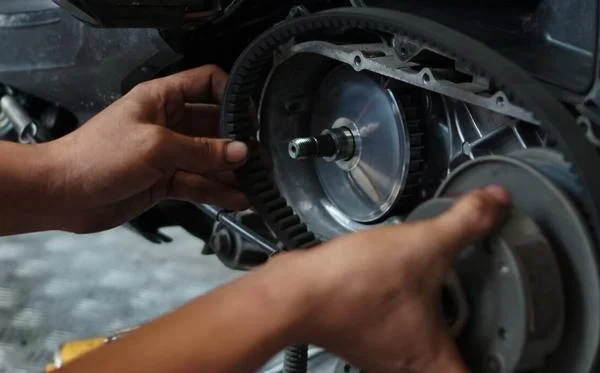
The CVT system relies on a complex interplay between the v-belt, the primary (drive) pulley, and the secondary (driven) pulley. As the engine speed increases, the pulleys adjust their diameter, effectively changing the gear ratio to optimize acceleration and fuel efficiency. The v-belt is subjected to immense thermal stress, friction, and tension throughout this process.
Over time, the rubber compound of the v-belt undergoes natural wear and tear. Factors such as aggressive acceleration, carrying heavy loads, and operating in high-temperature environments accelerate this degradation. When a v-belt reaches the end of its service life, it may exhibit thinning, cracking along the teeth, or fraying along the edges. If the belt snaps while the motorcycle is in motion, the engine will continue to run, but power will fail to reach the rear wheel, resulting in an immediate loss of propulsion. This is not only a major inconvenience but can also pose a significant safety risk if the failure occurs in high-speed traffic or on a busy thoroughfare.
Expert Insights on Preventive Maintenance
Wahyu Budhi, Head of Technical Training at PT Wahana Makmur Sejati (WMS), recently emphasized the necessity for riders to remain vigilant regarding their motorcycle’s mechanical feedback. According to Budhi, the transition from a healthy CVT system to a failing one is rarely instantaneous; rather, the machine typically provides subtle cues that owners often overlook until a total failure occurs.
"Pengendara perlu memperhatikan perubahan suara dan respons sepeda motor saat digunakan. Jika muncul gejala yang tidak biasa, segera lakukan pemeriksaan agar penyebabnya dapat diketahui lebih awal dan tidak berkembang menjadi kerusakan serius," stated Budhi in a press briefing on Monday, October 26, 2026.
Budhi’s advice underscores the importance of the "human-machine interface." Riders are the first line of defense in vehicle maintenance. By paying close attention to the auditory and tactile feedback provided by the transmission, owners can catch issues long before the belt reaches the point of snapping.

Identifying Early Warning Signs
To prevent roadside emergencies, technicians advise riders to look for the following symptoms of a compromised CVT system:
- Unusual Vibrations: A significant increase in vibration from the engine area, particularly during initial acceleration, often indicates that the v-belt has lost its tension or that the pulley weights (rollers) have developed flat spots.
- Audible "Slapping" or Grinding: A loose v-belt may slap against the inside of the crankcase housing, producing a distinct rhythmic tapping or rattling sound. Similarly, a grinding noise can indicate that the internal bearings within the CVT assembly are beginning to fail.
- Loss of Power or "Slipping": If the motorcycle feels sluggish or if the engine revs increase without a corresponding increase in speed, the belt is likely slipping on the pulleys. This is a primary indicator of extreme wear or contamination from oil or dust inside the housing.
- Poor Fuel Economy: A degraded transmission system forces the engine to work harder to achieve the same speed, which directly correlates to higher fuel consumption.
- Difficulty Starting or "Clunky" Engagement: When the clutch shoes or the primary pulley assembly are worn, the motorcycle may jerk when starting from a standstill, indicating that the transmission is not engaging smoothly.
The Role of Regular Inspection Intervals
Most manufacturers recommend inspecting the CVT system every 8,000 to 10,000 kilometers, with a total replacement of the v-belt typically suggested between 20,000 and 25,000 kilometers, depending on the specific model and usage conditions. However, these figures are estimates. In urban environments characterized by "stop-and-go" traffic, the transmission components are subjected to more frequent heat cycles, which may necessitate more frequent inspections.
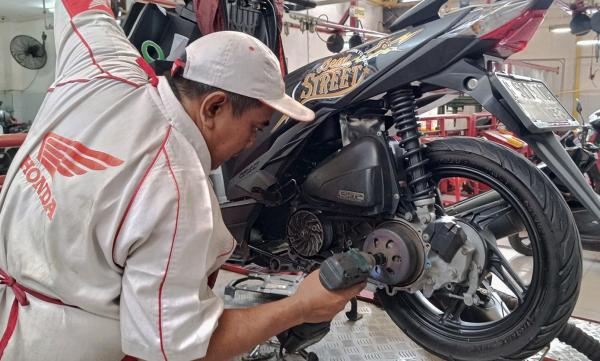
A professional inspection involves removing the outer crankcase cover to clean out accumulated dust and debris. This build-up, caused by the friction of the belt and clutch, can act as an abrasive, accelerating the wear on the pulley surfaces. A technician will measure the width of the belt to check for thinning and inspect the rollers for structural integrity.
Broader Implications for Motorcycle Safety
The failure of a CVT belt is not merely a mechanical issue; it has broader implications for road safety. A sudden loss of power in heavy traffic can cause a rider to lose momentum, potentially leading to rear-end collisions or causing the rider to panic and make erratic maneuvers. Furthermore, the reliance on automatic transmissions has grown in proportion to the increase in motorcycle usage, meaning that a larger segment of the population is operating vehicles that require specialized, periodic technical attention.

There is a growing concern among road safety advocates that many riders treat automatic motorcycles as "maintenance-free" vehicles compared to their manual counterparts. This misconception stems from the simplicity of the twist-and-go operation. Educating the public on the necessity of "CVT hygiene"—keeping the housing clean and replacing belts on a strict schedule—is essential to reducing the number of avoidable breakdowns on public roads.
Chronology of Maintenance and Awareness
The evolution of CVT technology in motorcycles has seen significant improvements in durability over the last decade, with newer materials for v-belts offering better heat resistance and longevity. However, the fundamental mechanical physics of the system remains the same.
- Initial Ownership: New motorcycles typically perform flawlessly, leading to a false sense of security.
- The 5,000-10,000 km Milestone: The first accumulation of belt dust occurs. Riders often ignore minor performance shifts at this stage.
- The 15,000-20,000 km Threshold: This is the critical period where belt elasticity begins to diminish. Professional inspection is non-negotiable here.
- The 25,000 km+ Zone: Beyond this, the probability of a snapped belt increases exponentially. Riders who ignore this interval are essentially gambling on the integrity of a worn rubber component.
Conclusion and Recommendations
The message from industry experts like Wahyu Budhi is clear: the longevity of a motorcycle’s transmission is directly tied to the owner’s awareness. By treating the CVT as a high-wear, high-stress component rather than a "set-and-forget" feature, riders can ensure both the reliability of their commute and their safety on the road.
To maintain optimal performance, riders are encouraged to:

- Adhere to the manual’s service intervals: Do not wait for the motorcycle to stop working before scheduling a service.
- Listen to the bike: Any change in engine note or vibration should be investigated immediately by a certified technician.
- Use genuine parts: When replacing a v-belt, always opt for the manufacturer’s original equipment (OE) to ensure the correct compound and dimensions are used.
- Seek professional cleaning: Regular cleaning of the CVT housing prevents the accumulation of heat-trapping dust.
Ultimately, the matic motorcycle is an engineering marvel that brings efficiency and freedom to millions. By respecting the mechanical limits of its transmission system and responding proactively to the early warnings it provides, riders can enjoy a trouble-free experience for the lifetime of their vehicle.