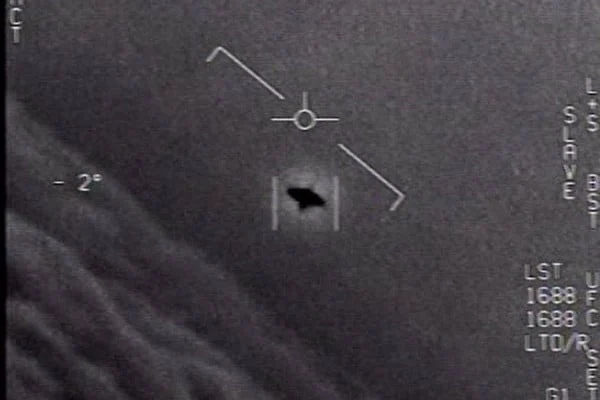
The United States Department of Defense has officially released its seventh collection of declassified documents, video footage, and photographic evidence concerning unidentified anomalous phenomena (UAP), commonly referred to as UFOs. This latest disclosure, released under the government’s ongoing initiative to foster transparency regarding unexplained aerial incursions, provides unprecedented access to historical and contemporary records that have long remained shielded from public scrutiny. As the U.S. government navigates the complexities of national security and public interest, this seventh batch of records serves as a critical milestone in the mandate established by the Presidential UAP Records System for Reporting and Disclosure (PURSUE).
The Core Evidence: Observations of Unidentified Craft
The most compelling aspect of this latest release centers on a detailed report involving a mysterious black, triangular-shaped craft. According to the declassified documentation, the object was observed by three federal agents in the immediate vicinity of a high-security United States facility in Texas. The incident report highlights several characteristics that continue to challenge conventional aeronautical explanation.
Perhaps most notably, the craft was described as moving at "extraordinary speeds" that appeared to defy current aerodynamic limitations. Despite these rapid maneuvers, thermal imaging equipment operated by the witnesses failed to detect any infrared signature or heat exhaust. In standard aviation, the combustion or propulsion processes necessary to achieve high-velocity flight invariably generate heat; the absence of such a signature suggests a propulsion technology that does not align with known jet-turbine or rocket-propulsion systems. The report further notes that the object exhibited silent flight, lacking the sonic booms or engine noise typically associated with high-performance military aircraft.
Historical Context and Scope of the Disclosure
The seventh release is not limited to contemporary sightings. It serves as a comprehensive archive that bridges decades of UAP research. The documents provided to the public cover a wide temporal range, including:
- Mid-Century Records: Detailed notes from the 1940s and 1950s, a period that saw the emergence of the "flying saucer" phenomenon in the American consciousness, including early investigations by the Air Force’s Project Blue Book and its predecessors.
- Skinwalker Ranch Data: Reports regarding purported paranormal activity and unexplained aerial phenomena at the infamous Skinwalker Ranch in Utah. This site has been a focal point of interest for both private investigators and government researchers for years due to its history of recurring, anomalous events.
- Inter-Agency Coordination: Records detailing the collaborative efforts between the National Aeronautics and Space Administration (NASA) and the Department of Defense (DoD). These documents specifically address the protocols for recovering and analyzing debris suspected of being associated with non-terrestrial or unidentified space-borne vehicles.
Chronology of the Disclosure Initiative
The current wave of transparency traces its origins to a significant shift in federal policy. The following timeline outlines the evolution of the UAP disclosure process:
- 2017: The New York Times publishes an exposé on the Advanced Aerospace Threat Identification Program (AATIP), bringing the government’s secret UFO studies into the mainstream.
- 2020-2021: The Pentagon officially releases three videos—known as "FLIR," "GOFAST," and "GIMBAL"—which were captured by Navy pilots, confirming the existence of UAPs.
- Early 2024: President Donald Trump signs an executive order mandating the creation of the PURSUE system, requiring federal agencies to standardize the collection, analysis, and eventual public disclosure of UAP-related data.
- 2024-Present: The Department of Defense begins the phased rollout of seven distinct tranches of documents, with the seventh release marking the most recent addition to the public domain.
Official Responses and Administrative Strategy
The release was confirmed by Pentagon spokesperson Sean Parnell, who emphasized that the Department of Defense is committed to a methodical, security-conscious approach to transparency. "Today, the Department of Defense is releasing the seventh collection of declassified historical files regarding unidentified anomalous phenomena (UAP), as part of the Presidential UAP Records System for Reporting and Disclosure (PURSUE)," Parnell stated.
He further clarified the long-term strategy for these disclosures, noting that the Pentagon "will release additional files in phases" and is currently engaged in active preparations for future tranches. This indicates that the current disclosure is not an isolated event but rather a sustained program designed to systematically reduce the backlog of classified UAP data. By processing these records through a formal review board, the DoD aims to ensure that no sensitive intelligence-gathering methods or current technological vulnerabilities are compromised during the disclosure process.
Scientific and Security Implications
The implications of these releases are twofold: they provide researchers with raw data to conduct independent analysis, while simultaneously raising urgent questions about national security and air-space sovereignty.
From a scientific perspective, the lack of thermal signatures in the Texas sighting is particularly significant. Physicists and aerospace engineers often point to such reports as potential evidence of "metric engineering" or propulsion systems that manipulate gravity or spacetime, rather than relying on atmospheric displacement. If such technology exists, the implications for global energy production and transportation are transformative.
From a security standpoint, the proximity of these objects to U.S. federal facilities suggests that the United States is being monitored by technology that remains unidentified and potentially adversarial. The coordination between NASA and the DoD, as detailed in the new documents, highlights a growing concern that these objects may pose a threat to civilian and military aviation. The risk of mid-air collisions, combined with the psychological impact on military personnel, has necessitated a formalization of reporting standards that were, until recently, nonexistent.
Analysis of the Public Disclosure Movement
The transition from a culture of denial to one of transparency represents a fundamental change in the relationship between the American government and the citizenry. For decades, the subject of UFOs was relegated to the fringes of pop culture and tabloid journalism. Today, it occupies a position of serious inquiry within the halls of Congress and the Pentagon.
The PURSUE system, as mandated by the executive branch, has successfully removed the stigma that once prevented pilots and military personnel from reporting anomalous sightings. By providing a safe, institutionalized framework for reporting, the government is gathering a more accurate dataset than it has had at any point in the last 70 years. This data is essential for determining whether the observed phenomena are the result of advanced foreign drone technology, atmospheric misidentifications, or something that falls outside the current scope of human scientific understanding.
Looking Ahead: The Future of UAP Transparency
As the Pentagon prepares for its eighth and subsequent releases, the public and scientific communities expect more granular details regarding the "triangular craft" sightings and the broader collaboration between intelligence agencies. The ongoing effort to reconcile historical archives with modern sensor data remains a massive undertaking.
The integration of advanced machine learning and artificial intelligence into the analysis of these records is likely the next phase of the program. By cross-referencing radar telemetry, pilot testimony, and thermal imaging from across several decades, the DoD hopes to identify patterns that may have been missed by human analysts in the past.
While the current documents do not offer definitive answers—such as the origin or the pilot identity of these craft—they provide a transparent foundation upon which future discoveries will be built. The commitment from the Department of Defense to continue this process serves as a testament to the fact that the study of UAP has moved from a clandestine secret to a matter of legitimate public and scientific concern. As these files continue to surface, the dialogue between the government and the public will remain centered on the dual pillars of national security and the quest for scientific truth in an increasingly mysterious sky.