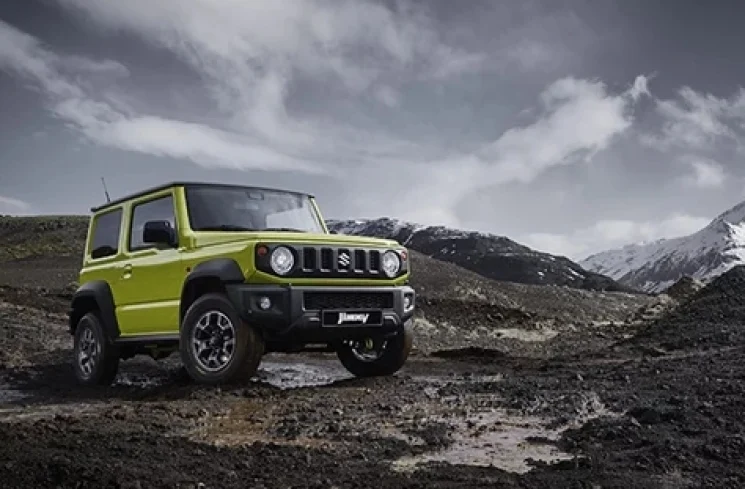
In a decisive move that underscores the tension between modern environmental mandates and the preservation of automotive heritage, Suzuki Motor Corporation has officially ruled out the development of an all-electric version of its iconic Jimny SUV. Despite a global industry pivot toward electrification and the introduction of increasingly stringent carbon emission regulations, the Japanese manufacturer remains steadfast in its belief that battery-electric vehicle (BEV) technology would fundamentally compromise the Jimny’s identity. This commitment to traditional engineering is not merely a rejection of a powertrain, but a strategic decision to maintain the "pure" off-road experience that has defined the nameplate for decades.
The Stance of Leadership: Protecting the DNA of an Icon
The decision stems from the highest level of Suzuki’s corporate hierarchy. Toshihiro Suzuki, the President of Suzuki Motor Corporation, has been unequivocal regarding the potential for an electrified Jimny. In recent public statements, he explicitly addressed the discourse surrounding the transition, noting that "If you talk about a Jimny EV, I think it would ruin the best part of the Jimny."
For the manufacturer, the "best part" of the vehicle is its mechanical simplicity, lightweight chassis, and the specific tactile feedback provided by its internal combustion engine (ICE). Integrating a heavy lithium-ion battery pack and high-torque electric motors would necessitate significant structural redesigns, likely increasing the vehicle’s weight—a factor that would arguably negate the agility and maneuverability that allow the Jimny to excel on challenging, narrow off-road trails.
This perspective is mirrored by regional management, including Michael Pachota, General Manager of Suzuki Australia. Pachota has reinforced that the company’s management remains aligned on this vision, prioritizing the preservation of the model’s core attributes over the pursuit of a "check-the-box" approach to vehicle electrification. By choosing to shield the Jimny from electrification, Suzuki is betting that there remains a significant, loyal market for authentic, mechanical off-roaders that prioritize capability over modern technological trends.
Chronology and Market Context
Since the launch of the current fourth-generation Jimny in 2018, the vehicle has experienced a surge in global popularity that few in the industry anticipated. It has evolved from a niche tool for agricultural and forestry workers into a global cultural phenomenon. Currently, the Jimny and its extended-wheelbase sibling, the Jimny XL, are powered by a 1.5-liter naturally aspirated four-cylinder petrol engine. This engine produces 75 kW of power and 130 Nm of torque, paired with either a five-speed manual or a four-speed automatic transmission.
The following timeline highlights the Jimny’s evolution in the context of recent regulatory pressures:
- 2018: The fourth-generation Suzuki Jimny is launched, receiving global acclaim for its retro-inspired design and traditional ladder-frame construction.
- 2023: Global automotive regulations begin to tighten, specifically the Euro 7 standards and regional carbon efficiency targets, putting pressure on non-electrified vehicles.
- 2024–2025: Intense media speculation regarding an "e-Jimny" circulates as competitors introduce electrified off-roaders.
- September 2026: Suzuki leadership officially confirms that an electric Jimny will not be produced, citing the preservation of the brand’s heritage as the primary motivator.
- 2027: Australia prepares for the implementation of the New Vehicle Efficiency Standard (NVES), a regulatory milestone that demands significant fleet-wide emission reductions.
Navigating Regulatory Hurdles: The Portfolio Balancing Strategy
Suzuki’s refusal to electrify the Jimny is not an act of defiance against environmental progress, but rather a calculation based on fleet-wide compliance. The company is currently navigating the New Vehicle Efficiency Standard (NVES) in Australia and similar frameworks globally, which demand that the average emissions of a brand’s total sales volume fall below a specific threshold.
Rather than forcing the Jimny to adapt to a powertrain that does not suit its purpose, Suzuki plans to utilize a "portfolio balancing" strategy. By offsetting the emissions of the Jimny with the sale of highly efficient, hybrid, or electrified models across the rest of its product range, the company can maintain the Jimny as a high-margin, low-volume "halo" product. This allows Suzuki to meet its collective carbon targets while keeping the Jimny’s mechanical purity intact.
This strategy highlights a sophisticated understanding of consumer segmentation. While the mass-market buyer may prioritize fuel economy and electric range, the Jimny buyer is typically seeking a specific type of capability—lightweight, repairable in remote locations, and mechanically predictable.
Engineering Implications and Consumer Demand
The technical simplicity of the Jimny is, paradoxically, its greatest competitive advantage in the modern era. In an age where automobiles are increasingly reliant on complex software, sensors, and large-scale battery systems, the Jimny offers a "pure" mechanical experience. The current 1.5-liter engine, while not the most powerful in its class, has been praised for its reliability and ease of maintenance.
The data supports Suzuki’s confidence: despite the engine platform being eight years old, order books remain consistently full. In many regions, the demand for the Jimny still far outstrips the supply, suggesting that the vehicle’s character, design, and off-road capability are far more influential to consumers than the presence of hybrid or electric powertrains.
For the automotive engineering community, this creates an interesting case study. It proves that there is a threshold where the "modernization" of a vehicle through electrification can actually destroy its value proposition. By maintaining the status quo, Suzuki is effectively positioning the Jimny as a "modern classic"—a vehicle that satisfies the current demand for retro-aesthetics and mechanical engagement.
Broader Industry Impact
Suzuki’s stance is a notable departure from the strategies employed by other manufacturers, many of whom are rushing to electrify their entire lineups to avoid potential fines and regulatory scrutiny. By explicitly exempting the Jimny from its EV roadmap, Suzuki is taking a calculated risk.
The implications of this move are twofold:
- Retention of Core Enthusiasts: By staying true to the Jimny’s heritage, Suzuki secures its reputation among off-road enthusiasts who are increasingly alienated by the "digitalization" and "electrification" of the SUV segment.
- Sustainability Accountability: By acknowledging that it must balance the Jimny’s emissions through other products, Suzuki demonstrates a pragmatic approach to environmental goals. It signals to regulators that they are committed to sustainability, but not at the cost of erasing the history of their most iconic products.
Ultimately, the decision regarding the Jimny highlights a fundamental question for the automotive industry: should all vehicles transition to the same technological standard, or is there room for a diversified market where mechanical heritage is preserved? Suzuki has provided its answer. For the foreseeable future, the Jimny will remain a holdout—a small, rugged SUV that refuses to trade its mechanical soul for a battery pack, banking on the idea that in a world of high-tech conformity, the authentic and the simple will always find an audience.
As the industry moves toward 2030 and beyond, the success of Suzuki’s portfolio-balancing strategy will be closely watched by analysts and competitors alike. If the Jimny continues to thrive without electrification, it may serve as a roadmap for other manufacturers seeking to protect their own heritage models from the inevitable pressures of the transition to a carbon-neutral future. For now, however, the message from Japan is clear: some legends are better left untouched.