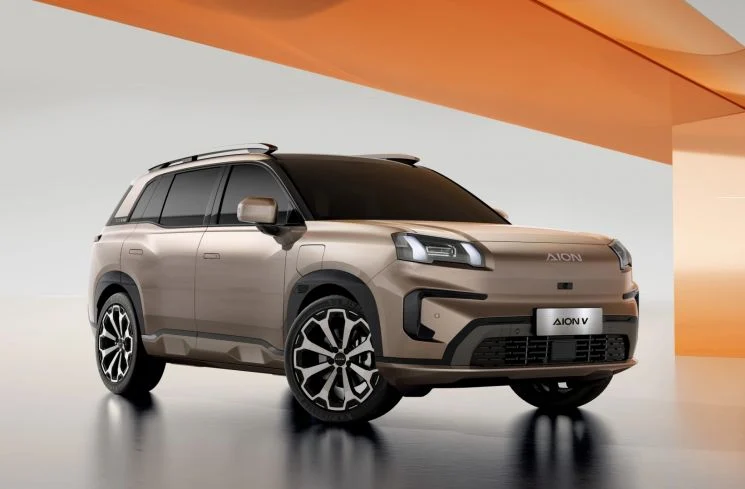
The Indonesian automotive landscape is undergoing a significant transformation as the transition toward electric mobility gains momentum. A pivotal player in this shift, the AION V, has solidified its market presence during the first quarter of 2026. According to the latest wholesale data released by the Association of Indonesia Automotive Industries (GAIKINDO), the AION V recorded 238 unit sales in March 2026 alone. This figure not only highlights the growing consumer appetite for Battery Electric Vehicles (BEVs) but also underscores the increasing dominance of the C-SUV EV segment within the archipelago’s competitive automotive market.
Market Context and The Rise of the C-SUV Segment
The C-SUV segment in Indonesia has historically been dominated by internal combustion engine vehicles, favored for their versatility and robust performance. However, as infrastructure for electric vehicles expands and government incentives become more structured, consumers are increasingly viewing EVs as a rational, long-term investment rather than a luxury alternative. The success of the AION V is reflective of this broader trend, where buyers prioritize total cost of ownership (TCO), technological integration, and the peace of mind offered by localized production.
Industry analysts observe that the move toward locally assembled—or Completely Knocked Down (CKD)—vehicles is a watershed moment for the Indonesian EV market. By localizing production, manufacturers like GAC AION are effectively mitigating the volatility associated with import logistics, currency fluctuations, and aftermarket maintenance challenges. This strategy has allowed the AION V to achieve a price point that appeals to a broader demographic of middle-to-upper-class consumers, effectively bridging the gap between premium niche vehicles and mass-market family SUVs.
Chronology of Strategic Expansion
The current success of the AION V is not an overnight occurrence but the culmination of a deliberate, multi-phase strategy by GAC Indonesia. Since the brand’s entry into the Indonesian market, the following timeline outlines its strategic progression:
- Q3 2025: GAC Indonesia announces its commitment to the Indonesian government to initiate CKD operations, signaling a long-term investment in local manufacturing facilities.
- Q4 2025: The first pre-production units of the AION V roll off the assembly line, undergoing rigorous quality assurance testing adapted for Indonesia’s unique road conditions and climate.
- January 2026: Official commercial launch of the localized AION V, with aggressive marketing campaigns focusing on the vehicle’s long-range capabilities and domestic production advantages.
- March 2026: The brand reports its strongest monthly sales performance to date, with 238 units delivered to dealerships, signaling a high conversion rate from interest to purchase.
Technical Prowess: Why Consumers Are Choosing the AION V
Beyond the economic arguments for local production, the AION V distinguishes itself through its technical specifications, which are engineered to address the specific "range anxiety" often cited by potential EV buyers in Indonesia.
The vehicle is equipped with a 75.3 kWh Lithium Iron Phosphate (LFP) battery. This chemistry is particularly significant for the tropical climate of Indonesia, as LFP batteries are known for their superior thermal stability and longer cycle life compared to nickel-based counterparts. With a claimed range of 602 kilometers on a single charge (based on testing parameters), the AION V provides sufficient autonomy for both intra-city commuting and extended cross-province travel.
Furthermore, the integration of creature comforts that resonate with local consumer preferences has been a key differentiator. The inclusion of an integrated cabin refrigerator—featuring freezing, cooling, and heating modes—addresses the comfort requirements of Indonesian families who frequently undertake long-distance travel. By blending high-capacity battery technology with consumer-centric features, AION has successfully positioned the vehicle as a practical family companion.
Official Perspectives on Localized Production
Andry Ciu, CEO of GAC Indonesia, emphasized the shift in market sentiment during a press briefing on April 16, 2026. "We are witnessing a profound shift in how Indonesian consumers evaluate electric vehicles," Ciu stated. "The decision to produce the AION V locally as a CKD model was not merely a pricing strategy. It was a commitment to ensuring long-term reliability for our customers. When a consumer buys a car, they are looking for the assurance that spare parts will be available, that service centers are accessible, and that their investment will retain value over time."
Ciu further noted that the global energy landscape, characterized by unpredictable fuel costs, has accelerated the transition to electric mobility. "In the face of global energy price volatility, the AION V serves as a hedge for households. We are providing more than just a car; we are providing a sustainable, efficient, and economically viable solution for modern Indonesian families," he added.
Safety and Smart Mobility
In the competitive landscape of 2026, a vehicle’s appeal is incomplete without a robust safety suite. The AION V is equipped with Advanced Driver Assistance Systems (ADAS) Level 2. This includes critical features such as Lane Keeping Assist, Adaptive Cruise Control, and Forward Collision Warning. By democratizing access to these advanced safety technologies at a starting price point of IDR 465 million (on-the-road Jakarta), AION is setting a new benchmark for what consumers should expect from the sub-500 million rupiah price bracket.
The deployment of ADAS in the AION V also serves as a foundational step toward the future of autonomous driving in Indonesia. As local traffic authorities continue to upgrade road infrastructure, these electronic safety nets become increasingly essential in reducing the risk of human error, which remains the leading cause of traffic accidents in the region.
Broader Economic and Industrial Implications
The success of the AION V has broader implications for the Indonesian automotive industry. By contributing to a higher volume of EV sales, the brand is assisting the Indonesian government in meeting its targets for vehicle electrification and carbon emission reduction. Furthermore, the focus on CKD production generates employment opportunities within the local manufacturing sector, fosters the development of a local supply chain for EV components, and strengthens Indonesia’s position as a regional hub for EV manufacturing in Southeast Asia.
Industry analysts suggest that if the current momentum continues, the AION V could serve as a case study for other international manufacturers entering the Indonesian market. The model proves that a combination of competitive pricing, localized manufacturing, and feature sets tailored to local habits is the most effective formula for success in the ASEAN region.
Future Outlook
As of mid-2026, the outlook for the AION V remains positive. With the expansion of public charging infrastructure and the increasing presence of service centers across major cities in Java, Sumatra, and beyond, the barriers to adoption are steadily being lowered. The brand’s ability to maintain supply chain stability will be the deciding factor in its ability to scale further throughout the remainder of the year.
While competition from other global and regional EV manufacturers is expected to intensify, the AION V’s current market share suggests that it has successfully captured the "early majority" of Indonesian EV adopters. The focus moving forward will likely be on maintaining customer satisfaction through after-sales excellence and potentially expanding the vehicle lineup to include more variants that cater to the diverse needs of the Indonesian market.
In conclusion, the AION V stands as a testament to the viability of the electric vehicle transition in Indonesia. By aligning its production strategy with the realities of the local market and ensuring that its technology meets the practical needs of the Indonesian family, GAC AION has successfully navigated the complexities of the current automotive landscape. The 238 units sold in March are more than just a data point; they represent a significant step toward a cleaner, more efficient, and technologically advanced future for mobility in the nation. As the automotive industry continues to evolve, the lessons learned from the AION V’s success will undoubtedly shape the strategies of manufacturers for years to come.