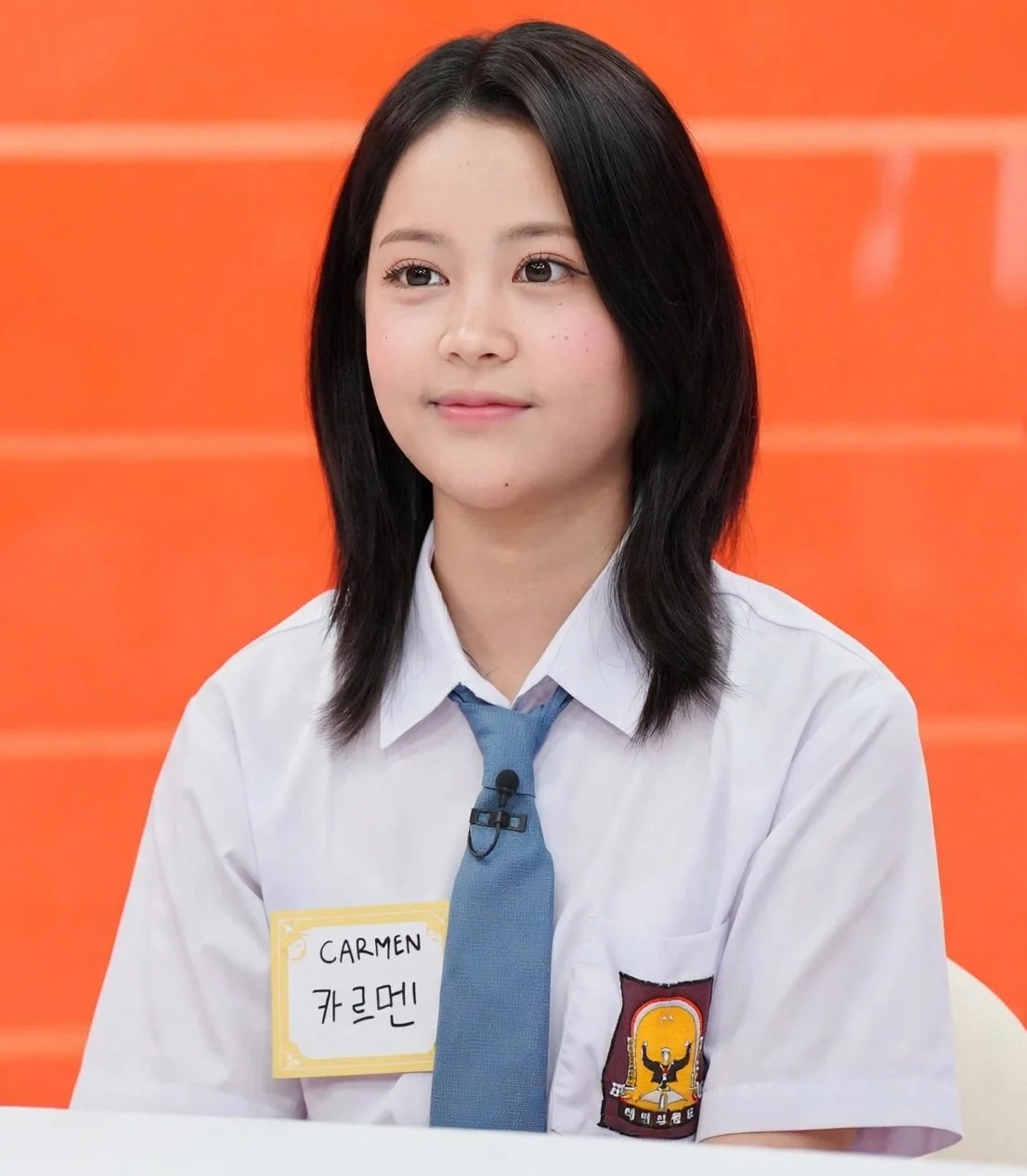
The K-pop industry has long been a conduit for cultural exchange, but a recent appearance by Carmen, a member of the rising group Hearts2Hearts, has bridged the gap between South Korea and Indonesia in a uniquely nostalgic way. During a recording for the popular web-variety program IDOL’S TABLE, the Bali-born idol was captured wearing the iconic white-and-gray uniform of an Indonesian senior high school (SMA). The images, which surfaced on October 28, 2026, have since triggered widespread discourse across social media platforms, highlighting the growing influence of Southeast Asian talent in the competitive Korean entertainment landscape.
The Context of the IDOL’S TABLE Production
IDOL’S TABLE is a digital variety series known for its high-concept themes that explore global fashion trends and cultural nuances. The episode featuring Carmen was designed around a "Global School Uniform" theme, intended to showcase how educational institutions across different nations express their identity through formal attire. By inviting international idols to participate, the producers aim to celebrate the diverse backgrounds of the current K-pop generation.
Carmen’s participation is particularly significant due to her background as an Indonesian talent navigating the rigid training systems of Seoul. Her choice to represent her homeland by donning the quintessential Indonesian SMA uniform—a white shirt and gray trousers or skirt—was not merely a wardrobe decision but a deliberate nod to her heritage. The production team confirmed that the segment was meant to evoke a sense of familiarity for international viewers while providing a fresh visual narrative for local Korean audiences accustomed to the traditional pleated skirts and blazers common in South Korean school dramas.
Chronology of the Event
The buzz began early Tuesday morning when official social media accounts for IDOL’S TABLE released a series of teaser stills. These images featured various idols from different labels dressed in school attire from their respective countries.
- October 27, 2026 (Evening): Preliminary filming for the segment concluded at the studio complex in Gyeonggi-do.
- October 28, 2026 (08:00 AM KST): Official production stills were uploaded to official Instagram and X (formerly Twitter) accounts.
- October 28, 2026 (10:00 AM KST): Indonesian fan communities, led by accounts such as @serbaserbikpop, began aggregating the content, causing the term "Carmen" to trend on X within the Indonesian region.
- October 28, 2026 (02:00 PM KST): Engagement metrics indicated that the post featuring Carmen had outperformed other segments of the episode by nearly 40% in terms of shares and comments.
Aesthetic Analysis and Stylistic Choices
The uniform selected for Carmen was an authentic replica of the standard Indonesian public high school attire. It featured the crisp white short-sleeved shirt, the signature gray skirt, and the necessary accessories: a black leather belt and a gray necktie. The precision of the styling—down to the modest, professional aesthetic—was praised by viewers for its accuracy.
Fashion analysts note that the juxtaposition of the "simple" Indonesian uniform against the high-production value of a Korean studio setting created a striking visual contrast. Carmen’s short, layered haircut complemented the look, stripping away the hyper-glamorous, stylized appearance often associated with idol promotions. This "down-to-earth" aesthetic served to humanize the performer, creating a relatable image that resonated with her core demographic—young students and early career professionals who view the SMA uniform as a symbol of their formative years.
The Impact of Southeast Asian Representation in K-Pop
The incident serves as a microcosm of a broader trend: the "localization" of K-pop. As South Korean entertainment companies look to expand their market share in Southeast Asia—a region with the highest consumption rates of K-pop content globally—they are increasingly leveraging the backgrounds of their non-Korean idols.

Data from the Korea Creative Content Agency (KOCCA) indicates that Southeast Asian fans account for nearly 35% of global K-pop social media engagement. By allowing idols like Carmen to showcase their national identity, agencies like the one managing Hearts2Hearts are fostering deeper emotional connections with regional markets. This strategy is not merely cosmetic; it is a calculated business move to ensure long-term loyalty in a volatile industry.
Official Responses and Industry Reception
While official statements from the management of Hearts2Hearts remain brief, a representative from the label stated, "Carmen was very excited to share a piece of her culture with the global audience of IDOL’S TABLE. It was an opportunity to showcase the pride she feels for her roots while working within the international framework of the K-pop industry."
Industry experts suggest that this moment could lead to more cross-cultural collaborations. "When an idol integrates their personal background into their professional work, it transforms them from a commodity into a personality," says a music industry analyst based in Seoul. "For Indonesian fans, seeing their own school uniform on a major Korean platform validates their culture’s place on the world stage."
Broader Implications for Globalized Entertainment
The viral nature of this event points to the shifting definition of the "global idol." In the early 2010s, foreign idols were often expected to assimilate completely into Korean norms. Today, the industry is shifting toward a model that celebrates multiculturalism.
Furthermore, the "school uniform" trend in Korean media has historically been used to evoke nostalgia for the "Golden Age" of youth. By adopting the Indonesian version of this trope, IDOL’S TABLE has inadvertently created a bridge for cultural dialogue. It encourages viewers to research the education systems and social contexts of the countries represented, effectively turning an entertainment program into an instrument of soft power.
As the full episode prepares for its digital release, expectations are high that the segment will feature an interview where Carmen discusses her experiences as a student in Indonesia before she transitioned into the rigorous training life of a K-pop idol. This narrative arc—from a student in a gray-and-white uniform to an international star—is a compelling story that continues to captivate the public imagination.
Conclusion: A Cultural Milestone
The reaction to Carmen’s appearance is a testament to the power of representation. While it may seem like a small detail—the choice of a school uniform—it serves as a significant marker in the ongoing integration of Southeast Asian talent into the K-pop ecosystem. By embracing her identity, Carmen has not only delighted her fanbase but has also contributed to a more inclusive, diverse, and globally conscious entertainment industry. As the lines between national cultures continue to blur in the digital age, moments like these will likely become the standard, rather than the exception, in the global media landscape. The success of this segment ensures that future productions will likely continue to explore the intersection of personal heritage and international stardom, further enriching the cultural tapestry of the K-pop phenomenon.