The nation of Spain is currently reeling from a catastrophic railway disaster that has claimed the lives of at least 64 people, marking the deadliest train accident in the country in over a decade. The tragedy occurred on the morning of Wednesday, October 28, 2026, when two passenger trains collided near the municipality of Toledo, triggering a massive emergency response and a national mourning period. As search and rescue operations transitioned into recovery efforts, authorities confirmed that the death toll makes this the most significant rail-related loss of life since the harrowing Santiago de Compostela derailment in 2013.
The Chronology of the Disaster
The collision took place at approximately 08:54 local time, a peak commuting hour for many traveling between the southern regions and the capital. According to preliminary reports from Adif, the state-owned administrator of railway infrastructure, the accident involved a Renfe AVE high-speed train and a private Iryo service. The location of the impact was on a high-speed line segment between the towns of Los Yebenes and Urda, situated roughly 120 kilometers south of Madrid.
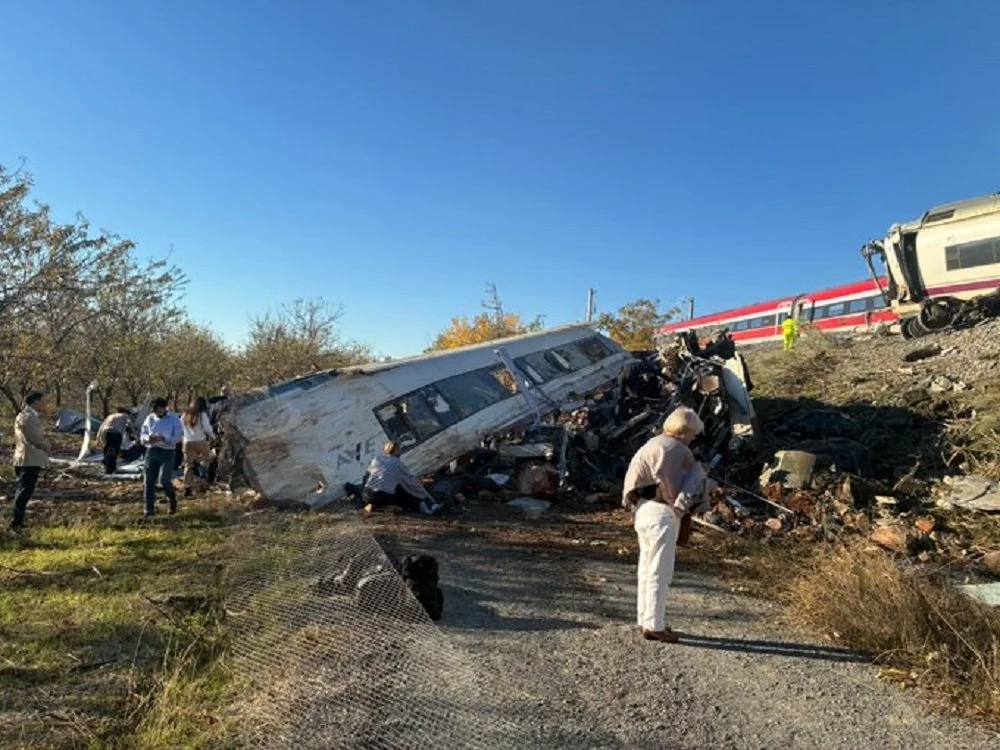
Witness accounts and initial data suggest that the Renfe AVE service, traveling at high velocity, struck the rear carriage of the Iryo train. The force of the impact was so significant that it caused two carriages from the rear of the Iryo train to derail, forcing them off the tracks and down an adjacent embankment. Emergency services, including paramedics, firefighters, and the Guardia Civil, were dispatched immediately to the scene, navigating difficult terrain to reach the mangled wreckage. By midday, local government officials in Castilla-La Mancha had confirmed the grim figure of 64 fatalities, with scores more suffering from injuries ranging from critical to minor.
Historical Context and Comparative Analysis
To understand the gravity of this incident, it is essential to view it through the lens of Spain’s railway safety record. For over a decade, Spain has prided itself on having one of the most sophisticated and safest high-speed rail (AVE) networks in the world. However, this progress has been punctuated by rare but devastating failures.
The most notable precedent remains the tragedy of July 24, 2013, in Santiago de Compostela. In that instance, a high-speed Alvia train carrying 218 passengers derailed while negotiating a sharp curve at excessive speed. The train slammed into a concrete wall, resulting in 80 deaths and leaving over 140 people injured. That incident became a defining moment for Spanish rail safety, leading to widespread overhauls in signaling technology and speed control systems across the national network.
The October 2026 collision bears little resemblance to the 2013 derailment in terms of cause, as it involved an inter-train impact rather than a solo derailment. Analysts are currently focusing on the signaling protocols that allowed two trains to occupy the same section of track, a scenario that modern Automatic Train Protection (ATP) systems are specifically designed to prevent.
Technical and Operational Implications
The involvement of two distinct operators—the state-run Renfe and the private entrant Iryo—adds a layer of complexity to the ongoing investigation. Spain opened its high-speed rail market to competition in recent years, allowing private companies like Iryo and Ouigo to operate on the state-maintained infrastructure managed by Adif.
While market liberalization has increased passenger volume and reduced ticket prices, it has also necessitated a more rigorous integration of traffic management systems. Adif is currently under intense scrutiny to explain why the Renfe AVE service was cleared to proceed on a line segment occupied by the Iryo train. Preliminary technical assessments suggest that investigators will be looking at three primary vectors:
- Signaling Failure: A potential malfunction in the European Rail Traffic Management System (ERTMS) or its Spanish equivalent, ASFA, which should have triggered an automatic stop.
- Human Error: An evaluation of the communication logs between the traffic control center and the drivers of both trains.
- Mechanical Malfunction: A check for potential braking system failures on the trailing Renfe train.
Official Responses and Government Action
The Spanish government has declared a period of official mourning. Prime Minister and senior cabinet members have expressed their deepest condolences to the families of the victims, promising a transparent and exhaustive investigation. "Our priority is to provide support to the victims and their families, and to ensure that the cause of this tragedy is identified with absolute clarity," a government spokesperson stated during an emergency press briefing in Madrid.
Meanwhile, representatives from Renfe and Iryo have pledged full cooperation with the Ministry of Transport and the judicial authorities. Both companies have suspended operations on the affected line to facilitate the ongoing investigation and ensure the structural integrity of the tracks before services resume. The European Union Agency for Railways (ERA) has also been briefed on the incident, as such a high-profile accident on a major European rail corridor necessitates a continent-wide review of safety protocols.
Humanitarian and Logistical Impact
The impact on the region of Castilla-La Mancha has been profound. Local hospitals, including those in Toledo and Ciudad Real, were placed on "mass casualty" alert, with medical personnel working around the clock to treat the injured. Blood donation centers across the region saw record turnouts within hours of the news breaking, a testament to the community’s resilience in the face of disaster.
Beyond the immediate human toll, the economic implications for the Spanish rail sector are significant. The disruption to the high-speed line connecting Madrid to Andalusia—a critical artery for the Spanish economy—will cause logistical bottlenecks for days, if not weeks. Business leaders have expressed concern regarding the short-term impact on transport reliability, though the primary focus remains on the humanitarian recovery.
The Path Forward: Safety Reforms
As the wreckage is cleared and the black boxes from the trains are analyzed, the focus will inevitably shift toward structural reform. The Spanish railway network has undergone a massive expansion over the last twenty years, and questions are now being raised about whether the maintenance and management of these lines have kept pace with the increasing number of services and operators.
Transportation experts suggest that this incident will likely trigger a nationwide audit of all high-speed rail signaling software. Furthermore, there is growing public pressure for increased transparency regarding the safety data of private rail operators entering the Spanish market. The 2026 tragedy serves as a somber reminder that in the high-speed rail era, even the most advanced technological systems are not infallible.
In the coming weeks, the Ministry of Transport is expected to release an initial report. For now, the nation remains focused on the 64 lives lost and the dozens of families whose lives have been irrevocably changed by the events of that Wednesday morning. The investigation into the Toledo collision will be a long, arduous process, one that will test the integrity of Spain’s transport infrastructure and the resolve of its regulatory bodies to prevent such a catastrophe from ever occurring again. As the debris is removed from the embankment and the tracks are repaired, the memory of this day will undoubtedly serve as a cornerstone for future safety regulations in the European rail industry.