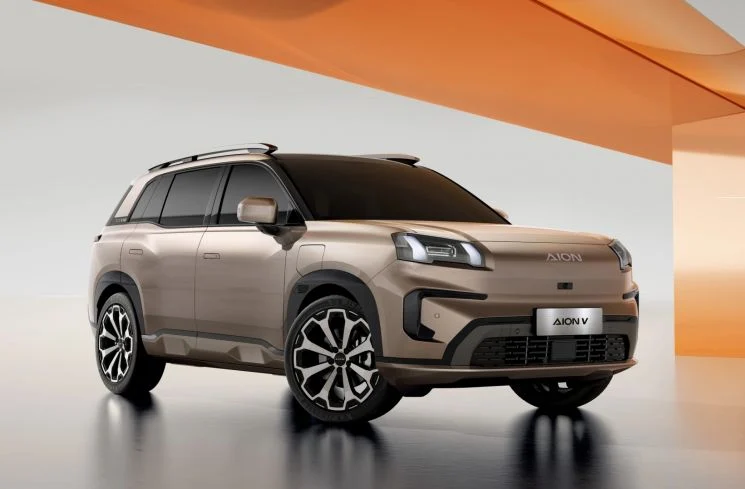
The Indonesian automotive landscape is undergoing a profound transformation as electrification shifts from a niche preference to a mainstream consumer choice. Standing at the forefront of this evolution is the AION V, a C-segment electric SUV that has successfully captured the attention of the Indonesian market. According to wholesale data released by the Association of Indonesia Automotive Industries (GAIKINDO), the AION V achieved a robust sales volume of 238 units in March 2026. This performance marks a pivotal moment for GAC AION in Indonesia, signaling a growing consumer confidence in locally assembled electric vehicles (EVs) and establishing the model as a serious contender in the highly competitive electrified SUV segment.
The Strategic Importance of Local Assembly (CKD)
The success of the AION V in the first quarter of 2026 is not merely a reflection of its design or performance specifications; it is deeply rooted in the strategic decision to adopt a Completely Knocked Down (CKD) production model. By shifting from imported units to local assembly, GAC Indonesia has addressed one of the most critical barriers to EV adoption in the archipelago: supply chain reliability.
For the modern Indonesian consumer, the purchase of an electric vehicle is often viewed as a long-term investment. Unlike traditional internal combustion engine (ICE) vehicles, where service networks are well-established, EV buyers prioritize the availability of spare parts and the presence of localized technical support. The transition to CKD production ensures that GAC Indonesia can maintain a steady inventory, effectively neutralizing the waiting times that historically plagued imported EV models. Furthermore, local production allows the manufacturer to adhere to the government’s Local Content Requirement (TKDN) policies, which are instrumental in qualifying for tax incentives and price stability, ultimately benefiting the end-user.
A Chronology of Market Entry and Growth
The trajectory of the AION V in Indonesia can be mapped through a series of calculated strategic moves by GAC AION. Following its initial brand introduction, the company wasted little time in establishing its industrial footprint.
- Q4 2025: GAC Indonesia officially inaugurated its local assembly operations, signaling a commitment to the Indonesian "Made in Indonesia" EV initiative.
- January 2026: The AION V began its mass-market rollout, with early adoption driven by initial pre-orders from metropolitan centers such as Jakarta, Surabaya, and Bandung.
- March 2026: Wholesale figures hit 238 units, representing a month-over-month increase that outpaced several competing legacy brands in the C-SUV category.
- April 2026: Management confirms that the stability of the supply chain has allowed for the acceleration of delivery schedules, further bolstering market confidence.
This timeline reflects a deliberate strategy of establishing infrastructure before scaling sales, a methodology that has mitigated the common pitfalls of entering an emerging market with limited support systems.
Technical Prowess and Consumer-Centric Innovation
Beyond the logistics of production, the AION V has gained traction due to its technical specifications, which are tailored to the unique requirements of the Indonesian demographic. The vehicle is equipped with a 75.3 kWh Lithium Iron Phosphate (LFP) battery, which offers a competitive range of up to 602 kilometers on a single charge. This range is particularly significant in the Indonesian context, where infrastructure for charging is still expanding; a longer range provides the psychological assurance required for inter-city travel.
Perhaps the most distinctive feature of the AION V—and one that has resonated strongly with local consumers—is the inclusion of a high-utility cabin refrigerator. With three distinct modes (freezing, cooling, and heating), this feature is a direct response to the tropical climate and the cultural emphasis on family-oriented, long-distance road trips. This integration of lifestyle-centric features into a high-tech platform demonstrates a sophisticated understanding of the local market’s preferences.
Perspectives from Leadership
Andry Ciu, CEO of GAC Indonesia, addressed the industry implications of these figures during a press briefing on April 16, 2026. He emphasized that the shift in consumer behavior is driven by a more rational approach to vehicle ownership.
"We are observing that consumers today are much more sophisticated in how they evaluate the value of an electric vehicle," Ciu stated. "For our customers, the CKD status is not just a price-point factor; it is a promise of long-term security. It encompasses the certainty of unit availability, the simplicity of scheduled maintenance, and the overall longevity of the vehicle’s residual value. We are moving away from the novelty phase of EVs and into the phase of practical, sustainable utility."
Ciu further noted that the global volatility in energy prices has acted as a catalyst for this shift. "As traditional fuel costs fluctuate, the efficiency of an electric drivetrain becomes an economic necessity rather than a luxury. The AION V is positioned to provide that economic buffer while maintaining a high standard of comfort and safety," he added.
Safety and Technology Standards
The competitive nature of the C-SUV segment in Indonesia necessitates a high baseline for safety and technology. The AION V addresses this through the integration of Advanced Driver Assistance Systems (ADAS) Level 2. This includes essential safety features such as Lane Keeping Assist (LKA) and Adaptive Cruise Control (ACC), which are designed to reduce driver fatigue in Indonesia’s heavy urban traffic conditions and on expanding toll road networks.
By pricing the vehicle starting at Rp 465 million (On-The-Road Jakarta), GAC Indonesia has positioned the AION V at a sweet spot in the market—accessible enough for the middle-to-upper-class professional, yet premium enough to compete with established Japanese and European models.
Broader Market Implications
The success of the AION V provides several critical insights into the future of the Indonesian automotive industry. Firstly, it proves that the demand for EVs is not solely reliant on government subsidies, but is equally driven by product quality and perceived reliability. When an international brand invests in local manufacturing, it lowers the "risk barrier" for potential buyers who might otherwise hesitate to switch from gasoline engines.
Secondly, the performance of the AION V highlights the growing importance of the C-SUV segment. As families in Indonesia seek more space and higher ground clearance—characteristics synonymous with SUVs—the electrification of this specific form factor is inevitable. The AION V’s ability to compete here indicates that the market is ready for a wider variety of electric SUV body styles.
Finally, the implications for the broader industry are clear: the transition to Electric Vehicles is accelerating. With consistent wholesale figures like those recorded in March 2026, it is highly probable that more manufacturers will follow the GAC model of localizing production. This will create a virtuous cycle: increased local production will lead to higher economies of scale, which will drive down costs further, ultimately making electric mobility the default choice for the Indonesian consumer within the next decade.
Challenges and Future Outlook
Despite the positive momentum, GAC Indonesia and the broader EV industry in the region face ongoing challenges. The development of charging infrastructure remains a primary concern for potential buyers residing outside of major urban hubs. Additionally, the rapid evolution of battery technology means that manufacturers must remain agile in their R&D efforts to ensure their current models do not become obsolete too quickly.
However, the outlook remains optimistic. With the government’s continued commitment to net-zero emissions and the integration of renewable energy sources into the national grid, the environment for EV growth in Indonesia is more favorable than ever. As the AION V continues to establish its reputation, the company is expected to focus on expanding its service center network and increasing the density of its charging support.
In conclusion, the performance of the AION V in the first quarter of 2026 is a testament to the maturation of the Indonesian electric vehicle market. By combining high-specification technology with the practical benefits of local manufacturing, GAC Indonesia has successfully tapped into the needs of a modern, efficiency-conscious consumer base. The AION V stands as a benchmark for how international automotive brands can successfully integrate into the Indonesian market, setting a standard that others will likely aim to emulate in the coming years. As the market continues to evolve, the success of the AION V will likely be remembered as a cornerstone in the country’s transition toward a sustainable, electrified future.