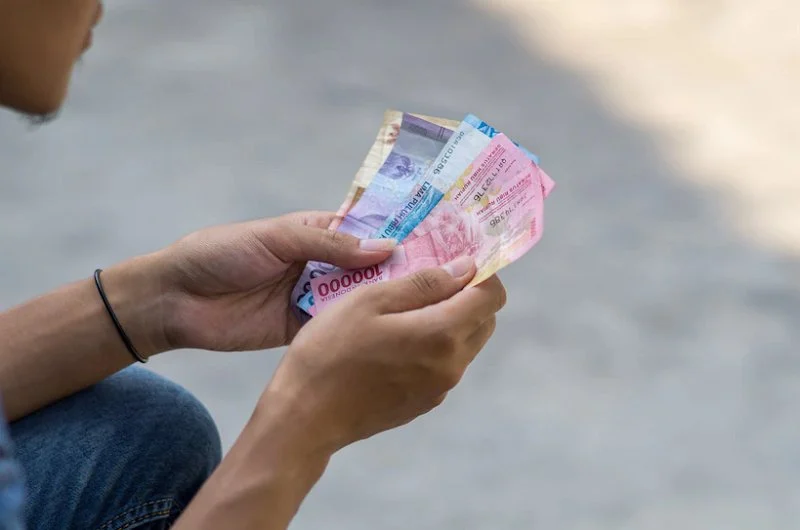
The disbursement of social assistance funds, specifically the Direct Cash Assistance (BLT) amounting to Rp600,000, remains a critical component of Indonesia’s social safety net. As of September 2026, a segment of the population categorized as Beneficiary Families (KPM) has reported delays or total non-receipt of these funds. While anxiety among the public is palpable, the government maintains that these disruptions are not arbitrary but rather the result of rigorous, data-driven administrative adjustments aimed at ensuring fiscal integrity and targeting accuracy.
Understanding why these funds remain stagnant requires an examination of the government’s systemic approach to social welfare. The Ministry of Social Affairs (Kemensos) utilizes the Integrated Social Welfare Data (DTKS) system, which serves as the primary repository for identifying eligible households. This database is not static; it is a dynamic, living document subjected to periodic verification and validation (verivali) processes to ensure that aid reaches those who truly need it, while simultaneously pruning those who have transitioned out of poverty.
The Mechanism of Periodic Data Updates
The primary driver behind the suspension of social assistance is the government’s commitment to dynamic data management. Since the inception of large-scale social assistance programs in response to economic fluctuations, the Ministry of Social Affairs has implemented quarterly updates to the DTKS. This process involves local governments—specifically at the village and sub-district levels—verifying the status of every listed household.
When a KPM fails to receive their Rp600,000 disbursement, it is frequently due to a "graduasi" (graduation) event. Graduation occurs when a family’s socioeconomic status has improved to the point where they no longer meet the poverty thresholds set by the Central Statistics Agency (BPS). In the Indonesian social welfare context, this is often measured by "deciles." If a family moves from the lowest decile (the poorest) to a higher decile through improved employment, entrepreneurial success, or increased income, they are automatically phased out of specific assistance programs.
Furthermore, discrepancies in administrative data—such as inconsistencies between a citizen’s National Identification Number (NIK) and the data registered in the Dukcapil (Civil Registry) system—often lead to automatic blocks. If the Ministry’s system detects a mismatch, the disbursement process is halted to prevent potential fraud or misdirection of funds.
The Role of PPATK and the Crackdown on Online Gambling
A significant, and relatively recent, development in the suspension of social assistance is the government’s active intervention against illegal activities. In an effort to ensure that state funds are used for essential needs—such as food, education, and health—the government has cross-referenced beneficiary data with intelligence provided by the Financial Transaction Reports and Analysis Center (PPATK).
The PPATK, which monitors suspicious financial flows, has been instrumental in identifying individuals linked to online gambling (judol) platforms. The policy is clear: those identified as active participants in online gambling are deemed to have violated the spirit of social assistance. Consequently, their access to government aid, including the Rp600,000 BLT, is immediately revoked or suspended. This move serves as a deterrent and a measure to protect state finances from being funneled into predatory digital activities that exacerbate poverty.
Chronology of Disbursement Challenges
The path to receiving social assistance is often complex. Following the initial announcement of a disbursement cycle, the Ministry of Social Affairs issues a decree regarding the list of eligible recipients. The following chronology outlines the standard flow of operations that recipients should understand:

- Data Validation (Month 1): The Ministry conducts a cross-check of the DTKS against the Dukcapil database to ensure all NIKs are valid.
- Budget Allocation (Month 2): The Ministry of Finance allocates the budget to the relevant agencies, which is then channeled through state-owned banks (Himbara) or the national postal service.
- Disbursement Phase (Month 3): Funds are transferred to the KPM’s electronic benefit card or via local post offices.
- Verification Period: If a recipient does not claim their funds within a set period, or if their data is flagged during this phase, the funds are returned to the state treasury (Kas Negara) as an unspent balance.
Steps for Beneficiaries to Verify Status
For those concerned about the status of their assistance, the government has provided digital tools to facilitate transparency. It is crucial for citizens to avoid unofficial third-party websites that may pose security risks. The official channel is the website maintained by the Ministry of Social Affairs at cekbansos.kemensos.go.id.
To check the status, individuals should follow these precise steps:
- Access the official portal: Use a secure browser to navigate to the Ministry’s portal.
- Input Regional Data: Select the province, regency, sub-district, and village corresponding to the address registered on the resident’s KTP (ID card).
- Enter Name: Input the full name exactly as it appears on the KTP.
- Captcha Verification: Complete the security code (captcha) displayed on the screen to prevent automated bot access.
- Result Analysis: Click "Cari Data." The system will display whether the person is currently listed as a beneficiary, the status of the current disbursement, and the specific program for which they are eligible.
If the status shows "Not Found," it suggests that the individual is either not registered or has been removed due to one of the aforementioned administrative reasons. In such cases, citizens are encouraged to contact their local village office (Kantor Desa/Kelurahan) to inquire about their status in the DTKS, as local officials are often the first to receive updates on data changes.
Broader Economic Implications
The decision to strictly enforce eligibility criteria is part of a broader fiscal strategy. By purging the beneficiary lists of deceased individuals, those who have migrated without updating their data, or those who have clearly transitioned out of the poverty bracket, the government aims to increase the "fiscal space" available to support truly vulnerable populations.
Economic analysts note that while the suspension of benefits causes immediate hardship for affected families, the long-term integrity of the welfare system depends on this level of scrutiny. "The effectiveness of social protection programs is not determined by the number of people receiving aid, but by the precision with which that aid is targeted," notes an expert in public policy.
However, the challenge remains in the speed of the appeals process. When a household is incorrectly removed from the list—a "false negative"—the bureaucratic hurdles to get reinstated can be significant. Local governments are currently being encouraged to streamline the "Sanggah" (objection) process, allowing citizens to formally challenge their removal from the list if they believe an error has occurred.
Conclusion and Future Outlook
As of September 2026, the administration of the Rp600,000 BLT remains a cornerstone of the national strategy to mitigate the effects of global economic instability. While the delays are undoubtedly frustrating for those in need, they are largely symptomatic of a system undergoing a transition toward greater accountability.
Recipients are advised to remain vigilant regarding their administrative data, ensure their residential information is consistent across all government platforms, and refrain from engaging in illicit activities that jeopardize their eligibility. The government continues to emphasize that the social safety net is a support system, not a permanent entitlement, and as national economic conditions evolve, so too will the structure and eligibility requirements of these vital aid programs.
For the most accurate information, beneficiaries should rely solely on updates provided by the Ministry of Social Affairs and avoid spreading unverified information from social media channels, which often exacerbate public anxiety during periods of administrative transition.