The highly anticipated legal proceedings surrounding the acid attack on prominent human rights activist Andrie Yunus are set to advance significantly tomorrow, April 16, 2025, with the formal transfer of the case file to the Military Court II-08 Jakarta. This crucial development marks a pivotal moment in a case that has drawn widespread national and international attention, highlighting persistent concerns over the safety of human rights defenders and the efficacy of Indonesia’s military justice system. Colonel Chk Andri Wijaya, Head of the Military Prosecutor 07-II Jakarta, confirmed the impending handover, scheduled for 10:00 AM Western Indonesia Time (WIB), and assured media access for comprehensive coverage. The announcement has reignited calls from civil society organizations and legal experts for a transparent and impartial trial, emphasizing the need for justice for victims of violence, particularly those targeted for their advocacy work.
Background: Andrie Yunus and the Legacy of KontraS
Andrie Yunus is an activist with the Commission for the Disappeared and Victims of Violence (KontraS), one of Indonesia’s most steadfast and vocal human rights organizations. Established in 1998 during the tumultuous period leading to the fall of the New Order regime, KontraS has a long and distinguished history of advocating for victims of state violence, enforced disappearances, torture, and extrajudicial killings. The organization has consistently championed justice for past abuses, pushed for military and police reform, and monitored the human rights situation across the archipelago. Andrie Yunus, in his capacity as an activist, has been integral to KontraS’s mission, often involved in documenting abuses, providing legal aid, and campaigning for accountability. The attack on him, therefore, is not merely an assault on an individual but is widely perceived as an attack on the broader human rights movement and the fundamental right to freedom of expression and assembly in Indonesia. Activists like Yunus frequently operate in challenging environments, facing intimidation, threats, and physical violence due to their unwavering commitment to exposing injustice and holding powerful actors accountable.
The Attack: A Timeline of Violence and Investigation
The brutal acid attack on Andrie Yunus occurred on the evening of December 12, 2024, as he was returning home from a day of advocacy work. The incident, which took place in a residential area of Jakarta, left Yunus with severe burns and significant trauma, requiring extensive medical treatment and a prolonged recovery period. Eyewitness accounts, though limited, suggested the involvement of two individuals on a motorcycle who swiftly fled the scene after dousing Yunus with a corrosive liquid. The immediate aftermath saw a surge of public outrage and condemnation from various sectors of society, including human rights organizations, student groups, and political figures. KontraS, along with other civil society groups, swiftly launched a campaign demanding a thorough and expedited investigation, emphasizing the need to identify not only the perpetrators but also any masterminds behind the attack.
The police investigation, which commenced shortly after the incident, initially faced challenges in identifying suspects. However, through diligent forensic work and intelligence gathering, authorities eventually apprehended several individuals believed to be involved. Crucially, it emerged that at least one of the primary suspects was an active member of the Indonesian military. This discovery immediately shifted the jurisdictional landscape of the case, moving it from the purview of civilian courts to the military justice system, a transition that has historically been a point of contention for human rights advocates in Indonesia. The involvement of military personnel underscored the potential for the attack to be politically motivated or linked to Yunus’s activism, amplifying concerns about state-sponsored intimidation against human rights defenders. The investigation phase leading up to the transfer of the case file has been closely watched, with human rights groups consistently pressing for transparency and a commitment to uncovering the full truth.
Indonesia’s Military Justice System: A Complex Landscape
The decision to try the suspected military personnel in a military court is mandated by Indonesian law, specifically Law No. 31 of 1997 on Military Courts. This legislation stipulates that active members of the armed forces accused of criminal offenses must be tried under the military justice system, regardless of whether their alleged crimes were committed in the line of duty or against civilians. While this legal framework aims to maintain discipline within the military, it has been a consistent source of criticism from human rights organizations and legal reform advocates for decades. Critics argue that the military justice system often lacks the transparency, independence, and impartiality inherent in civilian courts. Concerns frequently cited include:
- Lack of Transparency: Proceedings in military courts are often less open to public scrutiny compared to civilian trials, making it difficult for civil society to monitor the process and ensure fairness.
- Perceived Leniency: There is a widespread perception that military courts tend to hand down lighter sentences to their own personnel, particularly in cases involving abuses against civilians, compared to what would be expected in a civilian court.
- Limited Civilian Oversight: The system operates largely independently, with limited avenues for civilian oversight or accountability, which can hinder the pursuit of justice for civilian victims.
- Potential for Conflict of Interest: The prosecutors and judges within the military justice system are themselves military officers, raising questions about their ability to render judgments entirely free from institutional loyalty or pressure.
This historical context makes the Andrie Yunus case particularly sensitive. Human rights groups fear that the trial in a military court could impede the full disclosure of facts, particularly regarding potential command responsibility or wider networks involved in the attack, and ultimately compromise the pursuit of genuine justice for Yunus.
Demands for Ad Hoc Judges: Ensuring Impartiality
In light of the deep-seated concerns regarding the military justice system, a significant proposal has emerged from various quarters, including the Vice President-elect Gibran Rakabuming Raka and former Minister of Law and Human Rights Yusril Ihza Mahendra: the involvement of ad hoc judges in the trial. This suggestion, as highlighted in related news, calls for the inclusion of judges from outside the military structure, potentially civilian judges with expertise in human rights law, to sit alongside military judges. The rationale behind this proposal is to introduce an element of impartiality and civilian oversight, thereby enhancing public trust in the trial’s fairness and integrity.

Yusril Ihza Mahendra, for instance, has confirmed that discussions on involving ad hoc judges would be held with the Supreme Court (MA), indicating a recognition at high levels of government of the need to address public skepticism. Proponents of ad hoc judges argue that their presence could ensure a more robust examination of evidence, a stricter adherence to human rights principles, and a greater likelihood of a verdict that satisfies the demands for justice. It would also serve as a potential mechanism to bridge the gap between the military justice system and civilian expectations of transparency and accountability. However, implementing such a measure would require careful legal consideration and potentially amendments or interpretations of existing laws, as the current framework for military courts does not typically include civilian judges in this capacity. The debate surrounding ad hoc judges underscores the profound importance of this case as a potential catalyst for reform within Indonesia’s legal framework for military personnel.
Human Rights Advocacy: A United Front
The attack on Andrie Yunus has galvanized the human rights community in Indonesia and beyond. KontraS, supported by a broad coalition of national and international non-governmental organizations, has maintained consistent pressure on authorities to ensure a fair, transparent, and comprehensive legal process. Statements from KontraS have repeatedly demanded:
- Thorough Investigation: Not just into the direct perpetrators, but also into any individuals or entities that may have ordered or facilitated the attack.
- Protection for Human Rights Defenders: A robust commitment from the state to ensure the safety and security of activists who often face threats for their work.
- Transparency: Open access for civil society and media to monitor the trial proceedings.
- Justice and Accountability: A verdict that reflects the gravity of the crime and holds all responsible parties accountable, regardless of their position or affiliation.
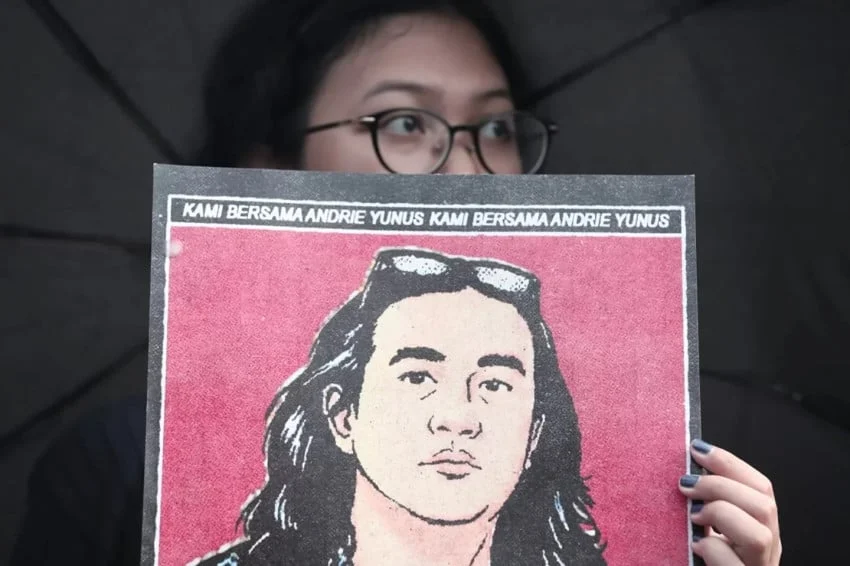
The case has also become a focal point for long-standing advocacy initiatives, such as the weekly "Kamisan Action" (Aksi Kamisan) held in front of the Presidential Palace. The image accompanying the original news, depicting the 902nd Kamisan Action, serves as a poignant reminder of the enduring struggle for justice for victims of human rights abuses in Indonesia. These silent protests, held every Thursday, symbolize the persistent demands for accountability that echo across various cases, including that of Andrie Yunus. Organizations like Amnesty International and Human Rights Watch have also issued statements condemning the attack and calling on the Indonesian government to uphold its international human rights obligations to protect activists and ensure justice for attacks against them. They emphasize that failing to secure justice in such a high-profile case could send a chilling message to other human rights defenders, potentially leading to a shrinking civic space.
Broader Implications: Precedent, Protection, and Reform
The outcome of the Andrie Yunus case holds significant implications for several critical aspects of Indonesian society:
- Precedent for Justice: This trial has the potential to set a crucial precedent for how cases involving military personnel accused of crimes against civilians are handled. A transparent and just verdict could bolster public confidence in the legal system, while a perceived whitewash could deepen cynicism and further erode trust in the military’s accountability mechanisms.
- Protection of Human Rights Defenders: The safety and security of human rights defenders are fundamental to a healthy democracy. A strong judicial response to the attack on Andrie Yunus would send a clear message that violence against activists will not be tolerated and that the state is committed to protecting those who speak truth to power. Conversely, an unsatisfactory outcome could embolden perpetrators and further endanger activists working on sensitive issues.
- Military Reform: The case places renewed scrutiny on the need for continued reform within the Indonesian military, particularly concerning its justice system. Calls for greater transparency, civilian oversight, and alignment with international human rights standards are likely to intensify, potentially leading to long-overdue legislative changes. The discussion around ad hoc judges is a direct reflection of this pressure for reform.
- Rule of Law: At its core, the case is a test of Indonesia’s commitment to the rule of law. Ensuring that justice is served, regardless of the perpetrator’s background, is essential for maintaining a society where everyone is equal before the law.
The Road Ahead: Monitoring the Trial
As the case file is transferred to the Military Court II-08 Jakarta, the focus will now shift to the trial proceedings themselves. Human rights organizations, media, and the public will be closely monitoring every stage, from the preliminary hearings to the presentation of evidence and the final verdict. The ability of the court to conduct a fair and open trial, to thoroughly examine all evidence, and to resist any potential institutional pressures will be paramount. The integrity of the judicial process will be judged not only by the legal outcome but also by its adherence to principles of transparency and due process. The involvement of independent observers, if permitted, could further enhance the credibility of the proceedings.
The Global Context: Threats to Human Rights Defenders
The attack on Andrie Yunus is not an isolated incident but rather reflects a global trend of increasing threats and violence against human rights defenders. According to reports from organizations like Front Line Defenders, hundreds of human rights defenders are killed or face serious attacks worldwide each year. In 2023 alone, Front Line Defenders documented the killings of 195 human rights defenders in 34 countries, with countless others facing arbitrary detention, judicial harassment, smear campaigns, and physical assaults. Latin America and Asia consistently rank among the most dangerous regions for activists. Such attacks aim to silence dissent, deter advocacy, and undermine democratic processes. The international community, including the United Nations and various human rights bodies, consistently calls on states to protect human rights defenders, investigate all attacks against them, and ensure accountability for perpetrators. The Andrie Yunus case, therefore, resonates far beyond Indonesia’s borders, serving as a stark reminder of the risks faced by those dedicated to upholding human dignity and justice globally.
Conclusion: A Test of Justice
The transfer of Andrie Yunus’s case file to the Military Court II-08 Jakarta marks a critical juncture in a deeply significant legal battle. It represents not just the pursuit of justice for an individual victim, but a broader struggle for accountability, transparency, and the protection of human rights in Indonesia. The eyes of the nation, and indeed the international community, will be fixed on the military court, observing whether it can deliver a verdict that upholds the principles of justice, strengthens the rule of law, and sends an unequivocal message that attacks on those who defend human rights will not go unpunished. The future credibility of Indonesia’s justice system, particularly its military component, hinges on the fairness and integrity of the proceedings that are now set to unfold.