In a strategic maneuver to maintain economic stability, the Chinese government has officially announced an extension of its current trade truce with the United States. According to the Customs Tariff Commission of the State Council, Beijing will continue to suspend an additional 24% tariff on a range of American imports for another two months. While this extension serves as a vital reprieve for businesses operating across the Pacific, the move is tempered by the continued enforcement of a 10% supplemental tariff, signaling that while the threat of total trade escalation has been mitigated, the friction remains far from resolved.
The policy, which took effect on November 10, 2026, at 13:01 Beijing time, represents a significant diplomatic effort to preserve the fragile equilibrium in the world’s two largest economies. By extending this suspension until January 2027, Beijing is effectively buying time to navigate the volatile shifts in U.S. economic policy, specifically those tied to the transition of administrative powers and evolving trade enforcement mechanisms.
The Historical Context of the Trade Dispute
The current tensions are rooted in a long-standing series of trade disputes that have escalated periodically since 2018. The imposition of tariffs has been characterized by retaliatory cycles where both Washington and Beijing utilized punitive measures to protect domestic industries and counter perceived unfair trade practices.
The specific policy framework mentioned in the latest announcement—referencing the transition from the International Emergency Economic Powers Act (IEEPA) to the more rigorous Section 301 of the Trade Act of 1974—highlights the underlying legal complexities. The U.S. government has historically argued that its tariff regime is necessary to address intellectual property theft and forced technology transfers. Conversely, China has maintained that these measures are protectionist and violate World Trade Organization (WTO) principles. The adjustment of the 24% tariff suspension is a direct response to the diplomatic dialogue initiated between leaders of both nations in Washington, aiming to prevent a total collapse of bilateral commercial relations.
Chronology of Recent Escalations and Reconciliations
To understand the significance of the January 2027 deadline, it is essential to view the timeline of the recent trade friction:
- Early 2025: The implementation of "Announcement No. 4" set the stage for a series of tariff adjustments intended to pressure American exporters.
- Mid-2026: Diplomatic channels opened between Washington and Beijing to address the mounting economic costs of the trade war, which began to impact global supply chains, particularly in the semiconductor and manufacturing sectors.
- November 2026: The official extension of the tariff suspension was announced, effectively pushing the deadline for a potential renewal of hostilities to January 2027.
- January 2027: This date marks a critical junction where both nations will likely evaluate the success of the current truce before deciding on long-term tariff structures.
The Scope of the Suspension and Broader Economic Impacts
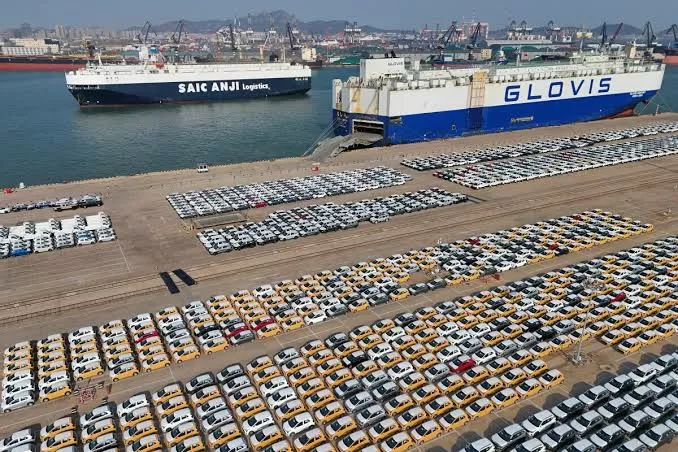
The reach of these measures extends well beyond mere customs duties. The Ministry of Transport in China has synchronized its policies with the Customs Tariff Commission, confirming that special levies previously planned for U.S.-flagged vessels will be deferred until January 10, 2027. This move is intended to prevent the disruption of maritime logistics, which remains a primary artery for trade between the two countries.
Furthermore, the Ministry of Commerce has signaled a broader conciliatory posture by extending the suspension of trade and export restrictions on 27 American entities. This also includes the deferral of sanctions against the U.S.-based subsidiaries of the South Korean shipbuilding giant, Hanwha Ocean. By providing these exemptions, China is attempting to decouple its broader trade war strategy from specific corporate entities that are vital to global industrial production.

Fact-Based Analysis of the Current Landscape
The decision to maintain a 10% tariff while suspending the 24% levy suggests a calculated "middle-ground" approach. Economists note that this is a "wait-and-see" strategy. By keeping the 10% tariff in place, Beijing retains leverage and signals to Washington that it is not fully abandoning its stance against American trade policies. However, by suspending the more aggressive 24% levy, China avoids triggering an immediate, full-scale retaliation from the U.S. that could further destabilize global markets already reeling from inflation and supply chain bottlenecks.
The situation is further complicated by recent geopolitical developments, including reports of corporate espionage and sensitive technology breaches involving major industry players like Nvidia. Such incidents serve as a backdrop to the trade negotiations, making the environment for diplomacy increasingly precarious. The ability of the two nations to maintain this truce depends heavily on their ability to compartmentalize these sensitive security issues from the broader economic agenda.
Official Responses and Future Implications
While no official statement has been released by the U.S. Trade Representative (USTR) regarding the specific extension, market analysts suggest that the U.S. is likely monitoring the situation closely to determine if the suspension of the 24% tariff will lead to substantive changes in China’s domestic policies regarding industrial subsidies and state-owned enterprises.
For global businesses, the extension provides a much-needed period of predictability. The uncertainty surrounding trade policies often forces companies to hold back on capital investment and inventory expansion. A two-month extension, while brief in the context of international trade, allows firms to plan for the first quarter of 2027 with slightly more confidence.
However, the risk of a "cliff" remains. If by January 2027 a more permanent agreement has not been reached, the threat of the 24% tariff returning—or potentially increasing—could lead to a massive, last-minute rush to clear goods through customs, creating logistical nightmares at major ports in both Los Angeles and Shanghai.
Broader Implications for Global Trade
The China-U.S. trade relationship is the primary driver of the global economy. When these two powers engage in tariff skirmishes, the impact is felt universally. From the price of raw materials to the cost of consumer electronics, the uncertainty generated by these policy shifts trickles down to end-users.
The current, albeit temporary, stability is a reflection of the reality that neither nation can afford a total decoupling of their economies without facing severe domestic repercussions. The Chinese economy, currently navigating a period of internal structural adjustment, relies on export stability, while the American economy continues to depend on the availability of affordable Chinese-manufactured components and consumer goods.
As the international community watches these developments, the focus will remain on whether these two-month increments will eventually evolve into a comprehensive trade framework or if they are simply a temporary stalling tactic in an era of prolonged geopolitical competition. For now, the "January 2027" deadline stands as the next major checkpoint in a global economic drama that shows no signs of concluding in the near term. The coming weeks will likely see increased back-channel negotiations to determine if a more permanent framework can be established before the current suspension expires.