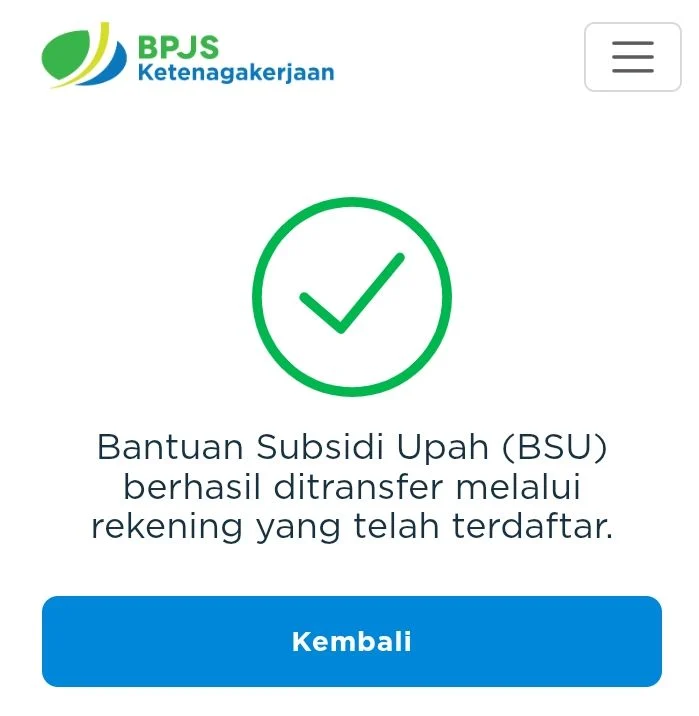
The Indonesian Ministry of Manpower (Kemnaker) has officially initiated the disbursement process for the 2026 Wage Subsidy Assistance (BSU), a government-led economic stimulus program designed to bolster the purchasing power of workers across the nation. Eligible employees are set to receive a total of Rp900,000, distributed as a lump-sum payment representing three months of financial support at Rp300,000 per month. This initiative, which rolls out throughout November and December, serves as a targeted intervention to maintain economic stability for the workforce amidst ongoing global inflationary pressures.
Regulatory Framework and Legal Basis
The implementation of the 2026 BSU program is strictly governed by the recently enacted Minister of Manpower Regulation Number 16 of 2026. This regulation functions as the second amendment to the foundational Minister of Manpower Regulation Number 10 of 2022, which originally established the guidelines for government-provided wage subsidies.
By formalizing these criteria, the government aims to ensure transparency and accountability in the distribution of funds. The technical guidelines associated with this regulation provide a comprehensive roadmap for employers and employees alike, detailing the administrative processes required to verify eligibility and facilitate the transfer of funds through official banking channels.
Core Eligibility Criteria for Beneficiaries
To ensure the assistance reaches the intended demographic, the Ministry of Manpower has established stringent eligibility requirements. According to the official directives, applicants must meet the following criteria:
- Citizenship Status: The beneficiary must be an Indonesian citizen (WNI), verified through a valid National Identity Number (NIK).
- Employment Insurance Participation: The worker must be an active participant in the BPJS Ketenagakerjaan (Social Security Agency for Employment) program. Crucially, the beneficiary must have held active status as of August 2026.
- Wage Thresholds: While the specific wage ceiling is determined by regional minimum wage standards, the subsidy is primarily aimed at those earning below the defined threshold for "low-to-middle income" workers in their respective provinces.
Indah Anggoro Putri, the Director General of Industrial Relations Development and Social Security for Workers (PHI and Jamsos) at the Ministry of Manpower, emphasized that these requirements are non-negotiable to maintain the integrity of the subsidy distribution. "We are committed to ensuring that this assistance is channeled accurately to maintain the economic resilience and purchasing power of Indonesian workers, ensuring that their financial stability remains protected during these challenging times," stated Indah during a press briefing in Jakarta.
Historical Context and Evolution of the BSU Program
The BSU program is not a new initiative but rather an evolved response to economic crises. First introduced during the COVID-19 pandemic in 2020, the program was designed to provide a financial cushion for workers whose salaries were affected by lockdown restrictions and business contractions.
Over the years, the program has undergone several iterations. In 2022, the government refined the eligibility criteria to focus more specifically on workers in the formal sector who had not yet received other forms of social assistance, such as the Family Hope Program (PKH) or the Pre-Employment Card (Kartu Prakerja). The 2026 iteration reflects a strategic shift toward long-term economic resilience, acknowledging that while the pandemic has subsided, global economic volatility—driven by fluctuating commodity prices and geopolitical tensions—continues to impact the domestic cost of living.
Chronology of Disbursement
The rollout for the 2026 cycle follows a structured timeline to prevent administrative bottlenecks:
- Early August 2026: Deadline for verifying the BPJS Ketenagakerjaan database to identify active participants who meet the criteria.
- September – October 2026: Cross-referencing data with the Ministry of Social Affairs and other government databases to prevent double-dipping of social assistance.
- Early November 2026: Commencement of fund transfers to the Himpunan Bank Milik Negara (Himbara) banks—including BNI, BRI, Mandiri, and BTN—as well as Bank Syariah Indonesia (BSI) for recipients in Aceh.
- November – December 2026: Finalization of the disbursement phase, with ongoing monitoring to address any failed transfers due to inactive or mismatched account data.
Analysis: Economic Impact and Implications
The distribution of Rp900,000 per worker, while appearing modest, carries significant weight when aggregated across the millions of eligible workers. Economists note that this injection of liquidity serves two primary purposes: immediate consumption support and inflationary mitigation.
By providing cash directly to low-income workers, the government stimulates local demand for essential goods. This, in turn, helps maintain the revenue streams of Small and Medium Enterprises (SMEs) that form the backbone of the Indonesian economy. However, some analysts argue that such subsidies are "short-term bandages" and suggest that the government must eventually pivot toward structural reforms, such as upskilling programs or more aggressive minimum wage adjustments, to ensure long-term prosperity.
Furthermore, the integration of BPJS Ketenagakerjaan data as the primary vetting tool reinforces the importance of social security participation. It serves as a nudge for both employers and employees in the informal sector to register with the national insurance scheme, thereby expanding the social safety net’s reach.
Official Response and Public Guidance
The Ministry of Manpower has urged workers to exercise caution regarding fraudulent websites or unofficial communication channels claiming to provide BSU information. Official updates are exclusively provided through the Ministry’s website (kemnaker.go.id) and the official BPJS Ketenagakerjaan portal.
Workers are advised to regularly check their bank accounts linked to their payroll or their Himbara accounts. In cases where a worker meets all requirements but has not received the funds, the Ministry has provided a grievance mechanism. This involves verifying the status of their registration through the BPJS Ketenagakerjaan’s online system to ensure their NIK and bank details are correctly recorded.
Challenges in Distribution
Despite the streamlined process, the government acknowledges several operational challenges. The most common issue remains the "unmatched data" scenario, where the bank account provided by the worker does not match the name registered in the BPJS Ketenagakerjaan system. Additionally, accounts that have been inactive for an extended period may cause transfer failures.
To address these, the Ministry of Manpower, in collaboration with the banking sector, has implemented a "re-verification" cycle. If a transfer fails, the funds are returned to the state treasury, and the Ministry works with the employer to rectify the administrative error, ensuring the worker eventually receives the subsidy.
Future Outlook: Beyond 2026
As the 2026 BSU program concludes at the end of December, the government is expected to evaluate its performance against broader economic indicators, such as the national poverty rate and domestic consumption levels. Policymakers are likely to use this data to determine whether such direct cash transfers should remain a staple of the social safety net or if they should be replaced by more sustainable, growth-oriented programs.
For the millions of Indonesian workers currently receiving the Rp900,000 aid, the immediate focus is on utilizing these funds to cover basic household expenditures. While the amount may not be substantial in the context of the total cost of living, the government’s commitment to this program signals a continued focus on protecting the most vulnerable segments of the workforce, ensuring that the wheels of the Indonesian economy continue to turn even in the face of uncertainty.
Conclusion
The 2026 BSU program represents a vital component of Indonesia’s broader social protection strategy. By aligning strict eligibility requirements with a robust digital verification system, the Ministry of Manpower seeks to ensure that the aid is both equitable and effective. As the disbursement phase moves toward its conclusion, the focus remains on ensuring that every eligible worker receives the support they are entitled to, thereby reinforcing the government’s role in maintaining national economic stability during these final months of the year. Workers are encouraged to stay vigilant, check their account status, and utilize the official channels for any inquiries, ensuring a smooth and successful distribution process for all beneficiaries.