The red carpet of the 78th Primetime Emmy Awards in 2026 transformed into an extraordinary canvas of sartorial expression, where the intersection of traditional craftsmanship and contemporary design dictated the evening’s biggest fashion statements. Hollywood’s most celebrated actors arrived at the venue draped in exquisite creations from the world’s most prestigious fashion houses, offering a visual feast of dramatic architectural gowns, fluid bias-cut slips, and aggressively modern iterations of menswear tailoring. This year’s ceremony, broadcast globally to millions of fashion and television enthusiasts, proved once again that the red carpet is not merely an introductory prelude to an awards show, but a significant cultural and economic ecosystem for luxury brands. As sustainability, personal expression, and historical nods continue to dominate red carpet styling strategies, the 2026 Emmy Awards delivered a definitive playbook on how modern celebrities and top-tier stylists leverage fashion to command the global spotlight.
The chronological rollout of the evening’s arrivals set an electric tone early on, as early-evening fashion commentators noted a distinct departure from predictable minimalism in favor of textured depth, metallic finishes, and nuanced color palettes dominated by muted pastels and rich jewel tones. Unlike previous years where safe monochromatic black suits and traditional ballgowns reigned supreme, the 2026 iteration encouraged bold risk-taking. Major luxury conglomerates, including LVMH, Kering, and independent giants like Prada and Chanel, orchestrated meticulously planned wardrobe campaigns for their brand ambassadors, turning the red carpet into a high-stakes runway. This strategic alignment between television’s biggest night and elite couture houses highlights the growing interdependence of the entertainment and luxury retail sectors, where a single memorable red carpet look can translate into millions of dollars in earned media value and immediate digital engagement.
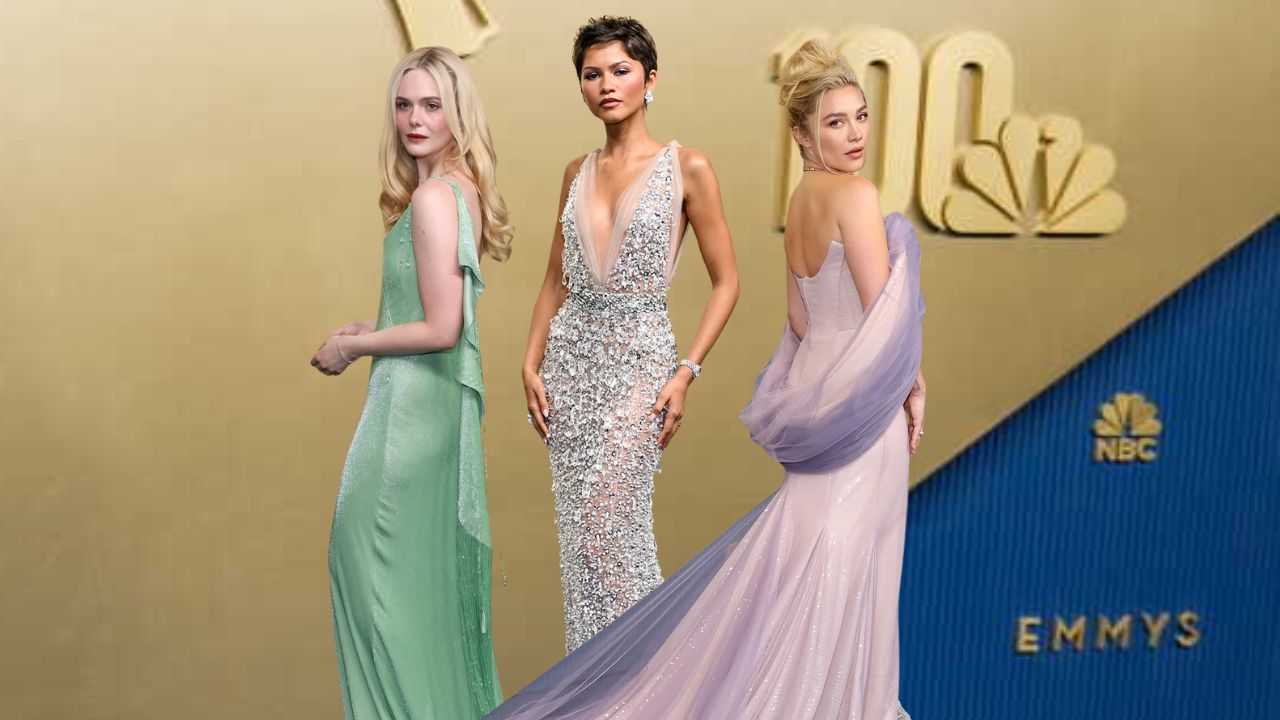
Among the standout womenswear presentations, Florence Pugh captured immediate critical acclaim in a custom Vivienne Westwood creation. Pugh’s lilac ensemble was a masterclass in contrasting textures, seamlessly marrying the rigid, commanding architecture of a traditional corset with the ethereal, weightless quality of featherlight transparent tulle. The subtle shimmering finish across the gown’s surface introduced a dynamic interplay with the flash photography of the red carpet, allowing the lilac hue to shift tones dynamically. Fashion critics lauded the look for maintaining Westwood’s signature rebellious punk-infused heritage while adapting it to the high-glamour demands of a prestigious television awards ceremony. The structural corset provided a sharp, unapologetic silhouette, anchoring the otherwise fluid and romantic elements of the design.

Equally captivating was Sarah Pidgeon’s interpretation of Chanel elegance. Pidgeon opted for a liquid-like lilac slip dress cut on the bias, a technique that allows the fabric to drape organically and hug the contours of the body with effortless grace. What elevated the minimalist silhouette from simple to sensational was the intricate embellishment along the neckline. Artisans at Chanel’s ateliers intricately encrusted the garment with a dazzling combination of gold and silver chains, precision-cut crystals, delicate beadwork, and lustrous white and lilac pearls. The thoughtful inclusion of a dramatic backless cut added a subtle touch of sensuality, ensuring that Pidgeon’s appearance balanced understated French sophistication with modern red carpet allure.
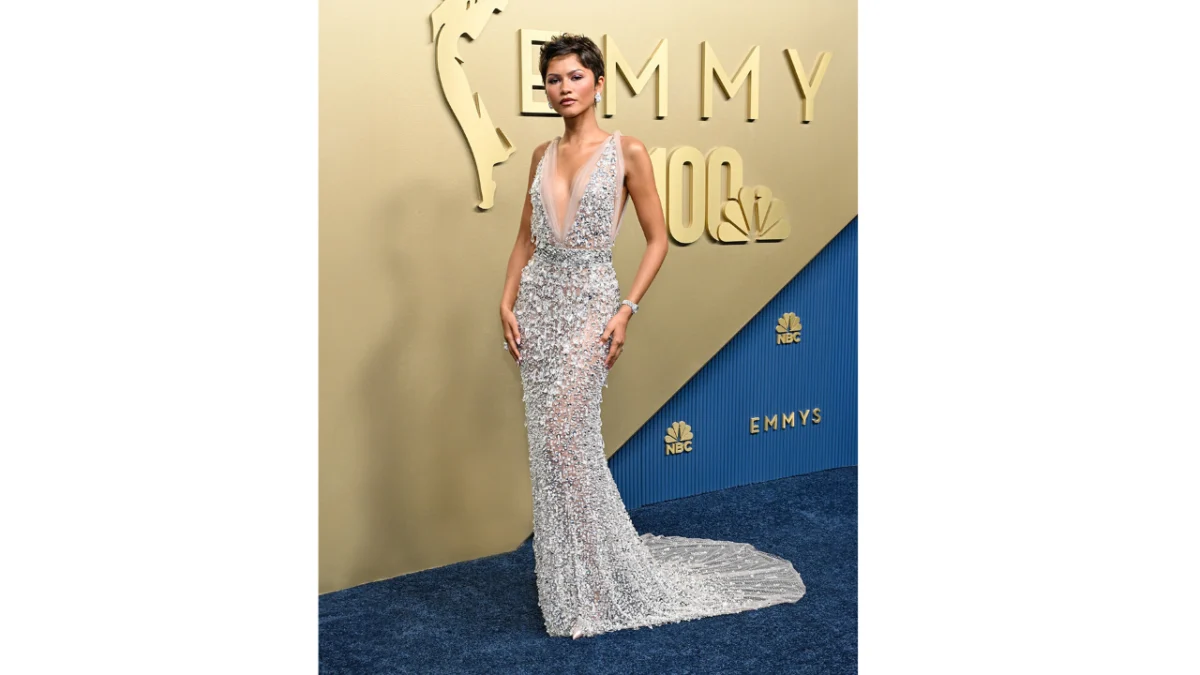
No discussion of modern red carpet dominance is complete without mentioning Zendaya, whose ongoing sartorial partnership with Prada continues to set the gold standard for celebrity styling. Zendaya arrived in a breathtaking custom Prada creation drenched in shimmering silver. The V-neck gown clung flawlessly to her frame, featuring a daringly low neckline and semi-transparent fabrics that played with light and shadow. The surface of the dress was entirely populated by micro-crystals and pearls, creating a luminous, second-skin effect that cascaded down into a dramatic, floor-sweeping train. Style analysts quickly hailed Zendaya’s look as one of the most technically demanding pieces of the evening, requiring hundreds of hours of hand-embroidery to achieve its liquid-metal luminosity.

Shifting toward ethereal romance, Elle Fanning embraced the gentle, refreshing palette of the evening in a stunning mint-green gown from the Ralph Lauren Collection. Known for her penchant for fairy-tale aesthetics, Fanning’s dress featured delicate spaghetti straps, a sophisticated wrap neckline, and a fluid silhouette that moved like water. The defining architectural element of her look was a long, sweeping sash draped effortlessly over her shoulder, trailing down to the floor and finished with delicate, artisanal fringe. The mint hue offered a refreshing visual palate cleanser amidst a sea of metallics and heavy jewel tones, cementing Fanning’s status as a perennial red carpet favorite.
Rhea Seehorn brought a fierce, avant-garde sensibility to the proceedings through a custom Louis Vuitton masterpiece designed by Nicolas Ghesquière. Seehorn’s gown was an exercise in structural geometry, hugging the torso tightly before dramatically flaring out toward the hem in a controlled, sculptural cascade. The intricate surface detailing introduced complex tactile dimensions, proving that Ghesquière’s futuristic vision for Louis Vuitton translates exceptionally well to classical red carpet codes. The dress commanded attention not through excessive skin exposure, but through the sheer brilliance of its engineering and textile manipulation.

The evolution of menswear on the red carpet was equally compelling, breaking away from the monotonous sea of black tuxedos that once defined Hollywood ceremonies. Adam Brody spearheaded this shift in a sharp, impeccably tailored Prada suit. Brody’s look offered a masterclass in clean lines and modern proportions, punctuated by Prada’s signature twilly tie. This small yet impactful styling choice injected a contemporary, youth-culture energy into traditional formal wear, demonstrating how menswear can successfully experiment with accessories without sacrificing sophistication.
Colman Domingo, widely recognized as a modern fashion risk-taker and style icon, continued his winning streak on the red carpet with a commanding ensemble by Valentino. Domingo’s suit showcased an assertive silhouette characterized by powerful shoulders and precise tailoring, dyed in a rich, saturated colorway that demanded immediate attention. His appearance underscored a broader industry movement toward expressive, gender-fluid, and personality-driven menswear, where actors are no longer content to serve as mere backdrops to their female counterparts, but instead emerge as primary fashion innovators in their own right.

Complementing the menswear narrative, Paul Anthony brought a sleek, highly structured aesthetic to the Emmy Awards via Louis Vuitton. Anthony’s tailored ensemble embraced minimalist luxury, relying on immaculate tailoring, sharp lines, and luxurious fabric weights to make a definitive statement. The look aligned seamlessly with the actor’s established personal style, proving that restraint, when executed with absolute precision, can be just as impactful as avant-garde experimentation.
Oscar Isaac rounded out the notable menswear presentations with a relaxed yet deeply sophisticated offering from Celine. Isaac’s tailored suit subverted traditional black-tie expectations by incorporating a classic ivory waistband, infusing the look with a subtle touch of vintage charm and relaxed nonchalance. The ensemble highlighted a growing trend toward softer, less rigid tailoring on the red carpet, where comfort and individual personality take precedence over stiff formality.

The broader implications of the fashion choices displayed at the Emmy Awards 2026 extend far beyond a single night of celebration. Industry insiders and economic analysts note that high-profile red carpet placements serve as the ultimate marketing funnel for luxury conglomerates. When a celebrity wears a custom creation by houses like Prada, Chanel, or Louis Vuitton, the subsequent spike in digital searches, social media impressions, and direct-to-consumer interest in related ready-to-wear accessories provides a quantifiable return on investment. Furthermore, the increasing prominence of menswear experimentation signals a permanent demographic shift in luxury fashion consumption, where male consumers are increasingly willing to invest in high-fashion tailoring, statement accessories, and bold color palettes inspired by red carpet icons.
Ultimately, the red carpet of the 2026 Emmy Awards will be remembered as a triumphant celebration of stylistic diversity. From Florence Pugh’s punk-inflected Westwood corset and Zendaya’s crystal-encrusted Prada masterpiece to Colman Domingo’s bold Valentino tailoring, the evening proved that fashion remains an indispensable pillar of modern entertainment culture. As trends continue to oscillate between historical references and futuristic structuralism, television’s biggest night provided an inspiring glimpse into the future of global luxury style.