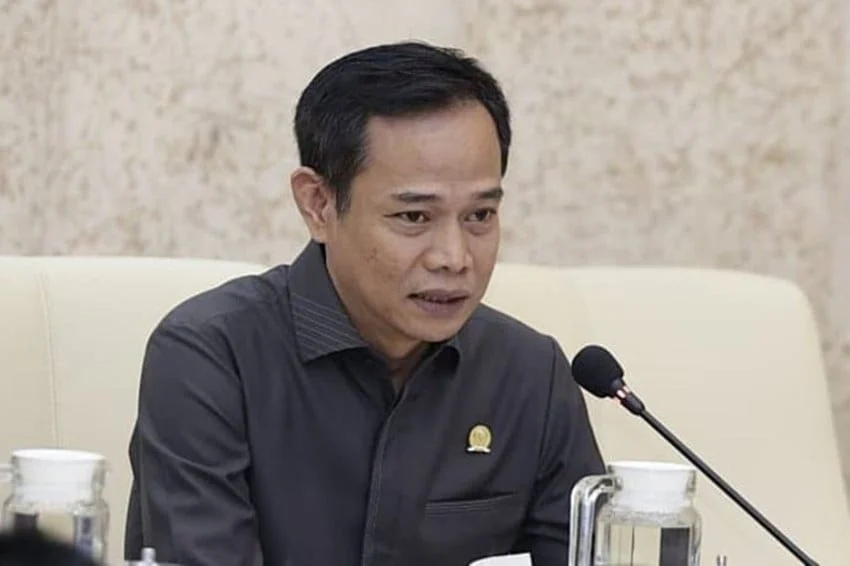
JAKARTA — Growing political discontent among Indonesia’s youngest electorate has reached the halls of parliament, as a member of the House of Representatives (DPR) reported significant backlash directed at Vice President Gibran Rakabuming Raka. According to Eka Widodo, a legislator from the National Awakening Party (PKB), numerous constituents belonging to Generation Z have expressed profound disappointment regarding the legal and political controversies surrounding the nation’s second-highest-ranking executive. The grievances, which include direct calls for the impeachment of the Vice President, were allegedly voiced during a recent constituent engagement period, commonly known as recess, in the Central Java IX electoral district.
The rising friction highlights a deepening generational divide over political ethics, institutional integrity, and the pathways to power in contemporary Indonesian politics. While the administration continues
to push its national development agenda, segments of the youth demographic argue that the events leading to Gibran’s ascension have undermined meritocracy and damaged the perception of youth participation in public service.
Constituent Encounters and Youth Grievances in Central Java
The controversy came to light when Eka Widodo, widely known as Edo, detailed his interactions with young voters during his official parliamentary duties in his constituency. Central Java IX—encompassing regions such as Tegal and Brebes—became an unexpected focal point for anti-establishment sentiment among first-time voters and young professionals.
According to the PKB lawmaker, groups of young individuals approached him directly to register their discontent. The core of their argument centers on the perception that the legal maneuvering which enabled Gibran’s vice-presidential candidacy fundamentally compromised the sanctity of the constitution. Furthermore, these young constituents expressed frustration that the trajectory of the current vice president sets a troubling precedent, suggesting that familial proximity to executive power supersedes institutional rules and democratic norms.
"When I was conducting my recess in the Central Java IX electoral district, I was surrounded by Gen Z youths. They conveyed a very deep disappointment regarding the Gibran case," Edo stated in an official release. "They feel that the constitution was damaged and the hearts of young people were hurt. This is purely the voice of Gen Z youths conveyed to me during the recess."
The Legal Catalyst: The Controversial Constitutional Court Ruling
To understand the roots of the current friction, it is necessary to examine the constitutional and political timeline that enabled Gibran Rakabuming Raka to enter the 2024 presidential race. The controversy traces back to late 2023, a pivotal period that reshaped the electoral landscape of the world’s third-largest democracy.
For years, Indonesian electoral law stipulated that candidates for president and vice president must be at least 40 years old. This requirement effectively barred numerous younger regional leaders from national executive office. However, the legal framework shifted dramatically on October 16, 2023, when the Constitutional Court (MK) issued Decision Number 90/PUU-XXI/2023.
The ruling, presided over by then-Chief Justice Anwar Usman—who is the maternal uncle of Gibran Rakabuming Raka—introduced an exception to the minimum age requirement. The court ruled that individuals under 40 years old could run for president or vice president provided they had previously been elected to public office through a regional or national election, such as a gubernatorial, mayoral, or regency race.
This judicial decision instantly cleared the path for Gibran, who was then the 36-year-old Mayor of Surakarta (Solo) and the eldest son of then-President Joko Widodo. Within days of the ruling, the Prabowo Subianto-Gibran Rakabuming Raka ticket was finalized, culminating in their victory in the February 2024 presidential election and their subsequent inauguration later that year.
The decision, however, was met with immediate ethical and public outcry. An internal ethics council investigation later found Anwar Usman guilty of severe violations of judicial ethics regarding conflicts of interest, leading to his removal as Chief Justice, though the Constitutional Court’s verdict itself remained legally binding and could not be overturned.
Broader Socio-Political Implications for Gen Z Engagement
The involvement of Gen Z in these political debates signifies a notable shift in how younger Indonesians view democratic institutions. Analysts and political scientists point out that Generation Z and younger millennials constitute more than half of the total electorate in Indonesia, making their political attitudes a decisive factor in national stability and future electoral outcomes.
While initial analyses of the 2024 election suggested that young voters were primarily motivated by pragmatic economic policies, social media presence, and charismatic campaigns, subsequent developments have revealed a more nuanced and critical perspective. A segment of this demographic is demonstrating heightened awareness of constitutional law, governance ethics, and the principles of fair competition.
The argument presented by the youth groups in Central Java—that Gibran’s rise diminishes the legitimate aspirations of ordinary young people—strikes at the heart of modern Indonesian meritocracy. Many young citizens feel that while millions of youths study, work, and compete under strict regulatory frameworks, high-level political exceptions can be engineered for those with direct ties to the ruling elite. This perception risks fostering political alienation, cynicism, and a generalized distrust of democratic processes among the rising generation.
Political Repercussions and the Stance of Political Parties
The emergence of impeachment rhetoric from constituent interactions places opposition parties and independent factions in a delicate yet strategic position. While mainstream political parties in the ruling coalition maintain a solid majority in the DPR, expressions of discontent from grassroots legislators like Edo reflect underlying tensions within legislative coalitions.
The National Awakening Party (PKB), historically rooted in traditionalist Islamic networks and a strong proponent of populist representation, often balances its role within broader political configurations with the need to voice constituent concerns. By highlighting the grievances of Gen Z, PKB legislators are able to position themselves as responsive to public sentiment without necessarily initiating formal parliamentary impeachment proceedings, which currently lack the mathematical and legal consensus required for execution under Indonesian constitutional law.
Under the Indonesian 1945 Constitution, the impeachment or removal of a president or vice president is an extremely rigorous process. It requires allegations of treason, corruption, bribery, other severe criminal offenses, or moral turpitude, and must pass through investigative thresholds involving the House of Representatives, the Constitutional Court, and a final plenary session of the People’s Consultative Assembly (MPR). Consequently, calls for impeachment voiced during recess periods are widely viewed by constitutional experts as political expressions of public dissatisfaction rather than imminent legal motions.
Institutional and Government Response
As discussions surrounding the legitimacy of executive appointments continue to circulate in public forums and digital platforms, representatives of the administration and allied political parties have consistently defended the legality of the 2024 election results.
Government defenders emphasize that Gibran’s candidacy complied fully with the finalized legal framework validated by the Constitutional Court and overseen by the General Elections Commission (KPU). From this perspective, attempts to continuously question the Vice President’s legitimacy are viewed as politically motivated efforts to disrupt national stability following a democratic and peaceful electoral transition.
Furthermore, administration officials frequently point to ongoing youth-focused initiatives, digital economy programs, and educational reforms as evidence of the government’s commitment to empowering the younger generation. They argue that substantive policy delivery and economic inclusion are far more critical to Gen Z than protracted debates over past legal controversies.
Outlook and Future Trajectory of Youth Activism
The incident reported by the PKB lawmaker underscores a broader global trend: the increasing politicization and critical engagement of youth demographics regarding institutional integrity. As information flows rapidly through digital and social media channels, localized grievances can quickly scale into national discussions.
For the current administration, managing the expectations and winning the trust of Gen Z remains a critical governance challenge. Bridging the gap between legal compliance and public perception of fairness will require transparent communication, demonstrable anti-corruption commitments, and genuine opportunities for youth participation in policy formulation.
Meanwhile, parliamentarians anticipate that constituent concerns regarding governance, legal reform, and ethical standards will continue to feature prominently during future recess periods. Whether these localized expressions of discontent will crystallize into organized political movements or gradually integrate into mainstream policy debates will largely depend on the administration’s ability to address the underlying socio-political anxieties of Indonesia’s youngest and most dynamic voters.