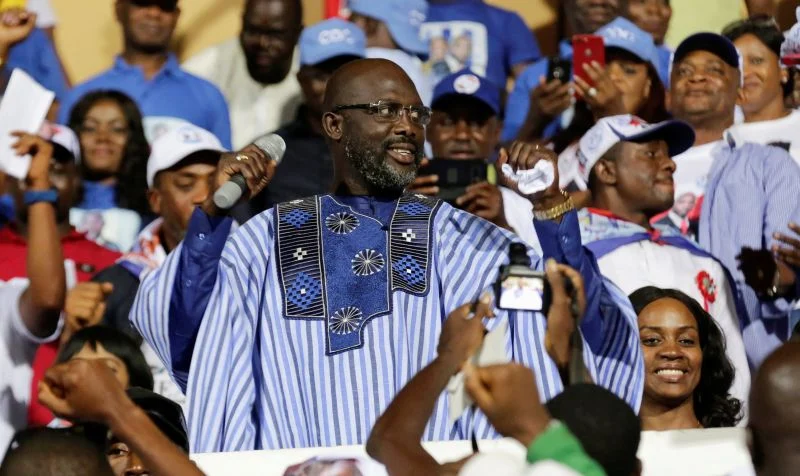
The remarkable journey of George Tawlon Manneh Oppong Ousman Weah, a name synonymous with footballing brilliance, has culminated in a historic ascension to the highest office in his native Liberia. In December 2017, the world watched as the former FIFA World Player of the Year, celebrated for his electrifying performances with elite clubs like AC Milan, Manchester City, and Chelsea, officially transitioned from the pitch to the political arena, being elected President of Liberia. This transition marks not just a personal triumph but a significant moment for Liberia, a nation that has long yearned for stable leadership and renewed hope.
The Genesis of a Legend: Humble Beginnings and Early Promise
Born on October 1, 1966, in Monrovia, Liberia, George Weah’s early life was deeply intertwined with the raw, unadulterated passion for football. Growing up amidst the sandy fields of his hometown, his prodigious talent with the round leather was evident from a young age. Before gracing international stadiums, Weah honed his skills with local Liberian clubs, including Invincible Eleven, Mighty Barolle, Bongrange Bonguine, and the aptly named Young Survivors of Claretown. It was with this latter team, a side reportedly operating without a formal coach, that Weah, still in his formative years, demonstrated his leadership and innate ability by guiding them to promotion into the top division of Liberian football.
This early success did not go unnoticed. In 1987, at the age of 20, Weah secured his first professional contract with Tonnerre of Yaoundé, a prominent club in Cameroon. His impact was immediate, helping the team clinch the top-tier league championship in his debut season. This continental exposure provided the springboard for his ascent to European football.
European Stardom: Monaco, PSG, and the Rise of a Global Phenomenon
The allure of French football proved irresistible, and in 1987, AS Monaco, then a top-flight club, secured Weah’s signature. At just 22 years old, he embarked on a five-season tenure with the principality club, from 1987 to 1992, where he netted an impressive 57 goals. His contribution extended beyond individual brilliance, as Monaco also secured the French Cup in 1991 during his time there.
Weah’s electrifying pace, exceptional ball-carrying ability, and uncanny accuracy in front of goal quickly endeared him to fans and garnered him significant attention from larger clubs. His relentless work ethic and uncompromising technical prowess led to a lucrative move to Paris Saint-Germain (PSG) in 1992.
At PSG, Weah solidified his reputation as a world-class striker. He was instrumental in the club’s triumphs, leading them to a Coupe de France title, a Ligue 1 championship, and a commendable semi-final appearance in the 1995 UEFA Champions League. His Ligue 1 tally of 37 goals and 3 assists in 123 appearances underscored his consistent impact in one of Europe’s most competitive leagues.
The Pinnacle of Football: AC Milan and the Ballon d’Or
The year 1995 marked a pivotal moment in Weah’s career and cemented his place in football history. AC Milan, a powerhouse of Italian Serie A, acquired his services from PSG for a substantial fee. His move to the San Siro was met with immense anticipation, and he did not disappoint. During his five-year stint with the Rossoneri, from 1995 to 2000, Weah was instrumental in securing two Serie A titles in 1996 and 1999.
His time in Italy proved to be the zenith of his playing career. He amassed 51 goals and 1 assist in 114 appearances for AC Milan, consistently demonstrating his clinical finishing and all-around attacking threat. This period of sustained excellence culminated in unprecedented individual accolades. In 1995, he was awarded the prestigious FIFA World Player of the Year award, becoming the first and, to date, only African player to achieve this honor. The following year, in 1996, he further solidified his global standing by winning the Ballon d’Or, the coveted European Footballer of the Year award. These achievements placed him in an exclusive echelon of sporting legends.
A Post-Football Calling: The Transition to Politics
Upon hanging up his boots from a glittering football career that also saw brief spells with Manchester City and Chelsea in England, George Weah did not retreat from the public eye. Instead, he turned his formidable energy and influence towards serving his homeland, Liberia. Recognizing the nation’s persistent struggles with poverty, corruption, and political instability, Weah embarked on a political journey.
His entry into politics was met with both enthusiasm and skepticism. While many celebrated the prospect of a national hero leading the country, others questioned his preparedness for the complex world of governance. Nevertheless, Weah remained steadfast, establishing his Congress for Democratic Change (CDC) party and campaigning on a platform of fighting corruption, creating jobs, and improving the lives of ordinary Liberians.
The Road to the Presidency: A Multi-Term Pursuit
Weah’s presidential aspirations were not realized overnight. His first significant bid for the presidency came in 2005, shortly after his retirement from football. He faced off against Ellen Johnson Sirleaf, a Harvard-educated economist and former World Bank official, in a closely contested election. While Weah garnered considerable support, Sirleaf ultimately emerged victorious, becoming Africa’s first elected female head of state.
Undeterred, Weah continued to engage in Liberian politics. He ran for a seat in the Liberian Senate in 2014, representing Montserrado County, the country’s most populous region. He won this election convincingly, demonstrating his continued popularity and growing political acumen. This senatorial victory served as a crucial stepping stone, allowing him to gain firsthand experience in the legislative branch and further solidify his connection with the electorate.
In 2017, George Weah launched his second presidential campaign, this time with a more experienced political base and a broader coalition of support. The election, held on October 10, 2017, was initially marred by delays and disputes over alleged fraud. However, after a run-off election held on December 26, 2017, the National Elections Commission declared George Weah the winner with 61.5% of the vote. His victory marked the first peaceful transfer of power in Liberia in over seven decades, a significant achievement for a nation that had endured brutal civil wars.
Inauguration and Early Presidency: Hopes and Challenges
On January 22, 2018, George Weah was inaugurated as the 25th President of Liberia. His inauguration speech was met with widespread optimism, as he pledged to tackle the nation’s pressing issues, including endemic corruption, widespread poverty, and the need for economic development. He promised to be a president for all Liberians, emphasizing unity and a fresh start.
The initial years of his presidency have been characterized by a series of policy initiatives aimed at improving governance, attracting investment, and addressing the needs of the populace. Weah’s administration has focused on fiscal reforms, efforts to increase transparency, and investments in education and healthcare. However, the challenges facing Liberia remain immense. The country continues to grapple with the lingering effects of decades of conflict, limited infrastructure, and a fragile economy heavily reliant on natural resources and international aid.
Broader Impact and Implications: A Symbol of Hope and Resilience
George Weah’s journey from the dusty pitches of Monrovia to the presidential palace is a powerful testament to the transformative power of perseverance, talent, and dedication. His election as President of Liberia has resonated far beyond the nation’s borders, serving as a beacon of hope for millions across Africa. It symbolizes the potential for individuals from humble beginnings to achieve the highest levels of success, both in their chosen fields and in public service.
For Liberia, Weah’s presidency represents an opportunity for a new chapter. His popularity and charismatic appeal offer a chance to unite a diverse population and foster a sense of national pride. However, the true measure of his success will lie in his administration’s ability to translate campaign promises into tangible improvements in the lives of ordinary Liberians. The global football community, which once celebrated his athletic prowess, now watches with keen interest as he navigates the complex terrain of national leadership, hoping that his winning spirit will translate into a prosperous future for his nation. The challenges are daunting, but the symbolism of his ascent offers a potent reminder that even in the face of adversity, dreams can indeed be realized, and leadership can emerge from unexpected quarters.