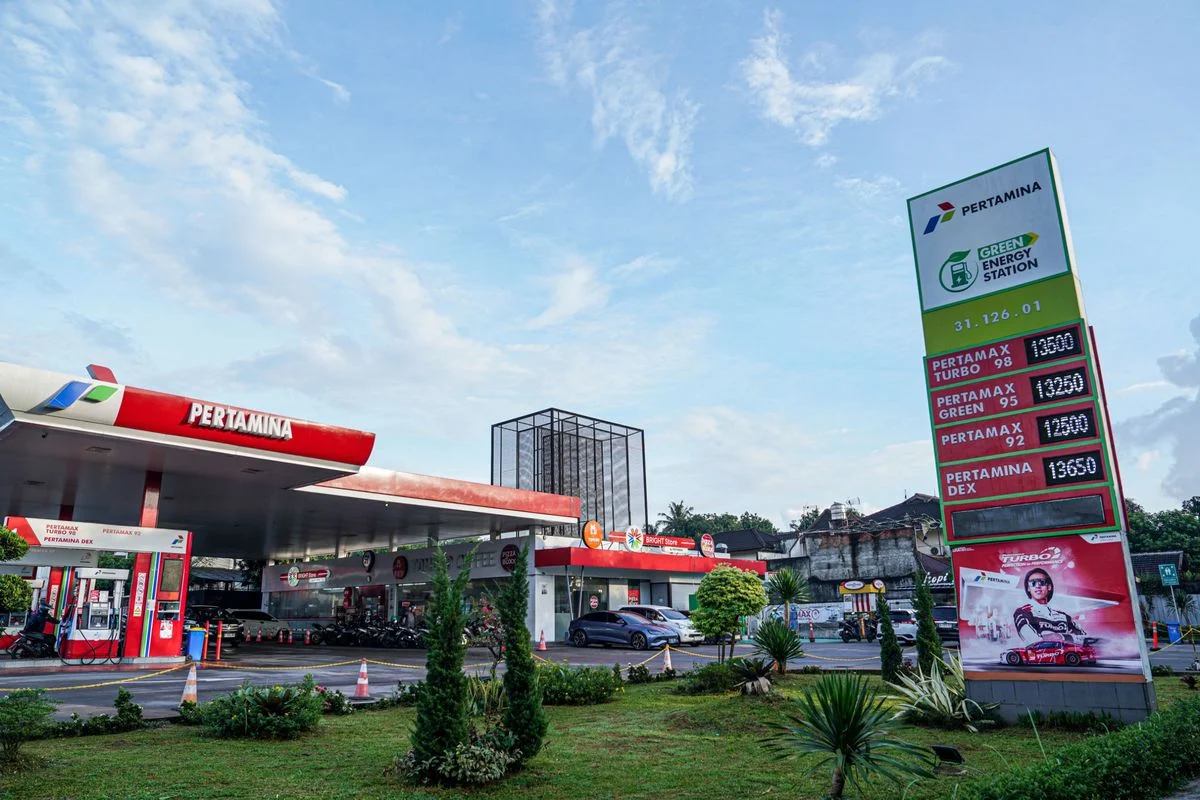
PT Pertamina Patra Niaga has officially confirmed that the retail prices for both subsidized and non-subsidized fuels across the Jabodetabek region will remain unchanged for the month of November 2026. This decision maintains the price structure established in October 2026, providing a period of fiscal stability for consumers and businesses alike as the Indonesian economy navigates the final quarter of the year. For motorists in the capital city and its surrounding satellite cities, the consistency in fuel pricing serves as a critical anchor for household and operational budgeting during a period often marked by seasonal inflation and logistical adjustments.
As of Thursday, November 5, 2026, the price of Pertamax, the most widely consumed non-subsidized gasoline in the country, remains fixed at Rp15,950 per liter. The premium variants, designed for high-performance engines, also maintain their previous price points: Pertamax Green is retailing at Rp19,150 per liter, while the high-octane Pertamax Turbo is set at Rp19,600 per liter. In the diesel segment, the non-subsidized options, Dexlite and Pertamina Dex, continue to be priced at Rp23,700 and Rp25,200 per liter, respectively. Crucially, the government-subsidized fuels—Pertalite and Biosolar—remain firmly anchored at Rp10,000 and Rp6,800 per liter, reflecting the government’s ongoing commitment to energy affordability for the broader public.
Strategic Stability in Energy Pricing
The decision to hold fuel prices steady is part of a broader strategy by the Indonesian government and its state-owned energy company, Pertamina, to mitigate the volatility of global oil prices. Historically, Indonesia has faced significant challenges in balancing the State Budget (APBN) against the fluctuations of the Indonesia Crude Price (ICP). By opting for price stability, the government aims to suppress inflationary pressures that could otherwise erode consumer purchasing power.
Economic analysts observe that the decision to freeze prices in November reflects a cautious approach to regional economic recovery. Following the global energy shocks witnessed in recent years, the energy sector has adopted a more conservative adjustment cycle. Rather than monthly fluctuations based on immediate market signals, Pertamina often opts to absorb price differentials through its internal financial mechanisms or government compensation schemes, provided that the fiscal room allows for such interventions.
Chronology of Price Adjustments in 2026
To understand the current state of fuel pricing, it is necessary to look at the timeline of adjustments made throughout 2026. The year began with a push toward diversifying the fuel mix, with the government incentivizing the use of greener fuels.
In the first quarter of 2026, minor adjustments were made to non-subsidized fuels to reflect the softening of global crude prices. However, the second and third quarters were characterized by a period of relative stability, punctuated by minor tactical shifts in late August to align with international refinery benchmarks. The current consistency observed in November follows a trend established in mid-September, where the government prioritized keeping transport costs low to support the agricultural and retail logistics sectors ahead of the year-end festive season.
This period of stagnation—or, more accurately, stability—is a departure from the high-volatility environment of the early 2020s, signaling a more mature and resilient supply chain management system by Pertamina.
The Role of Subsidies in National Economic Security
Subsidized fuels, namely Pertalite and Biosolar, remain the backbone of the Indonesian economy, particularly for the logistics and public transportation sectors. The decision to keep these prices at Rp10,000 and Rp6,800 is not merely a social policy; it is an essential component of the national inflation control strategy.
According to data from the Ministry of Finance, the subsidy allocation for the 2026 fiscal year was calculated with the assumption of sustained international price pressures. By maintaining these prices, the government effectively insulates the transportation sector—which relies heavily on Biosolar—from the potential for secondary price hikes in essential goods. If diesel prices were to rise, the immediate downstream effect would be an increase in the cost of goods sold (COGS) for almost all consumer commodities, triggering a chain reaction of inflation.

Market Analysis and Global Context
The stability of fuel prices in Indonesia is being watched closely by regional observers, especially in the context of the ASEAN energy market. While many neighboring nations have adopted fully floating, market-based pricing models, Indonesia’s hybrid system—which combines market-driven prices for high-end fuels with state-subsidized prices for essential fuels—remains a unique case study in energy security.
Data from global energy agencies indicate that while global supply remains robust, geopolitical tensions continue to exert pressure on the cost of crude extraction and refining. However, Indonesia’s strategic decision to leverage its domestic refinery capacity and increase its domestic crude production has provided a buffer. The consistency of prices in November 2026 is a testament to the effectiveness of these hedging strategies.
Operational Impact on Consumers and Industry
For the average motorist, the lack of a price hike in November is a welcome development. The transport and logistics industry, which operates on razor-thin margins, can continue its operations without the need for immediate adjustments to shipping rates or ticket prices for public transport.
However, industry experts advise that consumers should remain vigilant. The energy market is inherently sensitive to shifts in global demand, particularly as the northern hemisphere enters the winter season, which historically drives up the demand for heating oil and, by extension, diesel and its derivatives. While November brings stability, the outlook for December and early 2027 will depend on the final quarterly reports regarding global energy stocks and the stability of the rupiah against the U.S. dollar.
Government and Pertamina’s Official Stance
While Pertamina has not issued a new, separate statement regarding the November pricing beyond the official publication of the price list, officials from the Ministry of Energy and Mineral Resources (ESDM) have previously indicated that the government will continue to review prices on a monthly basis. The policy remains flexible: if there is a significant, sustained deviation in global oil prices, the government retains the prerogative to adjust retail prices to ensure the sustainability of the national energy supply chain.
The communication strategy from Pertamina focuses on transparency, ensuring that all price adjustments—or lack thereof—are published well in advance through their official digital channels, including the MyPertamina application and their official website. This ensures that the public is not caught off guard by sudden changes and that the distribution of fuel remains orderly.
Implications for the Future of Energy Consumption
Looking beyond November, the government is increasingly focused on the transition to more sustainable energy sources. The promotion of Pertamax Green—a blend containing bioethanol—is part of a long-term roadmap to reduce reliance on fossil fuels and lower the carbon footprint of the domestic transport sector.
While the price of these greener options remains higher than standard fuels, the gradual adoption of these products is a critical indicator of Indonesia’s energy transition. The current price stability provides a window of opportunity for the government to push for broader adoption of these cleaner fuels without the friction of frequent price fluctuations.
In summary, the status quo of fuel prices in November 2026 represents a calculated decision to support economic stability and consumer confidence. For the residents of Jabodetabek, the lack of change at the pump is an essential factor in maintaining the current trajectory of local economic activity as the nation moves toward the close of the year. Investors, logistics providers, and the general public can expect this period of stability to continue unless there is a dramatic shift in the underlying global energy market dynamics. As the year draws to a close, all eyes will be on the Ministry of Finance and Pertamina to see how they navigate the potential challenges of the early 2027 fiscal cycle.