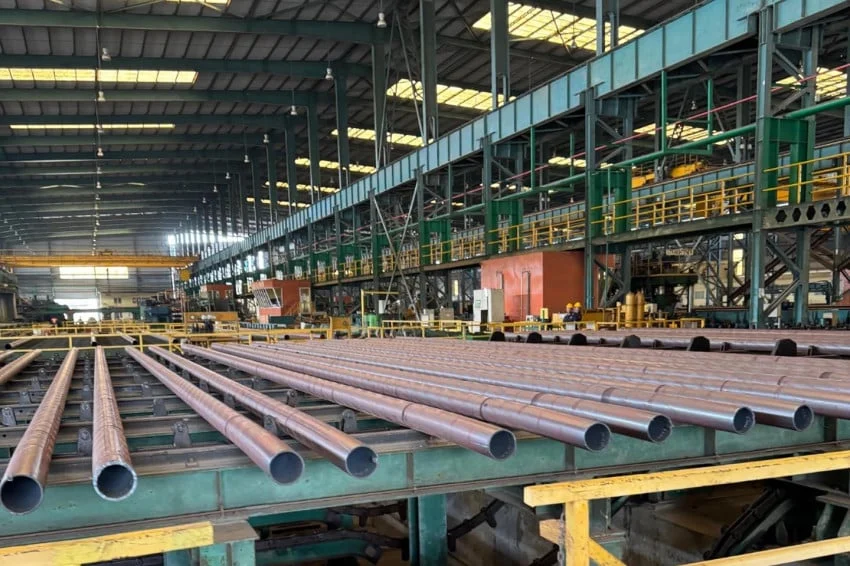
The Indonesian seamless pipe industry has reached a critical juncture, prompting domestic manufacturers to demand a rigorous re-evaluation of government import policies. Michael Johan Gary, Director of PT Indo Sino Internasional, has formally requested that the government cease granting masterlist facilities and import quotas to auxiliary industries, such as thread processors and heat treatment facilities. This appeal stems from the argument that the domestic production capacity for seamless pipes has matured sufficiently to meet national demand, rendering current import incentives redundant and counterproductive to the nation’s industrial roadmap.
The Core Conflict: Masterlist Facilities and Domestic Capability
At the heart of the dispute is the implementation of the Masterlist facility—a government-granted incentive that allows companies to import machinery, raw materials, or semi-finished goods with exemptions from import duties and Value Added Tax (VAT). Under current regulations, specifically Ministry of Finance Regulation No. 217/PMK.04/2019, these facilities are intended for goods that cannot yet be produced domestically, or for products where the domestic supply fails to meet the required technical specifications or volume.
However, industry players argue that this policy is being exploited by auxiliary sectors that import finished or near-finished pipes under the guise of industrial support. Gary asserts that by granting these facilities to secondary industries, the government inadvertently facilitates a "flood" of imported products that compete directly with locally manufactured seamless pipes. This, according to manufacturers, undermines the competitiveness of domestic firms, leads to the underutilization of existing production plants, and discourages further capital investment in deep-processing capabilities.
Historical Context and Industrial Development
The Indonesian seamless pipe industry has undergone significant transformation over the last decade. Historically, the country relied heavily on imports to serve the oil and gas sector, which is the primary consumer of high-grade seamless piping. Recognizing the strategic importance of this sector, the Indonesian government initiated a series of policies aimed at increasing the Domestic Component Level (TKDN).
The push for domestic production is not merely about volume; it is about technological sovereignty. In the mid-2010s, Indonesia lacked the sophisticated heat treatment and high-precision threading capabilities required for deep-well drilling. Consequently, the government permitted imports of these specialized components. Fast forward to 2024, and the landscape has changed. Several domestic companies have invested millions of dollars in upgrading their manufacturing lines to include advanced heat treatment and threading technology. By these standards, the original rationale for the Masterlist facilities—that the product was unavailable domestically—no longer holds true.
Chronology of the Policy Debate
The tension between import reliance and domestic protection has intensified over the past twenty-four months:
- 2019: The Ministry of Finance issued PMK No. 217/2019, formalizing the criteria for import duty exemptions for the upstream oil and gas sector. This regulation was designed to lower the cost of exploration and production.
- 2022: A surge in global supply chain disruptions prompted a domestic push to source components locally. Several domestic seamless pipe manufacturers began reporting increased idle capacity despite high demand in the national oil and gas sector.
- 2023: Industry associations began lobbying the Ministry of Industry and the Ministry of Trade to tighten verification processes for "Import Recommendations."
- Late 2024: High-level discussions occurred between the Ministry of Industry and domestic manufacturers. The Deputy Minister of Industry publicly voiced support for the quality of local seamless pipes, signaling a potential shift toward stricter import enforcement.
Data and Market Dynamics
To understand the scope of the issue, one must examine the market demand. Indonesia’s oil and gas sector remains a major driver of seamless pipe consumption. According to data from the Ministry of Energy and Mineral Resources (ESDM), national production targets for crude oil and natural gas continue to rise, necessitating higher consumption of tubular goods.
However, when these goods are imported duty-free, they gain an artificial price advantage over locally produced pipes, which must absorb the costs of domestic labor, energy, and raw material procurement. Analysts note that if domestic manufacturers operate at 50% capacity due to import competition, the per-unit production cost rises, creating a vicious cycle that makes the local product appear less competitive. Conversely, if these manufacturers were allowed to supply the full domestic demand, economies of scale would likely drive down the average unit price, benefiting the end-users in the energy sector in the long term.
The Role of Verification and Regulatory Enforcement
Michael Johan Gary’s argument does not call for the creation of new protectionist laws, but rather for the consistent enforcement of existing ones. The Ministry of Finance’s regulation clearly mandates that imports should only be granted if the product is not available domestically or does not meet the necessary specifications.
The point of contention lies in the verification process. Currently, industry observers allege that there is a lack of transparency and rigorous technical review in the issuance of Masterlist recommendations. When a company applies for a facility, the verification body often relies on self-reported data from the applicant. If the system fails to cross-reference these requests with the verified capabilities of domestic producers, the facility is granted by default, bypassing the spirit of the regulation.
Broader Economic Implications
The debate has significant implications for Indonesia’s "downstreaming" (hilirisasi) agenda. The government has prioritized moving up the value chain, from raw material extraction to finished industrial goods. Seamless pipes represent a high-value-added product in the steel and metalworking sector.
- Investment Certainty: If domestic companies cannot guarantee a market share because of government-facilitated imports, investors are unlikely to commit to further expansions in complex manufacturing technologies.
- Trade Balance: Reducing unnecessary imports of industrial goods will directly improve Indonesia’s trade balance.
- Job Creation: The manufacturing of seamless pipes is highly labor-intensive and requires a skilled workforce. A robust domestic industry supports thousands of high-quality engineering and technical jobs.
Official Responses and Future Outlook
While the government has expressed general support for domestic industry, the practical implementation of import restrictions remains complex. The challenge for policymakers is balancing the need for cost-efficient production in the oil and gas sector with the goal of nurturing the domestic manufacturing base.
Representatives from the Ministry of Industry have indicated that they are reviewing the current verification mechanisms. In recent public statements, the government has emphasized that while the oil and gas sector requires world-class quality, domestic producers have increasingly proven their ability to meet international standards such as API (American Petroleum Institute) specifications.
The next phase of this policy evolution is expected to involve a more digitized and transparent verification system. By creating a national database of domestic production capabilities, the government could theoretically automate the rejection of import applications for goods that are already available in sufficient quantity and quality locally.
Conclusion
The appeal by PT Indo Sino Internasional highlights a maturing industrial sector that is no longer content with being sidelined by outdated import policies. As the Indonesian government continues to navigate the complexities of its industrialization goals, the seamless pipe industry serves as a litmus test for the effectiveness of the nation’s domestic component policies. The path forward appears to require a move toward more rigorous, evidence-based verification of imports. If successful, this shift could secure the future of high-value manufacturing in Indonesia, ensuring that the country’s industrial growth is sustained by domestic capabilities rather than reliance on external supply chains. The resolution of this issue will likely set a precedent for how other strategic sectors manage the interplay between necessary imports and local production growth.