
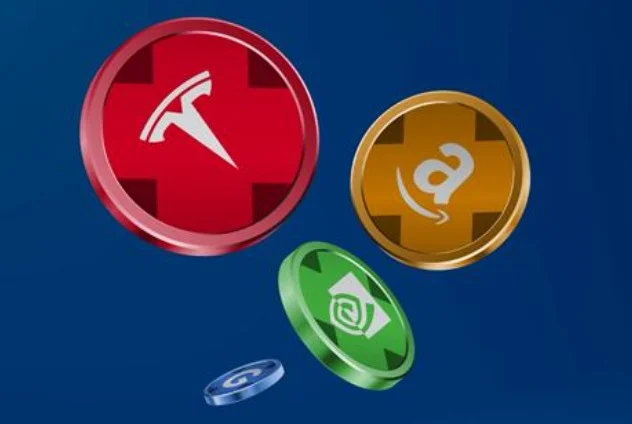
Indodax, a leading Indonesian cryptocurrency exchange, has unveiled a groundbreaking initiative by introducing seven tokenized global stocks, significantly broadening the investment horizon for Indonesian retail and institutional investors. Launched on April 15, 2026, this strategic move leverages cutting-edge blockchain technology to provide seamless, flexible, and democratized access to international equity markets, marking a pivotal moment in the integration of traditional finance and the burgeoning digital asset ecosystem in Indonesia. The innovation is poised to reshape how investors in the archipelago engage with global capital, offering a novel alternative to conventional cross-border investment avenues.
The Dawn of Tokenized Global Equities: Bridging Traditional Finance and Blockchain
Tokenized stocks represent a revolutionary financial instrument that transforms shares of publicly traded companies into digital tokens on a blockchain. Each token typically represents a fractional ownership of an underlying stock, with its value mirroring the real-time price of the traditional equity. This mechanism allows investors to gain exposure to global giants without needing to navigate the complexities, high fees, or jurisdictional barriers typically associated with international stock trading. For instance, an investor can purchase a fraction of a share in a prominent tech company listed on the NASDAQ or NYSE through a tokenized equivalent on Indodax’s platform, bypassing traditional brokers and their often prohibitive minimum investment requirements.
The introduction of these seven initial tokenized assets by Indodax is not merely an expansion of product offerings; it is a fundamental shift in investment accessibility. It aims to empower a wider segment of the Indonesian population, particularly the digitally native younger demographic, to diversify their portfolios beyond domestic assets and cryptocurrencies. The inherent advantages of blockchain — such as transparency, immutability, and 24/7 trading capabilities — are central to this innovation. Unlike traditional stock markets with fixed trading hours, tokenized stocks, being digital assets, can theoretically be traded around the clock, offering unprecedented flexibility for investors in different time zones. Furthermore, the fractional ownership aspect significantly lowers the barrier to entry, allowing individuals to invest smaller sums in high-value global stocks that would otherwise be out of reach. This democratization of access is a key driver behind Indodax’s latest strategic pivot, aligning with the broader global trend of financial inclusion through technological innovation.
Indodax’s Strategic Vision and Market Positioning
As one of Indonesia’s largest and most established cryptocurrency exchanges, Indodax has consistently positioned itself at the forefront of digital asset innovation in the country. Founded in 2014, it has grown to serve millions of users, facilitating the trading of a wide array of cryptocurrencies. Its journey has been characterized by a proactive approach to regulatory compliance, operating under the supervision of Indonesia’s Commodity Futures Trading Regulatory Agency (Bappebti), which oversees the country’s crypto sector. This foundation of trust and regulatory adherence is crucial for venturing into hybrid financial products like tokenized stocks.
Antony Kusuma, Vice President of Indodax, underscored the strategic imperative behind this launch, stating, "Through tokenized stocks, we are witnessing a profound shift in how investors access global assets, making it more open and flexible than ever before. This initiative is a testament to our commitment to democratizing investment opportunities and embracing the convergence of traditional finance with the efficiencies of blockchain technology." He elaborated on the vision, explaining that the move is part of Indodax’s broader strategy to evolve from a pure-play crypto exchange into a comprehensive digital asset platform that caters to a wider range of investor needs. The integration of global stocks via tokenization reflects a forward-thinking approach to meet the increasing demand for diversified and sophisticated investment instruments among Indonesian investors. This also positions Indodax as a pioneer in the Southeast Asian market, potentially setting a precedent for other digital asset platforms to follow suit in offering similar hybrid products. The emphasis on flexibility and openness highlights Indodax’s understanding of modern investor preferences, who seek greater control and fewer intermediaries in their investment journeys.
Indonesia’s Evolving Investment Landscape and Digital Asset Adoption
Indonesia, with its vast and youthful population, represents a dynamic and rapidly expanding investment landscape. The past decade has seen a remarkable surge in retail investor participation, driven by increasing digital literacy, ease of access to online trading platforms, and a growing awareness of wealth management. According to data from the Indonesia Central Securities Depository (KSEI), the number of capital market investors in Indonesia has consistently grown, reaching unprecedented levels, with a significant portion being young investors leveraging digital platforms. This demographic is particularly receptive to innovative financial products and digital solutions.
The government’s progressive stance on digital assets, particularly through the regulatory framework established by Bappebti, has fostered an environment conducive to innovation within the crypto space. While tokenized stocks present a new frontier that may require further regulatory clarification, Indodax’s existing compliance framework provides a strong basis for this expansion. Indonesian investors have shown a strong appetite for diversification, especially into global markets, to mitigate domestic market risks and tap into the growth potential of leading international companies. However, traditional avenues for accessing global stocks have often been cumbersome, involving complex procedures, foreign exchange considerations, and higher transaction costs. Tokenized stocks on a local platform like Indodax directly address these pain points, offering a streamlined, cost-effective, and accessible alternative. The growing sophistication of Indonesian investors, coupled with their increasing comfort with digital platforms and blockchain technology, creates a fertile ground for the adoption of such innovative financial instruments. This aligns with Indonesia’s broader digital economy agenda, aiming to harness technology for economic growth and financial inclusion.
The Mechanics of Blockchain-Powered Global Access
At its core, the tokenization of global stocks on Indodax’s platform relies on the fundamental principles of blockchain technology. When an investor purchases a tokenized stock, they are effectively acquiring a digital representation of an underlying asset that is held in custody by a regulated entity. The blockchain acts as a distributed ledger, recording ownership of these tokens transparently and immutably. Smart contracts, self-executing contracts with the terms of the agreement directly written into code, automate the processes of issuance, trading, and settlement of these tokenized assets. This automation significantly reduces the need for intermediaries, thereby lowering transaction costs and accelerating settlement times, which in traditional markets can take several days.
Compared to traditional cross-border investment, where investors often need to open accounts with international brokers, deal with foreign currency conversions, and navigate different regulatory jurisdictions, tokenized stocks simplify the entire process. Investors can use their existing Indodax accounts, typically funded with Indonesian Rupiah (IDR) or other cryptocurrencies, to directly purchase these tokenized assets. The underlying global stocks are usually held by a regulated third-party custodian, ensuring that the token’s value is directly pegged to the real asset. This setup offers a level of trust and security that is critical for attracting mainstream investors. The efficiency gained through blockchain technology means that transactions can be processed faster and at lower costs, making global investment more attractive and viable for a broader demographic. Furthermore, the cryptographic security of blockchain networks provides an enhanced layer of protection against fraud and unauthorized transactions, adding to investor confidence in this nascent asset class.
Navigating the Regulatory Terrain and Investor Safeguards
The introduction of tokenized stocks, while innovative, operates in a complex regulatory landscape that sits at the intersection of traditional securities law and digital asset regulations. In Indonesia, the primary regulator for digital assets is Bappebti, while the Financial Services Authority (OJK) oversees conventional capital markets. The classification and oversight of tokenized securities, which share characteristics of both, necessitate careful navigation and potentially new regulatory frameworks. Indodax’s initiative is likely the result of extensive discussions with these regulatory bodies, aimed at ensuring compliance and investor protection.
Antony Kusuma’s emphasis on investor education and risk awareness is paramount. He stated, "While blockchain technology simplifies access and the investment process, understanding the mechanisms and inherent risks remains crucial for investors to make informed and judicious decisions." This highlights Indodax’s commitment to responsible innovation. Tokenized stocks, like any investment, carry risks, including market volatility, liquidity concerns, and potential smart contract vulnerabilities. Regulatory clarity on aspects such as dispute resolution, investor protection schemes, and taxation for tokenized securities will be vital for long-term market growth and stability. Authorities like Bappebti and OJK will play a critical role in developing comprehensive guidelines that foster innovation while safeguarding consumer interests, preventing market manipulation, and ensuring financial stability. The success and sustained growth of tokenized stocks will heavily depend on robust regulatory frameworks that provide certainty and build trust among investors and financial institutions alike.
Broader Implications for the Indonesian and Global Financial Ecosystem
The launch of tokenized global stocks by Indodax carries significant implications, not only for the Indonesian financial market but also for the broader global digital asset landscape.
Impact on Local Investors: For Indonesian investors, this opens up unprecedented opportunities for portfolio diversification. They can now easily access blue-chip companies, high-growth tech firms, or established industries from around the world, reducing their reliance on the domestic market and potentially enhancing risk-adjusted returns. The lower entry barriers mean that even small-scale investors can participate in global growth stories, which was previously a privilege of larger, more sophisticated investors. However, it also introduces new complexities, requiring investors to understand global market dynamics, currency risks, and the specific mechanics of tokenized assets.
Impact on Indodax: This move solidifies Indodax’s position as an innovation leader in Indonesia and potentially Southeast Asia. By expanding beyond pure cryptocurrency offerings, Indodax diversifies its revenue streams, attracts a broader client base, and strengthens its competitive edge against both traditional brokers and other crypto exchanges. It demonstrates the platform’s ability to adapt and evolve in a rapidly changing financial environment.
Impact on Indonesian Capital Markets: The introduction of tokenized stocks could serve as a catalyst for the modernization of Indonesia’s capital markets. It may spur traditional financial institutions to explore similar blockchain-based solutions, fostering greater efficiency, transparency, and accessibility across the board. This integration of digital assets into mainstream finance could also attract foreign capital indirectly, as a more sophisticated and interconnected financial market emerges. It sets a precedent for how emerging markets can leverage technology to leapfrog traditional development stages.
Global Tokenization Trend: Indodax’s initiative contributes to the global momentum of asset tokenization, validating the potential of blockchain to transform various asset classes, from real estate to commodities and now, global equities. It serves as a case study for other jurisdictions and exchanges contemplating similar ventures, demonstrating the viability and demand for such hybrid financial products in emerging economies.
Potential Challenges and Future Outlook
Despite the promising outlook, the path forward for tokenized global stocks is not without challenges. Regulatory clarity remains a primary concern; evolving frameworks will need to keep pace with the rapid innovation to ensure investor protection and market integrity. Cybersecurity is another critical aspect, as the digital nature of these assets makes them susceptible to hacking attempts or smart contract exploits, necessitating robust security protocols and regular audits. Market liquidity, especially in the early stages, will be crucial for efficient price discovery and easy entry/exit for investors. Continuous investor education will also be vital to ensure that users fully comprehend the risks and benefits associated with these new instruments.
Looking ahead, Indodax is likely to expand its offering beyond the initial seven tokenized stocks, adding more global equities, and potentially other tokenized asset classes, as the market matures and regulatory clarity improves. The success of this venture could also pave the way for other forms of tokenized securities, such as bonds, real estate, or commodities, further diversifying investment opportunities for Indonesians. The long-term vision involves a truly integrated financial ecosystem where traditional assets seamlessly interact with digital ones, all powered by blockchain technology.
In conclusion, Indodax’s launch of tokenized global stocks on April 15, 2026, represents a transformative moment for Indonesia’s financial landscape. By harnessing blockchain technology, the exchange is not only democratizing access to international equity markets but also propelling the country towards a more integrated, flexible, and digitally advanced investment future. This innovation underscores Indonesia’s growing prominence in the global digital asset space and its commitment to fostering an inclusive and dynamic financial ecosystem for all its citizens.
