
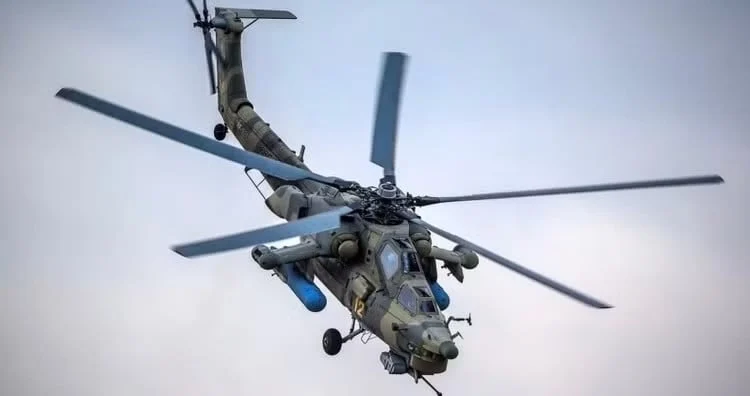
The skies above Tehran have recently witnessed the striking silhouette of the Russian-made Mi-28 "Night Hunter" attack helicopter, a development that signifies a significant advancement in Iran’s military capabilities and a notable step forward in its defense cooperation with Russia. This deployment marks the official operational debut of these advanced rotorcraft within the Iranian Armed Forces, bolstering their air power with a platform renowned for its formidable combat effectiveness and all-weather operational capacity.
A New Era of Aerial Prowess for Iran
The introduction of the Mi-28 into Iran’s air fleet represents a substantial technological leap, moving away from a reliance on older, Cold War-era helicopters. The aircraft, spotted conducting test flights and demonstrations over the Iranian capital, are reportedly being integrated into operational units, poised to enhance Iran’s offensive and defensive postures. This move is particularly impactful given the existing geopolitical landscape and Iran’s ongoing efforts to modernize its military in the face of regional and international pressures.
According to insights from Military Watch Magazine, the initial deployment involves several Mi-28 helicopters undergoing rigorous flight testing and familiarization exercises. This suggests that the helicopters are not merely for static display but are actively being prepared for real-world operational deployment, underscoring the urgency and strategic importance Iran places on this acquisition. While the precise number of helicopters delivered remains somewhat guarded, earlier reports indicated that at least three Mi-28 units were transferred to Iran from Russia starting in early 2026. The total value of the contract, a crucial indicator of the scale of this military transfer, has not yet been publicly disclosed.
The "Night Hunter": A Formidable Asset
The Mi-28, aptly nicknamed the "Night Hunter," is a modern, dedicated attack helicopter designed and manufactured by the Russian Helicopters holding company. Its primary role encompasses a wide range of combat missions, including anti-tank warfare, close air support for ground troops, and reconnaissance. The helicopter is engineered for high survivability, featuring advanced armor protection and a robust airframe capable of withstanding significant combat damage.
Key features of the Mi-28 include its potent armament, typically comprising a 30mm cannon and a variety of missiles, such as the Ataka anti-tank guided missiles, and unguided rockets. Its advanced avionics and targeting systems, including infrared and low-light television cameras, enable it to operate effectively day and night, in adverse weather conditions, and in complex combat environments. This all-weather capability is a critical enhancement for Iran’s air force, which has historically faced limitations in this regard due to its aging fleet.
The "Night Hunter" is a twin-engine, tandem-seat helicopter, meaning the pilot and weapon systems operator sit one behind the other. This configuration optimizes crew interaction and weapon system management. The pilot is situated in the rear cockpit, providing better visibility of the surrounding airspace, while the weapon systems operator in the front cockpit has direct control over the helicopter’s offensive capabilities.
Chronology of Acquisition and Deployment
The journey of the Mi-28 to Iran’s inventory has been a topic of discussion and speculation within defense circles for some time. While the exact timeline for the initial contract negotiations and finalization remains proprietary, the visible deployment signifies a culmination of these efforts.
- Pre-2026: Reports and analyses suggest that discussions and agreements regarding the acquisition of Russian attack helicopters, including the Mi-28, likely began years prior to the recent deliveries. Iran has consistently sought to diversify its arms suppliers and enhance its military technology, with Russia emerging as a key partner in recent years.
- Early 2026: As per earlier indications, the first batch of Mi-28 helicopters is understood to have been delivered to Iran during the early months of 2026. This initial delivery would have initiated a period of intensive familiarization, training, and integration for Iranian pilots and ground crews.
- Recent Weeks/Months: The recent sightings and reports of the Mi-28 conducting flights over Tehran mark a pivotal moment, indicating that the helicopters have moved beyond initial training phases and are being prepared for or have already entered operational service. This phase would involve testing under various mission profiles and integration with broader Iranian military command and control structures.
The specific details of the contract, such as the number of units, the total cost, and any associated technology transfer or maintenance agreements, have not been officially released by either the Iranian or Russian governments. However, the strategic implications of such a deal are considerable.
Supporting Data and Technological Context
The Mi-28’s integration into Iran’s air force is a stark contrast to its current helicopter inventory, which largely comprises aircraft from the Soviet era. These include the Bell AH-1 Cobra attack helicopters, acquired before the 1979 Islamic Revolution, and various Mi-series utility and attack helicopters. While these older platforms have been subject to modernization efforts, they generally lack the sophisticated avionics, targeting systems, and survivability features of modern attack helicopters like the Mi-28.
For instance, the AH-1 Cobra, while a capable platform in its time, is a 1960s design. Its weapon systems and sensors are significantly less advanced than those of the Mi-28, which features integrated digital systems, advanced radar warning receivers, and jam-resistant communication systems. The Mi-28’s ability to operate effectively in all weather conditions also addresses a significant vulnerability for Iran’s air force, which has at times been hampered by adverse weather impacting operations of less advanced aircraft.
The acquisition of the Mi-28 also aligns with Iran’s broader defense strategy, which emphasizes asymmetric warfare, deterrence, and the development of a robust, domestically capable defense industry. While Iran has made strides in its indigenous defense manufacturing, acquiring state-of-the-art platforms from international partners remains a crucial component of its modernization efforts, especially in areas where domestic production capabilities are still developing.
Potential Reactions and Geopolitical Implications
The deployment of the Mi-28 helicopters is likely to draw attention from regional and international actors, particularly those with security interests in the Middle East.
- Regional Powers: Neighboring countries, such as Saudi Arabia, Israel, and the United Arab Emirates, which have complex and often tense relationships with Iran, will undoubtedly monitor this development closely. The enhanced air combat capabilities of Iran could alter the regional military balance and influence ongoing strategic calculations.
- International Scrutiny: The transfer of advanced military hardware from Russia to Iran can also be subject to international scrutiny, particularly in the context of existing sanctions regimes and arms embargoes. However, the nature of the current international agreements and the evolving global political landscape might offer a different context for such transfers compared to previous periods.
- Iran’s Perspective: From Iran’s viewpoint, this acquisition is a crucial step in bolstering its national security and projecting a strong defense posture. It demonstrates Iran’s commitment to maintaining a modern and capable military force, able to deter potential adversaries and respond effectively to threats.
- Russia’s Role: For Russia, the sale of the Mi-28 helicopters to Iran represents a significant expansion of its defense export market and a reinforcement of its strategic partnership with Tehran. This also fits into Russia’s broader foreign policy objectives of strengthening ties with nations seeking to diversify their military partnerships away from Western suppliers.
Broader Impact and Future Outlook
The integration of the Mi-28 "Night Hunter" into the Iranian Armed Forces is more than just an addition of new hardware; it signifies a qualitative upgrade in Iran’s military potential. This "technological boost" could translate into several strategic advantages:
- Enhanced Offensive Capabilities: The Mi-28’s ability to engage armored vehicles and provide precise close air support can significantly enhance Iran’s offensive operations, whether in defensive scenarios or potential expeditionary roles.
- Improved Survivability: The helicopter’s advanced defensive systems and robust construction mean it is less vulnerable to enemy fire, increasing the chances of mission success and crew survival.
- All-Weather Operations: The capacity to operate effectively in diverse weather conditions eliminates a major operational constraint, allowing for greater flexibility and responsiveness in military planning.
- Deterrence Factor: The presence of such advanced attack helicopters can serve as a significant deterrent, signaling to potential adversaries that Iran possesses a modern and capable air combat force.
Looking ahead, the successful integration of the Mi-28 could pave the way for further defense cooperation between Iran and Russia, potentially involving other advanced military platforms or joint development initiatives. It also underscores the ongoing trend of increasing military ties between these two nations, which has significant implications for regional security dynamics. The "Night Hunter’s" presence in the skies over Tehran is a clear indicator that Iran is actively pursuing a path of military modernization, leveraging advanced foreign technology to bolster its defense capabilities in an increasingly complex geopolitical environment. The long-term impact of this acquisition will undoubtedly be a subject of keen observation by military analysts and policymakers worldwide.
