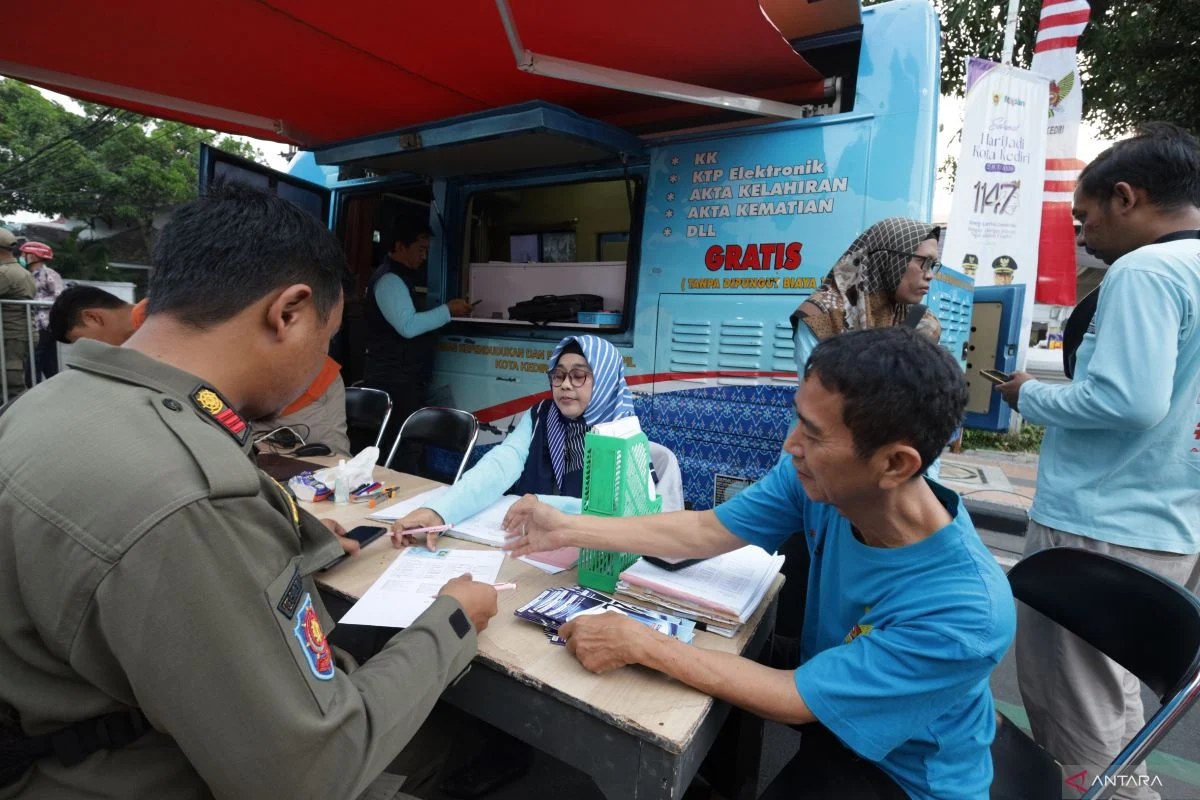
Jakarta, Indonesia – In a significant stride towards modernizing public administration and enhancing citizen convenience, the Indonesian government has officially eliminated the requirement for introductory letters from Rukun Tetangga (RT), Rukun Warga (RW), or kelurahan (village/sub-district) offices for the processing of a wide array of vital population administration documents. This sweeping policy, spearheaded by the Directorate General of Population and Civil Registration (Ditjen Dukcapil) under the Ministry of Home Affairs (Kemendagri), is set to drastically reduce bureaucratic hurdles, accelerate service delivery, and broaden access to essential civil documents for millions of Indonesians. The move underscores a broader national commitment to fostering a more efficient, transparent, and citizen-centric public service ecosystem, moving away from layers of traditional red tape that have long characterized administrative processes across the archipelago.
A Decisive Shift Towards Streamlined Governance
For decades, the introductory letter, locally known as a surat pengantar, issued by local neighborhood heads (RT/RW) and subsequently endorsed by the kelurahan or desa (village) office, has been an obligatory prerequisite for almost any interaction with government administrative bodies. While initially intended to verify residency and facilitate local oversight, this system often became a source of frustration, delays, and, in some instances, informal levies for citizens. The process involved multiple visits to local offices, often during limited operating hours, consuming valuable time and resources. Recognizing these systemic inefficiencies and their impact on public trust and economic productivity, the government has enacted a policy shift aimed at dismantling these barriers.
This reform is not merely an isolated measure but an integral component of Indonesia’s comprehensive public service reform agenda, which has gained momentum over the past decade. President Joko Widodo’s administration has consistently emphasized the importance of bureaucratic simplification, digital transformation, and the eradication of corruption in public services. The elimination of the surat pengantar requirement directly addresses these goals, promising to free citizens from unnecessary administrative burdens and allow them to interact directly with the Disdukcapil (Dinas Kependudukan dan Pencatatan Sipil – Department of Population and Civil Registration) offices for their needs.
Legal Foundation and Chronological Development
The legal underpinning for this transformative policy primarily stems from Peraturan Presiden (Perpres) Nomor 96 Tahun 2018 concerning Requirements and Procedures for Population Registration and Civil Registration, further solidified by Peraturan Menteri Dalam Negeri (Permendagri) Nomor 108 Tahun 2019 regarding Regulations on Services for Population Registration and Civil Registration. These regulations explicitly outline a simplified framework, stipulating that for most population administration services, direct application to Disdukcapil is sufficient, provided the applicant’s data is already recorded in the national population database.
While the spirit of these regulations has been in place for several years, the full-scale implementation and broad public communication of the surat pengantar elimination have been a more recent push. The Ministry of Home Affairs, through Ditjen Dukcapil, has been actively campaigning to ensure that local governments nationwide adopt and implement these streamlined procedures consistently. This process involved extensive socialization campaigns, training for Disdukcapil staff, and public announcements to educate citizens about their new rights and responsibilities in accessing these services. The gradual rollout has allowed various regional Disdukcapil offices to adapt their systems and workflows, some of which have also embraced digital platforms to further enhance accessibility.
Key Administrative Documents Now Accessible Without Introductory Letters
The list of documents for which the surat pengantar is no longer required covers the most frequently sought-after administrative services, impacting nearly every Indonesian citizen at various stages of their life. This includes:
-
Electronic Identity Card (KTP-el): For recording new data, updating existing information, or replacing lost/damaged KTP-el cards, citizens can now directly approach the Disdukcapil office. The previous requirement often meant multiple visits to RT/RW and kelurahan offices before even reaching the Disdukcapil, adding days or even weeks to the process. This simplification is particularly impactful given the KTP-el’s crucial role as a primary identification document for banking, employment, and accessing public services.
-
Family Card (Kartu Keluarga – KK): The KK is a foundational document for an entire household, detailing family relationships and residency. Changes such as the addition of new family members (e.g., newborns), removal of members (e.g., due to death or marriage), or updates to personal data within the card can now be processed directly at Disdukcapil. This directly addresses the often complex and time-consuming process of updating family details, which previously necessitated a chain of local endorsements.
-
Statement of Domicile Transfer (Surat Keterangan Pindah Domisili): Moving between administrative regions, whether within a city or across provinces, previously required extensive documentation and approvals from both the origin and destination local authorities, including surat pengantar. Under the new policy, citizens need only submit their request to the Disdukcapil with their existing KK and complete a transfer application form. This change significantly eases internal migration, which is a common occurrence in Indonesia, particularly for work and education. With an estimated annual internal migration rate of around 1.5-2% of the population, impacting millions, this simplification is profound.
-
Birth Certificate (Akta Kelahiran): Registering the birth of a child is a fundamental right and crucial for ensuring access to education, healthcare, and future administrative needs. The new policy allows for direct application for birth certificates at Dukcapil services, requiring supporting documents such as a birth statement from a healthcare facility, the parents’ KK, and identity documents. The surat pengantar is no longer a primary requirement, especially if the parents’ data is already within the national administration system, streamlining a process that is often urgent and emotionally sensitive for new parents.
-
Death Certificate (Akta Kematian): Similarly, the registration of a death, essential for inheritance, insurance claims, and updating family records, can now be done directly through Disdukcapil. This eliminates an additional layer of bureaucracy during a time of grief and allows families to process necessary documentation more quickly.
-
Child Identity Card (Kartu Identitas Anak – KIA): The KIA provides official identification for children under 17, facilitating their access to public services and recognition in various contexts. The application for a KIA can also be submitted directly to Disdukcapil, requiring family documents but no surat pengantar, provided the child’s and family’s data are already recorded in the population database. This policy promotes early identity registration and inclusion for younger citizens.
Digital Transformation and Regional Initiatives
Beyond the elimination of physical letters, the Indonesian government is actively leveraging technology to further enhance public service delivery. Many regional Disdukcapil offices have developed online platforms and mobile applications for submitting applications, tracking progress, and even receiving digital documents. Jakarta, as a pioneer, has implemented the "Alpukat Betawi" application, allowing residents to process various administrative documents digitally, minimizing the need for physical visits. This digital transformation is critical for a nation with a vast geography and a tech-savvy population, aligning with the broader "e-government" initiatives.
While the adoption of digital services varies across regions due to disparities in infrastructure and digital literacy, the central government is pushing for nationwide integration and standardization of these platforms. This dual approach – simplifying physical processes and promoting digital alternatives – aims to cater to diverse segments of the population and ensure broad accessibility.
Impact and Implications: A Paradigm Shift in Public Service
The implications of this policy are far-reaching, touching upon various facets of Indonesian society and governance:
- Enhanced Efficiency and Time Savings: Citizens no longer have to navigate multiple bureaucratic layers, saving precious time and reducing opportunity costs. A process that might have taken days or weeks can now potentially be completed in a single visit or even digitally. This is particularly beneficial for low-income citizens who cannot afford to take multiple days off work.
- Increased Transparency and Reduced Corruption: By minimizing face-to-face interactions with multiple officials and removing subjective intermediary approvals, the policy reduces opportunities for informal payments or corruption. Direct interaction with Disdukcapil staff, often in more controlled environments, promotes greater transparency.
- Improved Data Accuracy and Integration: The emphasis on direct application to Disdukcapil, particularly when data is already in the national database, reinforces the importance of a single, authoritative source of population data. This contributes to better data quality, which is crucial for national planning, social welfare programs, and election processes.
- Empowerment of Citizens: The policy empowers citizens by giving them direct access to essential services, reducing their reliance on local intermediaries. This fosters a sense of ownership and trust in government institutions.
- Challenges in Implementation: Despite the overwhelmingly positive intent, challenges persist. These include ensuring consistent implementation across all 514 districts/cities, addressing the digital divide in rural areas, maintaining data accuracy, and providing adequate human resources and infrastructure at Disdukcapil offices to handle the increased direct workload. Public awareness campaigns also need to be sustained to ensure all citizens are informed of the new procedures.
- Evolving Role of RT/RW: While the surat pengantar role diminishes, RT/RWs remain vital community pillars. Their functions will shift towards community development, social cohesion, and local problem-solving, rather than being mere gatekeepers for administrative paperwork. For specific, exceptional cases, particularly for individuals not yet registered in the national database (e.g., new migrants or those from remote areas seeking an initial NIK and KK registration), a surat pengantar might still be required for initial verification purposes. This ensures that the system maintains a mechanism for verifying new entries into the population database, balancing efficiency with data integrity.
Statements and Future Outlook
Officials from the Ministry of Home Affairs have consistently lauded this policy as a landmark achievement. Director General of Dukcapil, Professor Zudan Arif Fakrulloh (if he were still in office at the time, or a generic Ditjen Dukcapil representative), has frequently reiterated the government’s commitment to simplifying public services and making them more accessible. "Our goal is to make it as easy as possible for every Indonesian citizen to access their fundamental civil rights through efficient administration," a Ditjen Dukcapil spokesperson stated, emphasizing the paradigm shift from a ‘service that is difficult to a service that is easy.’
Public reaction, particularly in urban centers like Jakarta, has been largely positive, with many citizens expressing relief at the removal of cumbersome steps. Civil society organizations advocating for good governance and public service reform have also welcomed the move, viewing it as a tangible step towards a more accountable and citizen-friendly bureaucracy.
Looking ahead, the Indonesian government is expected to continue its trajectory of public service reform, with further digitalization efforts and simplification measures. The success of eliminating the surat pengantar for key documents serves as a powerful precedent for future initiatives, reinforcing the nation’s commitment to building a modern, responsive, and efficient administrative state that truly serves its people. This policy not only streamlines current processes but also lays a robust foundation for a future where administrative interaction is seamless, transparent, and respectful of citizens’ time and dignity. The journey towards fully digitalized and integrated public services is ongoing, but this latest reform marks a crucial milestone in Indonesia’s administrative evolution.