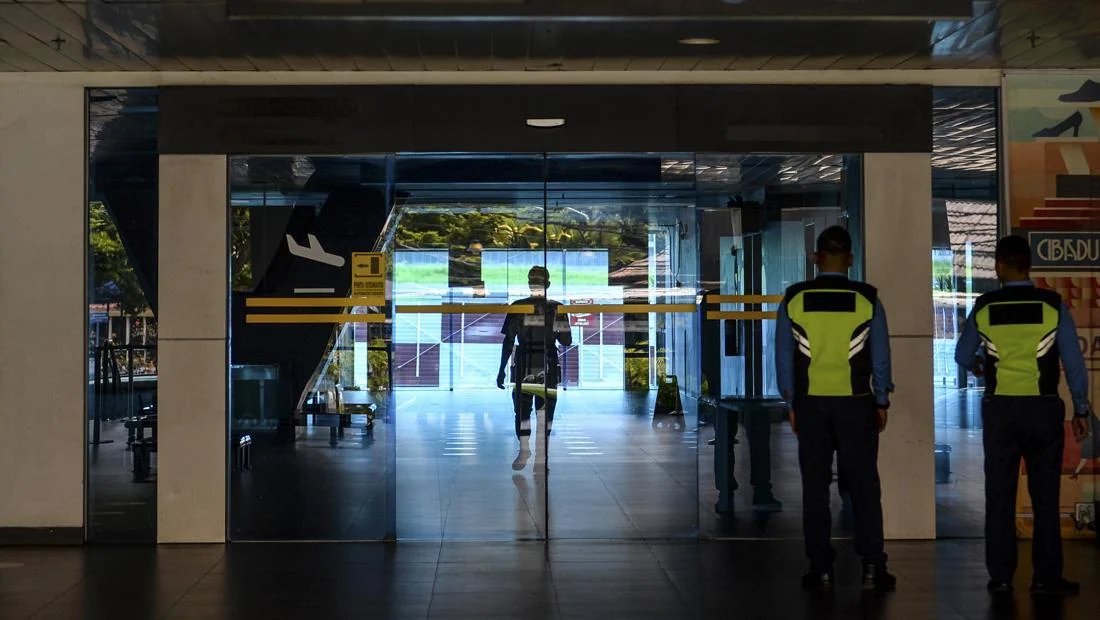
InJourney Airports, officially known as PT Angkasa Pura Indonesia (Persero), has confirmed that the comprehensive preparation and optimization of Husein Sastranegara Airport (BDO) in Bandung are proceeding according to a strict timeline to resume jet aircraft services in the near future. This strategic move marks a significant shift in West Java’s aviation landscape, signaling a return of narrow-body jet operations to the heart of the provincial capital. Arie Ahsanurrohim, the Corporate Secretary Group Head of InJourney Airports, stated on Sunday, July 19, 2026, that the organization is maintaining intensive coordination with all relevant stakeholders, including the Ministry of Transportation, local government authorities, and airline partners, to ensure a seamless transition. The primary focus of these preparations is the fulfillment of all operational readiness aspects as mandated by the Directorate General of Civil Aviation (DGCA) under the Ministry of Transportation.
The reactivation of Husein Sastranegara Airport for jet operations is not merely a logistical adjustment but a calculated effort to revitalize the economy of Bandung and its surrounding areas. For years, the airport primarily served turboprop aircraft and limited charter flights after most jet operations were transferred to West Java International Airport (BIJB) in Kertajati. However, recognizing the persistent demand for more direct access to Bandung—a major hub for tourism, education, and the creative economy—the government has authorized a phased return of jet services. This decision is expected to significantly reduce travel time for business travelers and tourists who previously had to navigate the two-to-three-hour journey from Kertajati or Jakarta to reach the center of Bandung.
A Phased Approach to Full Operational Capacity
The Ministry of Transportation has outlined a clear, two-stage scenario for the return of jet aircraft to Bandung. According to Lukman F. Laisa, the Director General of Civil Aviation, the first phase is scheduled to commence on August 17, 2026, coinciding with Indonesia’s Independence Day. Under this initial scenario, Husein Sastranegara will begin serving jet flights with minimal operations, focusing on business aviation and charter flights. This period will serve as a live testing ground for the airport’s basic infrastructure and ground handling capabilities, ensuring that the return of larger aircraft does not compromise safety or efficiency.
The second phase, which aims for full operational status, is targeted for September 17, 2026. By this date, the airport is expected to be fully equipped to handle commercial jet aircraft in the category of the Boeing 737-800 and the Airbus A320. These aircraft are the workhorses of the Indonesian aviation industry, and their return to Bandung will allow for high-capacity domestic and international routes. To manage this transition, the government will implement a sophisticated slot management system. This system is designed to ensure that the airport’s capacity—which is physically constrained by its urban location and mountain-surrounded topography—is utilized in a manner that is safe, orderly, and effective.
Infrastructure Upgrades and Safety Protocols
To accommodate the return of narrow-body jets, InJourney Airports is undertaking significant infrastructure upgrades on both the airside and landside of the facility. Safety remains the paramount concern, particularly given the technical challenges associated with Husein Sastranegara’s runway length and surrounding terrain. One of the critical requirements for jet operations is the provision of Pertolongan Kecelakaan Penerbangan dan Pemadam Kebakaran (PKP-PK) or Aircraft Rescue and Fire Fighting (ARFF) Category 7 services. This category is a regulatory necessity for handling aircraft the size of a Boeing 737 or Airbus A320.
To meet these standards, InJourney Airports is mobilizing specialized equipment, including high-capacity Foam Tender vehicles. Interestingly, the Ministry of Transportation has suggested a resource-sharing model where ARFF equipment and personnel from Kertajati Airport will be mobilized to Bandung following the conclusion of the 2026 Hajj season operations. This strategy allows for a cost-effective reactivation without the immediate need for massive capital expenditure on new heavy equipment. Beyond firefighting capabilities, airside improvements include the reinforcement of the runway, taxiway, and apron to increase the Pavement Classification Number (PCN), ensuring the ground can withstand the weight and pressure of frequent jet landings and take-offs.
On the security and passenger service front, the airport is upgrading its Screening Check Points (SCP). This involves the installation of the latest generation of X-ray machines, Walkthrough Metal Detectors (WMTD), and Handheld Metal Detectors (HHTD). These upgrades are essential not only for domestic security but also to comply with international aviation standards, as the airport prepares to resume regional flights to neighboring countries.
Airline Interest and Proposed Routes
The announcement of the reactivation has been met with significant enthusiasm from the airline industry. To date, six major airlines have officially expressed interest and submitted proposals to operate jet routes out of Husein Sastranegara Airport. These airlines recognize the high "load factor" potential of the Bandung market, which remains one of the most popular destinations in Southeast Asia.
Citilink, the low-cost carrier subsidiary of Garuda Indonesia, has proposed routes connecting Bandung to Kualanamu (Medan), Denpasar (Bali), and Surabaya. Super Air Jet, a rapidly growing player in the Indonesian market, has submitted an even more ambitious list of destinations, including Kualanamu, Denpasar, Pekanbaru, Makassar, Batam, Padang, Balikpapan, and Pontianak. This extensive network would effectively reconnect Bandung with major economic hubs across the Indonesian archipelago.
Garuda Indonesia itself plans to reintroduce its premium service on the Bandung-Denpasar route, catering to high-end tourists and business professionals. Meanwhile, Transnusa is looking toward international expansion, proposing routes from Bandung to Kuala Lumpur and Johor Bahru in Malaysia, as well as a domestic link to Lampung. The Singapore-based budget carrier Scoot has also signaled its intent to return to Bandung, providing a direct link to Singapore’s Changi Airport, which serves as a global gateway. Lastly, Wings Air is set to bolster regional connectivity with proposed routes to Lampung and Palembang.
Economic Implications and the Dual-Airport Strategy
The decision to bring jets back to Husein Sastranegara reflects a pragmatic "dual-airport" strategy for the West Java region. While Kertajati Airport was designed to be the primary international hub for the province, its distance from Bandung has remained a hurdle for immediate passenger growth. By allowing Husein Sastranegara to serve specific jet routes, the government is catering to the "point-to-point" demand of travelers who prioritize proximity to the city center.
Economic analysts suggest that this reactivation will provide an immediate boost to Bandung’s hospitality and retail sectors. Known as the "Paris van Java," Bandung relies heavily on weekend tourism from both domestic and international visitors. The return of direct jet flights from cities like Singapore and Kuala Lumpur is expected to increase the influx of foreign spending. Furthermore, the textile and fashion industries in Bandung, which often require rapid transport for samples and business travel, will benefit from the enhanced connectivity.
However, the government remains committed to the long-term viability of Kertajati Airport. The strategy involves a careful balancing act: Husein Sastranegara will likely focus on high-frequency domestic and short-haul regional routes, while Kertajati continues to develop as a hub for long-haul flights, cargo operations, and aircraft maintenance (MRO). The completion of the Cisumdawu Toll Road has already improved access to Kertajati, and officials believe that the two airports can eventually function as a complementary aviation ecosystem rather than competitors.
Regulatory Oversight and Future Outlook
The Directorate General of Civil Aviation has emphasized that the reactivation process must adhere strictly to the principles of safety, security, and regulatory compliance. The "safety assessment" conducted by the Ministry of Transportation serves as the foundation for this project. Lukman F. Laisa reiterated that while efficiency is a goal, there will be no compromises on aviation standards. The mobilization of assets and the optimization of existing facilities are being done to ensure that the process is as lean as possible without cutting corners.
As the August 17 deadline approaches, the focus will shift to trial runs and the final certification of ground crews. The aviation community and the residents of Bandung are watching closely, as the roar of jet engines returning to Husein Sastranegara symbolizes a new chapter in the city’s post-pandemic recovery. With six airlines already on board and a clear infrastructure roadmap, the airport is poised to reclaim its status as a vital artery for Indonesian aviation, bridging the gap between West Java and the rest of the world.
In the broader context of Indonesian infrastructure, the optimization of Husein Sastranegara is a testament to the government’s flexible approach to transportation planning. By listening to market demand and adapting existing assets, InJourney Airports is positioning itself to maximize the utility of Indonesia’s aviation network. The success of this reactivation will likely serve as a blueprint for other regional airports facing similar logistical and demand-based challenges, ensuring that the nation’s skyways remain open, efficient, and safe for all.