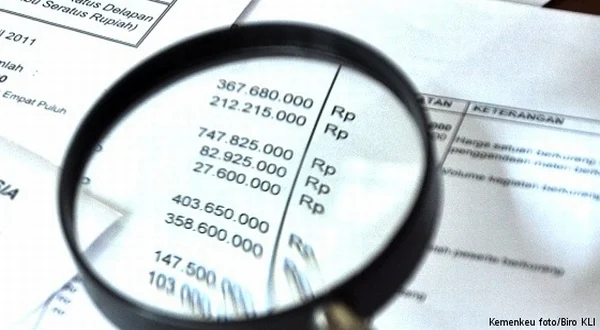
The Government of Indonesia formally presented the Draft Law (RUU) regarding the Accountability for the Implementation of the 2013 State Budget (APBN) during a plenary session of the House of Representatives (DPR) on Tuesday, June 24, 2014. Minister of Finance Chatib Basri, representing the administration of President Susilo Bambang Yudhoyono, delivered the report at the Nusantara II Building in Senayan, Jakarta. The presentation served as a critical constitutional requirement, detailing how public funds were utilized during a year marked by significant global economic volatility and domestic fiscal adjustments. However, the report was overshadowed by the audit results from the Supreme Audit Agency (BPK), which granted the 2013 Central Government Financial Report (LKPP) a "Qualified Opinion" or Wajar Dengan Pengecualian (WDP).
The WDP status indicates that while the financial statements were generally presented fairly in all material respects, there were specific areas where the auditors found discrepancies or lacked sufficient documentation to provide a clean bill of health. Minister Chatib Basri used the floor of the DPR to explain the underlying causes of this audit result, attributing the qualification to four primary accounting and administrative hurdles that have historically plagued the government’s balance sheet.
The Root Causes of the Qualified Audit Opinion
In his address to the legislators, Minister Chatib Basri identified the specific "exceptions" cited by the BPK that prevented the government from achieving a "Unqualified Opinion" (WTP), which is the highest standard of financial transparency. The first major issue involved "over-lifting" receivables and oil and gas sales receivables. In the extractive industry, over-lifting occurs when a production sharing contractor takes a larger share of crude oil or gas than they are entitled to under their contract, creating a debt to the state. The BPK found that the recording and reconciliation of these receivables remained inconsistent, leading to valuation uncertainties.
The second primary concern revolved around credit assets inherited from the now-defunct Indonesian Bank Restructuring Agency (BPPN). These assets, which date back to the 1997-1998 Asian Financial Crisis, have proven notoriously difficult to manage. The BPK noted issues with the documentation, legal status, and recovery values of these legacy assets, which continue to sit on the government’s books over a decade after the agency was dissolved.
Thirdly, the Minister pointed to discrepancies in the management of pension fund expenditures. The accounting for civil servant pensions has often faced scrutiny regarding the accuracy of beneficiary data and the timing of disbursements. These four factors—over-lifting, oil and gas receivables, ex-BPPN assets, and pension funds—collectively created enough statistical noise to warrant the BPK’s cautionary "Qualified" stance.
A Turbulent Global and Domestic Macroeconomic Backdrop
The 2013 fiscal year was not a standard year for the Indonesian economy. Minister Basri emphasized that the execution of the budget was heavily influenced by a "perfect storm" of external and internal pressures. Externally, 2013 was the year of the "Taper Tantrum." In May 2013, Ben Bernanke, then-Chairman of the U.S. Federal Reserve, signaled that the central bank would begin slowing its bond-buying program. This caused a massive shift in global capital flows, as investors pulled money out of emerging markets like Indonesia and moved it back to the United States in anticipation of higher interest rates.
This global shift was compounded by a slowdown in the Chinese economy and a persistent decline in the prices of Indonesia’s primary commodity exports, such as coal and crude palm oil (CPO). "From the external side, we faced a global economic slowdown, declining international commodity prices, and financial market volatility triggered by the Fed’s tapering off policy," Basri explained to the assembly.
Internally, these external shocks exposed vulnerabilities in Indonesia’s economic structure. The country’s current account deficit (CAD) widened significantly, putting immense pressure on the Rupiah. The currency, which had traded relatively stably in previous years, saw a sharp depreciation, moving from approximately Rp9,700 per USD at the start of the year to over Rp12,000 by the end of 2013. This depreciation increased the cost of imports and placed a heavier burden on the state budget, particularly regarding energy subsidies.
Chronology of Fiscal Interventions in 2013
To navigate these challenges, the government was forced to take several drastic measures throughout the 2013 calendar year. The timeline of these events provides context for the financial report presented to the DPR:
- First Quarter 2013: Initial signs of a widening trade deficit appeared as commodity demand from China weakened.
- May-June 2013: The "Taper Tantrum" announcement led to a rapid sell-off in the Indonesian stock and bond markets. The government and Bank Indonesia began coordinating to stem capital flight.
- June 2013: In one of the most significant fiscal moves of the decade, the government raised the price of subsidized fuel (BBM) to reduce the ballooning deficit. This move was necessary to maintain fiscal sustainability but led to a temporary spike in inflation, which peaked at over 8%.
- August 2013: The government launched a "Four-Point Policy Package" aimed at stabilizing the economy. This included incentives for export-oriented industries, measures to reduce oil imports, and efforts to protect low-income households from inflation through social assistance programs (BLSM).
- Fourth Quarter 2013: The budget execution was finalized amidst a weaker Rupiah, which affected the final figures for external debt payments and revenue from the oil and gas sector.
Supporting Data and Financial Implications
The 2013 LKPP revealed the scale of the fiscal challenge. The government’s total expenditure for the year reached approximately Rp1,650.6 trillion, while state revenue stood at roughly Rp1,438.9 trillion. This resulted in a budget deficit of 2.33% of Gross Domestic Product (GDP), which was higher than the initial target of 1.65% but still within the legal limit of 3.0%.
The "over-lifting" issues mentioned by Basri involved significant sums. Discrepancies in oil and gas reporting often involved trillions of Rupiah, which, while a small percentage of the total budget, are significant enough to trigger audit qualifications. Furthermore, the ex-BPPN assets, valued at billions of dollars in book value, continued to show a recovery rate far below their original nominal value, complicating the state’s asset management reporting.
The inflation rate, driven by the June fuel price hike, ended the year at 8.38%, significantly higher than the initial 2013 APBN assumption of 4.5%. This necessitated an increase in social safety net spending, which altered the planned allocation of funds and contributed to the complexity of the year-end accountability report.
Reactions from the Legislature and Financial Analysts
Following the Minister’s presentation, members of the DPR expressed a mix of understanding and criticism. While many acknowledged the severity of the 2013 global financial climate, members of the opposition parties questioned why the government had not yet resolved the "recurring" issues of ex-BPPN assets and oil receivables, which had been cited in previous BPK reports as well.
Financial analysts noted that the WDP status, while disappointing, was not a surprise. "The 2013 fiscal year was perhaps the most difficult year for the SBY administration since the 2008 global financial crisis," stated one Jakarta-based economist. "The fact that the government maintained a deficit below 3% while facing a currency crisis and a commodity slump is a feat, but the accounting ‘exceptions’ show that bureaucratic reform in asset management is still lagging behind macroeconomic management."
The BPK’s decision to maintain a WDP opinion served as a reminder that transparency involves more than just balancing the books; it requires a rigorous and verifiable trail for every asset and liability owned by the state.
Broader Impact and Future Outlook
The presentation of the 2013 APBN accountability report came at a pivotal moment in Indonesian politics. June 2014 was the height of the presidential election season, with the nation preparing to choose a successor to President Yudhoyono. The financial health of the country and the transparency of its reports were central themes in the transition of power.
The WDP status for 2013 set a benchmark for the incoming administration. It highlighted the urgent need for a "Clean Audit" (WTP) to bolster investor confidence. For Indonesia to achieve an investment-grade rating from all major global agencies and to lower its borrowing costs, achieving a WTP status for its LKPP was seen as an essential milestone.
Minister Chatib Basri concluded his presentation by reaffirming the government’s commitment to following up on the BPK’s recommendations. He noted that the transition to an accrual-based accounting system, which was scheduled for full implementation in 2015, would eventually help resolve many of the valuation issues related to receivables and assets.
"The dynamics of 2013, both internal and external, undoubtedly impacted our macroeconomic assumptions and the achievement of our targets," Basri said. "However, the government remains focused on strengthening the current account, stabilizing the Rupiah, and ensuring that every Rupiah of the state budget is accounted for, despite the technical hurdles we still face in certain sectors."
As the DPR moved to deliberate the RUU, the focus remained on how the next government would address these systemic accounting issues while navigating an increasingly unpredictable global economic landscape. The 2013 report stands as a historical record of a year defined by resilience in the face of market "tapering" and the ongoing struggle to modernize the financial reporting of the Indonesian state.