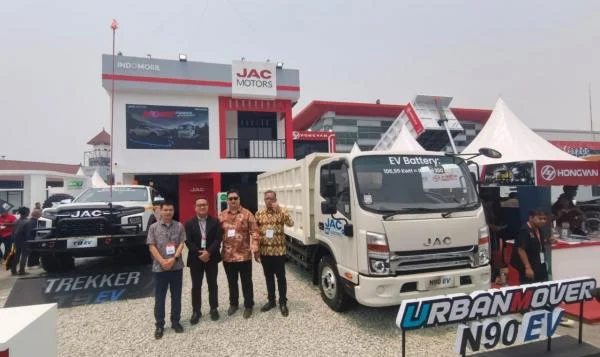
The Indonesian mining industry is undergoing a significant technological shift as JAC Motors, the prominent Chinese commercial vehicle manufacturer, officially unveiled its latest suite of electric vehicles (EVs) at the Mining Indonesia 2026 exhibition. Held at the JIExpo Kemayoran in Jakarta from September 9 to September 12, the event served as the strategic platform for the introduction of the Trekker T9 EV and the Urban Mover N90 EV. These models represent a calculated move by JAC Motors to integrate zero-emission logistics and operational support into one of Indonesia’s most carbon-intensive sectors.
The arrival of these vehicles underscores the growing pressure on mining corporations to align their operations with global Environmental, Social, and Governance (ESG) standards. As the Indonesian government pushes for a more sustainable energy transition, the heavy-duty sector—traditionally dominated by internal combustion engines—is increasingly becoming the primary target for electrification initiatives.
Strategic Introduction at Mining Indonesia 2026
Mining Indonesia, widely recognized as one of the largest mining equipment exhibitions in Asia, provided the ideal backdrop for JAC Motors to showcase its commitment to the Indonesian market. During the event, Reggie Kurnia, Chief Operating Officer (COO) of Indomobil JAC, emphasized that the debut of the Trekker T9 EV and Urban Mover N90 EV is not merely a commercial launch but a strategic response to the evolving demands of industrial operations.
"This is a critical momentum for us to build closer ties with industry stakeholders in the mining sector," said Reggie Kurnia during a press conference on Wednesday, September 9, 2026. "Our objective is to offer commercial EV solutions that are not only technologically advanced but also robust enough to withstand the challenging terrains and operational rigors typical of Indonesian mining sites."
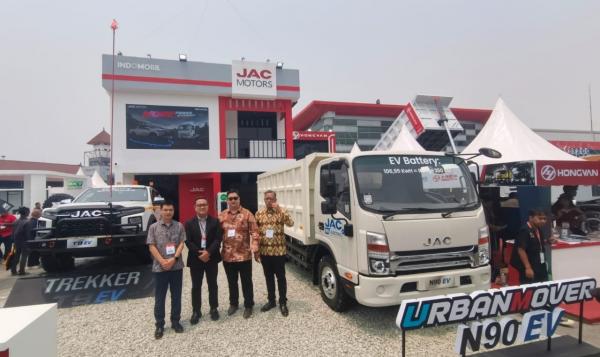
The Trekker T9 EV is designed for versatility, bridging the gap between light commercial transport and heavy-duty utility, while the Urban Mover N90 EV targets the logistics segment, aiming to streamline the movement of equipment and materials within mining complexes and their associated supply chains.
A Major Milestone: Handover Ceremony of 150 Units
A highlight of the exhibition was the formal handover ceremony of 150 units of the Trekker T9 EV. The vehicles were delivered to three major mining companies operating in diverse regions across the archipelago, specifically Aceh, Berau in East Kalimantan, and Banyuwangi in East Java. This distribution across different islands reflects the geographical diversity of Indonesia’s mining industry and the company’s confidence in its vehicle’s capability to operate effectively across varying logistical landscapes.
The immediate adoption of 150 units by major players serves as a tangible proof-of-concept for the broader market. Industry analysts suggest that this volume of adoption by established firms is a significant indicator of shifting procurement strategies, moving away from conventional diesel-powered fleets toward cleaner, more efficient electric alternatives.
The Technological Evolution of Mining Logistics
The transition to electric mining vehicles is supported by several technological advancements that address the specific limitations previously associated with EVs in industrial settings. JAC Motors has integrated high-capacity battery architectures and rapid-charging capabilities, ensuring that the vehicles can maintain uptime despite the demanding nature of 24/7 mining operations.
- Energy Efficiency: By replacing combustion engines with high-torque electric motors, these vehicles offer superior energy conversion rates, which is particularly beneficial in stop-start environments and short-haul logistics within mine perimeters.
- Reduced Maintenance Cycles: Electric drivetrains have fewer moving parts than traditional diesel engines, leading to lower long-term maintenance costs and less downtime for servicing—a critical metric for mining productivity.
- Terrain Adaptability: The Trekker T9 EV, specifically engineered for commercial utility, features chassis reinforcement and advanced suspension systems to manage heavy loads on uneven, unpaved mining roads.
Contextualizing the Shift Toward Green Mining
Indonesia has set an ambitious target to reach net-zero emissions by 2060. To achieve this, the industrial sector—which contributes a significant portion of the national GDP—must reduce its reliance on fossil fuels. The mining industry, as a foundational pillar of the Indonesian economy, is uniquely positioned to lead this change.

However, the transition is not without its hurdles. The availability of charging infrastructure remains a primary concern for fleet operators. The recent incident in Cikupa, Tangerang, involving public charging station congestion, highlights the growing pains of Indonesia’s nascent EV ecosystem. For the mining industry, this challenge is typically mitigated through the installation of dedicated, private, high-capacity charging hubs within the mine sites themselves, essentially creating "off-grid" islands of electric mobility.
Market Implications and Future Outlook
The strategic entry of JAC Motors into the Indonesian mining sector creates a ripple effect in the commercial vehicle market. It forces domestic and international competitors to accelerate their own EV development programs. As more companies follow suit, the price of electric commercial vehicles is expected to drop due to economies of scale and increased competition, making them more accessible to mid-sized and smaller mining contractors.
Furthermore, the government’s push for the "downstreaming" (hilirisasi) of minerals, particularly nickel, provides a compelling narrative for the adoption of EVs. By using electric vehicles to extract the very materials needed for EV batteries, mining companies are creating a circular economic model that is highly attractive to international investors and sustainability-conscious stakeholders.
Analyzing the Economic and Operational Impact
The integration of 150 Trekker T9 EV units is expected to provide substantial data on the long-term viability of electric transport in tropical, high-humidity, and rugged environments. JAC Motors, in collaboration with Indomobil, is likely to leverage this data to refine future iterations of their vehicles.
For the mining companies involved, the shift is an investment in operational resilience. While the initial capital expenditure for electric fleets is generally higher than that of diesel equivalents, the Total Cost of Ownership (TCO) is projected to be lower over the vehicle’s lifespan. This is attributed to the relative price stability of electricity compared to the volatility of diesel fuel prices, which are heavily dependent on global oil markets and domestic subsidy policies.

Conclusion
The presence of JAC Motors at Mining Indonesia 2026 and the subsequent deployment of their electric fleet mark a pivotal moment for Indonesia’s industrial sector. By demonstrating that electric vehicles can perform under the extreme conditions of mining sites, the company is helping to dismantle the perception that EVs are restricted to urban, passenger-car use cases.
As the industry moves toward 2030, the success of these 150 units will serve as a bellwether for the wider adoption of electric commercial vehicles. If the performance metrics—such as battery longevity, charging speed, and durability—meet or exceed expectations, it is highly probable that the mining sector will spearhead the next wave of Indonesia’s national electrification strategy. For now, the partnership between JAC Motors and its new corporate clients in Aceh, Berau, and Banyuwangi sets a high standard for what a sustainable, electrified industrial future in Indonesia might look like.