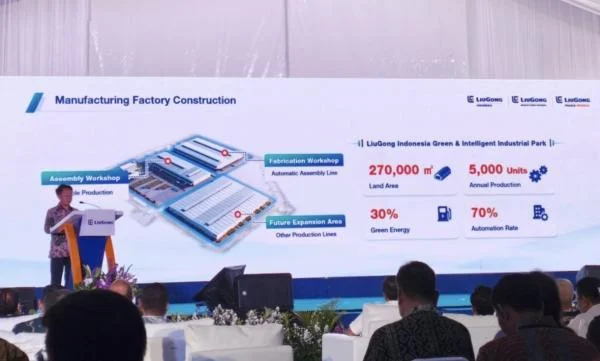
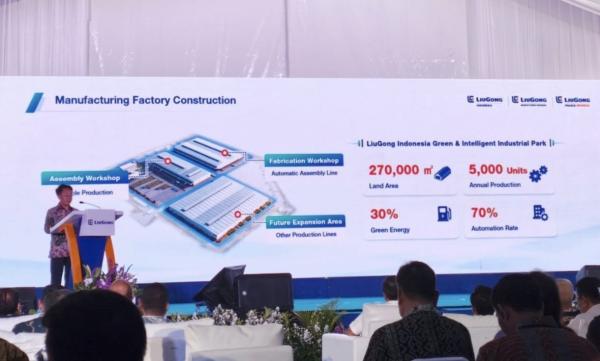
JAKARTA, Indonesia – Chinese heavy equipment manufacturer LiuGong is strategically positioning Indonesia as its primary production base for electric vehicles and heavy machinery across the Asia-Pacific region. This significant move is underscored by the construction of the Indonesia Green Smart Industrial Park, located within the Karawang Artha Industrial Hill (KAIH) in West Java. The establishment of this state-of-the-art facility represents a pivotal moment in LiuGong’s global manufacturing strategy, aiming not only to cater to the burgeoning domestic and regional markets but also to serve as a crucial supply hub for North America and Europe.
The ambitious project, which involves an investment of approximately 500 million yuan (equivalent to roughly Rp1.3 trillion), signifies LiuGong’s long-term commitment to Indonesia and its potential as a manufacturing powerhouse. The company’s leadership has articulated a vision that extends beyond mere production, emphasizing collaboration, innovation, and a dedication to supporting sustainable industrial development and the green transformation within the region.
Strategic Expansion and Global Footprint
The inauguration of the Indonesia Green Smart Industrial Park marks a significant expansion of LiuGong’s international manufacturing footprint. The company currently operates production facilities in India, Brazil, and Poland, demonstrating a deliberate strategy to diversify its global manufacturing capabilities and mitigate supply chain risks. By selecting Indonesia for its electric heavy equipment hub, LiuGong is capitalizing on the country’s strategic geographical location, its growing industrial base, and supportive government policies aimed at attracting foreign investment in advanced manufacturing sectors.
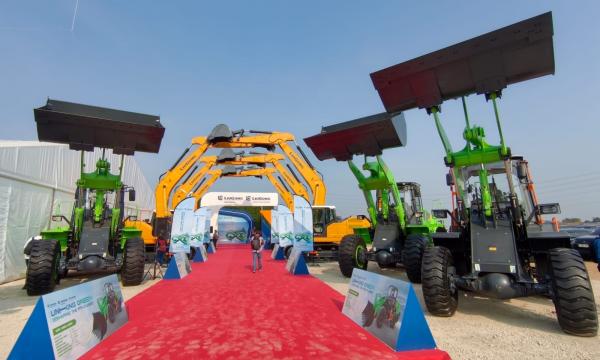
Zheng Jin, Chairman of Guangxi LiuGong Group Co Ltd and Guangxi LiuGong Machinery Co Ltd, highlighted the symbolic importance of the new industrial park. "The Indonesia Green Smart Industrial Park embodies LiuGong’s long-term commitment to the Indonesian market," Zheng Jin stated during the official opening ceremony on Wednesday, July 22, 2026. "We are committed to further deepening our partnerships in Indonesia and across the ASEAN region, fostering innovation through open collaboration, and working hand-in-hand with industry partners to champion sustainable industrial development and the green transformation of the region."
This statement underscores LiuGong’s intent to integrate its operations within the local economic ecosystem, fostering relationships with Indonesian suppliers, talent, and research institutions. The focus on electric heavy equipment aligns with global trends towards decarbonization and sustainable practices in the construction and mining industries.
A Hub for Electric Innovation and Regional Supply
The choice of Karawang, West Java, as the site for this advanced industrial park is strategic. Karawang is a well-established industrial zone with robust infrastructure, a skilled workforce, and proximity to key transportation networks, including major ports and highways. This logistical advantage is crucial for LiuGong’s plan to efficiently distribute its electric heavy equipment across the Asia-Pacific, and eventually to global markets.
Deng Tao, Vice President of Guangxi LiuGong Machinery, elaborated on the strategic implications of this investment. "This initiative represents a significant expansion of LiuGong’s overseas manufacturing footprint," Deng Tao explained. "It marks a strategic decision to establish Indonesia as the company’s business hub for electric heavy equipment. The investment reflects our confidence in Indonesia’s industrial capabilities and its potential to become a central node in our global supply chain for next-generation machinery."

The company’s emphasis on electric heavy equipment is particularly noteworthy. The global demand for environmentally friendly construction and mining machinery is on the rise, driven by stricter environmental regulations, corporate sustainability goals, and a growing awareness of climate change. Indonesia, as a rapidly developing nation with significant infrastructure projects and a large resource-based economy, presents a substantial market for these advanced vehicles. By producing them locally, LiuGong can offer products that are not only more sustainable but also potentially more cost-effective due to reduced shipping costs and tailored solutions for regional needs.
Supporting Data and Market Context
The global market for electric construction equipment is projected to experience substantial growth in the coming years. Reports from industry analysis firms indicate a compound annual growth rate (CAGR) of over 20% for the electric construction machinery market between 2023 and 2030. Key drivers for this growth include government incentives for electric vehicle adoption, increasing awareness of the environmental impact of traditional diesel-powered machinery, and technological advancements that are making electric alternatives more powerful and cost-efficient.
Indonesia, with its ambitious infrastructure development plans, including new roads, railways, airports, and energy projects, represents a prime market for heavy equipment. The transition to electric machinery in these sectors could lead to significant reductions in carbon emissions and air pollution in urban and industrial areas. Furthermore, LiuGong’s presence and investment could stimulate the development of a local ecosystem for electric vehicle components, battery technology, and charging infrastructure, fostering technological transfer and job creation.
Timeline and Key Milestones
While the article does not provide an explicit timeline for the construction and operational phases of the Indonesia Green Smart Industrial Park, the official opening of the facility on July 22, 2026, signifies that initial construction or a significant phase of development has been completed. The establishment of such a large-scale industrial park typically involves several stages:

- Planning and Feasibility Studies: This phase would have involved market research, site selection, environmental impact assessments, and securing necessary permits.
- Construction: The building of the factory, warehousing facilities, research and development centers, and supporting infrastructure. This is likely the phase that has culminated in the July 2026 opening.
- Equipment Installation and Commissioning: Setting up the production lines, testing machinery, and ensuring all systems are operational.
- Ramp-up and Full Production: Gradually increasing production capacity to meet market demand and achieve full operational efficiency.
LiuGong’s commitment to a "long-term" presence suggests that this facility is envisioned as a core component of its global strategy for decades to come. The phased approach to investment and production ramp-up is common for such large-scale manufacturing projects.
Broader Impact and Implications
The establishment of LiuGong’s electric heavy equipment hub in Indonesia carries several significant implications:
- Economic Contribution: The investment is expected to create numerous direct and indirect jobs, ranging from skilled manufacturing roles to engineering and management positions. It will also stimulate local economies through the procurement of raw materials, components, and services.
- Technological Advancement: By focusing on electric heavy equipment, LiuGong’s presence will likely accelerate the adoption of advanced manufacturing technologies and electric powertrain systems in Indonesia. This could lead to knowledge transfer and the development of local expertise in these critical areas.
- Environmental Sustainability: The shift towards electric heavy equipment aligns with Indonesia’s national climate goals and its commitment to reducing greenhouse gas emissions. The operation of an electric vehicle production facility itself, with a focus on green industrial practices, further reinforces this commitment.
- Regional Competitiveness: Indonesia’s position as a manufacturing hub for electric heavy equipment will enhance its competitiveness within the Asia-Pacific region and on the global stage. It could attract further foreign investment in the automotive and industrial machinery sectors.
- Supply Chain Resilience: By diversifying its production base to Indonesia, LiuGong is enhancing the resilience of its global supply chain, making it less susceptible to disruptions in any single region. This also positions the company to better serve markets in Southeast Asia and Oceania.
Official Reactions and Partnerships
While the article primarily features statements from LiuGong’s top executives, the successful establishment of such a significant industrial park often involves close collaboration with government agencies and local authorities. It is highly probable that the Indonesian government, through agencies such as the Ministry of Investment/BKPM (Investment Coordinating Board) and relevant regional development bodies, played a crucial role in facilitating the project. This would typically involve streamlining regulatory processes, providing incentives, and ensuring the availability of suitable land and infrastructure.
The emphasis on "open collaboration" and "working with industry partners" suggests that LiuGong is keen to build a strong network of local suppliers and service providers. This collaborative approach is vital for long-term success, ensuring that the Indonesian industrial ecosystem can effectively support the company’s operations and growth.
In conclusion, LiuGong’s strategic decision to establish its Asia-Pacific electric heavy equipment production hub in Indonesia represents a substantial investment and a forward-looking move. It underscores Indonesia’s growing importance as a manufacturing center and highlights the global shift towards sustainable industrial practices. The Indonesia Green Smart Industrial Park is poised to become a cornerstone of LiuGong’s global strategy, driving innovation and contributing significantly to the economic and environmental landscape of the region.