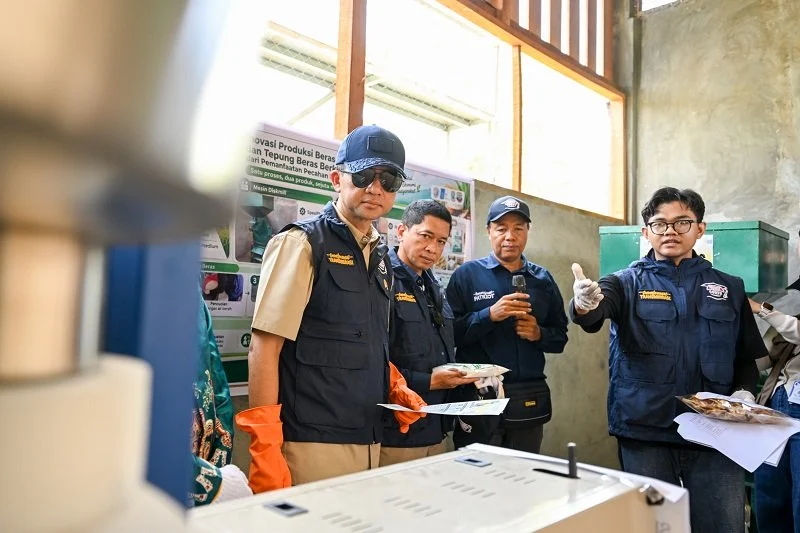
The agricultural landscape in the Momiwaren Transmigration Area, located in the Oransbari District of South Manokwari Regency, West Papua, has reached a technological milestone following the introduction of advanced grain-drying infrastructure. This initiative, spearheaded by the Tim Ekspedisi Patriot from the Sepuluh Nopember Institute of Technology (TEP ITS), marks a strategic shift toward modernizing post-harvest processes in Indonesia’s outer regions. By deploying grain dryers capable of processing two tons of harvest in a single cycle, the government aims to mitigate the long-standing challenges posed by unpredictable tropical weather, which has historically compromised the quality and marketability of local rice production.
A Technological Shift in Post-Harvest Management
For years, farmers in the Momiwaren region relied on traditional sun-drying methods, a labor-intensive process that required significant time and physical space. Under optimal conditions, this manual process could take anywhere from three to seven days. During the rainy season, however, this timeframe extended indefinitely, leading to high moisture levels, fungal growth, and substantial post-harvest losses. Furthermore, the practice of spreading grain on public roads not only degraded the quality of the rice but also created safety hazards for local traffic.
The implementation of the TEP ITS-designed mechanical dryer reduces this duration to just several hours. This efficiency is critical for maintaining the nutritional integrity of the rice and ensuring that farmers can bring their products to market promptly. To address the inherent energy challenges in remote transmigration zones, the system is integrated with a Photovoltaic (PV) solar array. This Pembangkit Listrik Tenaga Surya (PLTS) provides the necessary power to operate the drying machinery, effectively bypassing the limitations of the regional electrical grid and aligning with national sustainability goals.
Ministerial Vision: Transmigration as an Economic Engine
Minister of Transmigration M. Iftitah Sulaiman Suryanagara visited the site on Sunday, November 1, 2026, to oversee the inauguration of these facilities. During his visit, he emphasized that the current administration’s approach to transmigration has evolved significantly from the population-redistribution strategies of previous decades.
"I am here to witness the tangible contributions made by the Patriot Expedition team. Today, transmigration is no longer merely about relocating people; it is about building robust economic regions," Minister Iftitah stated.
The Minister’s remarks underscore a broader policy pivot toward "Economic Transmigration." This philosophy posits that transmigration areas should serve as self-sustaining hubs of productivity. By equipping these zones with advanced post-harvest technology, the Ministry seeks to elevate the socio-economic status of transmigrant families, moving them from subsistence farming to commercial-grade agricultural production.
Supporting Data and Agricultural Context
The reliance on manual drying has been a systemic bottleneck for Indonesian farmers. According to data from the Ministry of Agriculture and independent research, post-harvest losses in Indonesia range between 10% and 20% of total production, with the majority of these losses occurring due to improper drying and storage. In regions with high precipitation, such as West Papua, these losses are disproportionately higher.
The introduction of the two-ton capacity dryer represents a targeted intervention in the value chain. By controlling the moisture content (MC) of the grain to an ideal level (typically 14%), the machine ensures a longer shelf life and higher milling yields. The inclusion of an automated grain sorting unit—a secondary component of the TEP ITS project—further enhances the value of the crop. Uniform, clean, and well-dried rice commands a higher price in both local and regional markets, effectively increasing the net income of the transmigrant farmers.

Chronology of the Initiative
The collaboration between the Sepuluh Nopember Institute of Technology and the Ministry of Transmigration has followed a phased approach:
- Needs Assessment: Throughout early 2026, the TEP ITS team conducted on-site surveys in Oransbari to identify primary obstacles to agricultural productivity. The data confirmed that drying speed and electricity supply were the two most significant impediments to scale.
- Engineering and Design: Between March and August 2026, the team developed a modular dryer design that could be transported to remote regions and powered by renewable energy.
- Installation and Commissioning: In October 2026, the equipment was installed in the Momiwaren area. Training sessions were conducted for local farmer cooperatives to ensure long-term operational autonomy.
- Operational Launch: The official inspection and operational launch took place on November 1, 2026, led by Minister Iftitah, signifying the government’s commitment to scaling the technology to other transmigration sites.
Socio-Economic Implications
The broader impact of this technological intervention extends beyond immediate grain production. By creating a more predictable and efficient agricultural output, the Ministry is encouraging the development of local agribusiness ecosystems.
Market Competitiveness: When local farmers can provide high-quality, processed rice, they reduce the region’s dependence on rice imports from other provinces. This strengthens local food security and contributes to the stability of regional inflation by maintaining consistent supply levels.
Infrastructure and Connectivity: The transition away from drying grain on public roads improves infrastructure utility. While seemingly minor, the removal of agricultural debris from transit routes improves logistics efficiency for other goods, indirectly benefiting the broader regional economy of South Manokwari.
Human Capital Development: By partnering with academic institutions like ITS, the Ministry of Transmigration is fostering a culture of innovation among farmers. The program requires training in machine maintenance and energy management, which enhances the technical literacy of the local workforce.
Challenges and Future Outlook
While the deployment of mechanical dryers is a significant success, challenges remain. The long-term sustainability of this project will depend on several factors:
- Maintenance and Spare Parts: Ensuring that technical support remains available in remote areas is crucial. The Ministry plans to establish regional service centers to ensure that mechanical downtime does not disrupt harvest cycles.
- Scalability: With hundreds of transmigration areas across the Indonesian archipelago, the Ministry faces the task of identifying which regions require similar technology and securing the necessary funding to replicate the TEP ITS model.
- Grid Integration: As production scales, the demand for power will grow. Future iterations of this project may require larger-scale solar installations or mini-grid solutions to support additional processing machinery, such as industrial-scale mills.
Minister Iftitah has indicated that the Ministry will continue to monitor the performance of the Oransbari facility to refine the technology before considering a wider rollout. "We are committed to providing the tools that allow our transmigrants to compete on a level playing field. If this pilot project meets our performance benchmarks, we intend to implement similar systems in other priority transmigration zones across the country," he added.
Conclusion
The integration of solar-powered grain drying technology in the Momiwaren Transmigration Area marks a definitive step toward the modernization of Indonesia’s agricultural sector. By addressing the fundamental bottleneck of post-harvest processing, the Ministry of Transmigration and the TEP ITS team have demonstrated that targeted technological investment can significantly improve the lives of farmers. As Indonesia continues to prioritize food self-sufficiency, initiatives that reduce waste, increase efficiency, and empower local communities through innovation remain essential to the nation’s economic progress. The success in South Manokwari serves as a replicable model for how government policy, academic expertise, and local initiative can converge to solve long-standing agricultural challenges.