PT PLN (Persero) is accelerating the development of the electric vehicle (EV) ecosystem in North Sumatra by significantly enhancing the infrastructure and service quality of its Public Electric Vehicle Charging Stations (SPKLU). This strategic push comes in response to a rapid increase in EV adoption across the region, which has now reached approximately 9,800 units. The initiative underscores the state-owned utility’s commitment to facilitating the national energy transition by ensuring that infrastructure deployment keeps pace with the evolving mobility needs of the public.
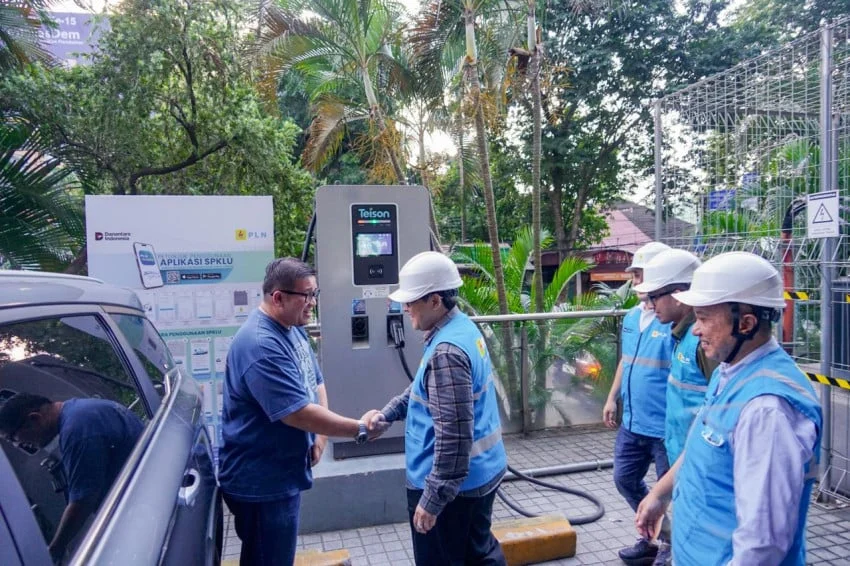
The commitment was reaffirmed by PLN Independent Commissioner Ali Masykur Musa during an inspection of the SPKLU located at the Cambridge complex in Medan on Saturday, October 31, 2026. During the visit, Masykur Musa engaged directly with EV users to assess their experiences, noting that the feedback loop between the provider and the consumer is essential for refining the operational standards of the charging network.
Accelerating Infrastructure to Match Market Growth
The current surge in EV ownership in North Sumatra is part of a broader national trend encouraged by government incentives and a growing awareness of the environmental and economic benefits of electric mobility. With nearly 10,000 EVs currently operating in the province, the demand for reliable, accessible, and high-speed charging infrastructure has reached a critical juncture.
PLN has recognized that the transition to sustainable transport hinges not only on the availability of vehicles but, more importantly, on the robustness of the supporting ecosystem. According to officials, the strategy involves a multi-pronged approach: expanding the physical footprint of SPKLUs, integrating smart-charging technologies, and ensuring grid stability to support high-voltage charging demands.
A User-Centric Approach to EV Adoption
During his visit to the Cambridge SPKLU, Commissioner Masykur Musa emphasized that the psychological barrier to EV adoption—often referred to as "range anxiety"—can only be dismantled through consistent and reliable service.
"PLN must continuously provide comfort, ease, and security to electric vehicle users," Masykur Musa stated. "The growth of the electric vehicle sector must be monitored and calculated precisely so that the development of SPKLU can be prepared in balance with community needs. We are not just building charging stations; we are building trust in a new way of transportation."
The user experience shared by local EV owners, such as Indrawan, serves as a vital benchmark for PLN’s operational adjustments. Indrawan noted that the shift to electric mobility has resulted in significant savings on operational costs compared to internal combustion engine (ICE) vehicles, while also providing a smoother driving experience. These firsthand accounts are being used by PLN’s management to identify bottlenecks in the current charging process, such as payment integration issues or physical site accessibility.
Strategic Planning and Geographical Expansion
General Manager of PLN Unit Induk Distribusi (UID) Sumatera Utara, Rizky Mochamad, provided further context regarding the strategic planning involved in this rollout. The deployment of new SPKLU units is not arbitrary; rather, it is determined by data-driven mapping that considers the density of EV users, the flow of inter-city traffic, and the specific needs of urban hubs and tourism hotspots.
North Sumatra’s topography and economic structure present unique challenges and opportunities. As a key tourism destination, the province requires a charging network that supports both local commuters and tourists traveling long distances. By placing charging stations in strategic locations like malls, transit hubs, and key tourist routes, PLN aims to create a seamless network that allows for worry-free travel across the province.
Chronology of PLN’s EV Infrastructure Rollout
The current expansion is the culmination of years of preparatory work. Since the formalization of the national electric vehicle program, PLN has executed a phased approach:
- Pilot Phase (2020–2021): Initial installation of limited SPKLU units in major cities, including Medan, to test system integration with the PLN Mobile application.
- Expansion Phase (2022–2024): Scaling up of public charging facilities and the introduction of home-charging services, which allowed residents to install private wall-box chargers with optimized electricity tariffs.
- Optimization Phase (2025–Present): Focus on high-speed DC charging (Fast Charging and Ultra-Fast Charging) to reduce charging times, alongside the current initiative to align supply with the 9,800-unit demand threshold in North Sumatra.
Supporting Data and Economic Implications
The transition to EVs carries significant economic implications for Indonesia. As the government seeks to reduce fuel subsidies and decrease reliance on imported fossil fuels, the electrification of the transport sector is a cornerstone of fiscal policy.
Current projections suggest that every 1,000 EVs added to the road reduce national dependence on imported fuel by a significant margin annually. Furthermore, the development of the EV ecosystem creates a secondary market for specialized maintenance services and infrastructure installation, stimulating local economic activity. The integration of renewable energy sources—such as solar and geothermal—into the charging grid further enhances the environmental impact, moving the entire mobility chain toward a net-zero objective.
Challenges and Future Outlook
While the growth in North Sumatra is promising, challenges remain. These include the necessity for a unified digital payment system, the requirement for consistent electricity grid upgrades in remote areas, and the need for standardized hardware across different EV brands.
Commissioner Masykur Musa highlighted that future policy must remain "adaptable to technological developments." As battery technology improves and charging speeds increase, the infrastructure installed today must be capable of modular upgrades to prevent premature obsolescence. This requires continuous collaboration between PLN, private sector partners, and local government authorities.
The Role of PLN in the Energy Transition
As the sole entity responsible for electricity distribution, PLN holds a central role in the energy transition. The company’s focus is shifting from being a traditional utility provider to a service provider for the digital and green economy. By leveraging its PLN Mobile platform, the company has successfully integrated billing, location tracking, and customer support, making the transition for the average consumer as frictionless as possible.
The ongoing efforts in North Sumatra reflect a broader national mandate. With similar developments occurring in Java, Bali, and Sulawesi, the provincial efforts in Medan are part of a cohesive national strategy to ensure that no region is left behind in the transition to sustainable energy.
Conclusion: A Pathway to Sustainable Mobility
The recent developments in North Sumatra demonstrate a proactive approach to managing the rapid adoption of electric vehicles. By prioritizing the user experience and grounding infrastructure deployment in robust data, PLN is establishing a blueprint for regional EV development.
As the province moves toward the 10,000-unit milestone, the success of these initiatives will be measured not just in the number of charging stations, but in the sustained growth of EV adoption and the public’s confidence in the charging network. For residents of Medan and the wider North Sumatra region, the future of mobility is increasingly electric, supported by a utility provider committed to evolving alongside the technology it powers.
Looking ahead, the collaboration between regulators, the utility provider, and the public will be the deciding factor in how quickly North Sumatra can fully transition to a cleaner, more efficient, and sustainable transport system. The dedication of resources and the focus on operational excellence displayed during the visit to the Cambridge SPKLU suggest that the necessary foundations are being laid for long-term success.