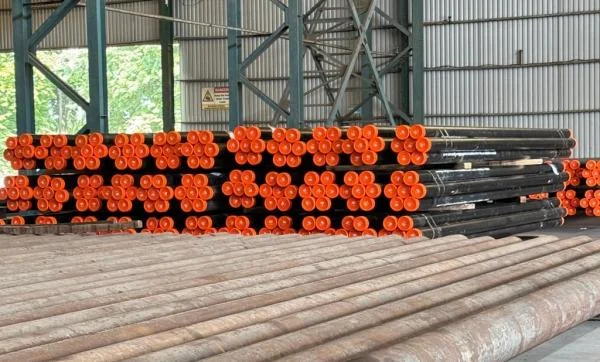
The national seamless pipe manufacturing sector in Indonesia is currently standing at a critical juncture, facing severe economic headwinds driven by an unyielding influx of foreign-made products into the domestic market. Industry stakeholders have warned that if the current regulatory environment and import liberalization trends persist unchecked, local manufacturers could face widespread bankruptcies, triggering a catastrophic wave of layoffs that would leave thousands of industrial workers unemployed. The core of the controversy centers on the continuous granting of import facilities, specifically the Masterlist system—which allows for the exemption of import duties—and generous import quotas handed out to threading companies and Heat Treatment Processors. Domestic producers argue that these external allowances are entirely unnecessary, given that local manufacturing plants already possess the technological capacity, technical expertise, and production volume required to fully satisfy domestic demand across various industrial sectors, most notably the oil and gas industry.
The urgency of the situation has prompted sharp warnings from executive leadership within the manufacturing sector. Michael Johan Gary, Director of PT Indo Sino Internasional, has formally and publicly urged the Indonesian government to take decisive corrective action by halting the issuance of Masterlist facilities and import quotas for seamless pipes destined for threading companies and heat treatment operators. According to industry leaders, undermining local production through competing foreign imports not only erodes the financial stability of domestic plants but also threatens the broader industrial ecosystem, which relies heavily on integrated local supply chains to maintain national economic resilience and strategic manufacturing independence.
Escalating Risks of Domestic Bankruptcies and Mass Layoffs
The potential economic fallout of unchecked seamless pipe imports extends far beyond individual factory floors, threatening to trigger a systemic crisis across multiple sectors of the national economy. When local manufacturing facilities are forced to halt operations or scale back production due to an inability to compete with subsidized or low-cost foreign alternatives, the immediate consequence is severe financial distress. Factories that have invested heavily in cutting-edge machinery, quality control infrastructure, and specialized workforce training find themselves operating far below optimal capacity utilization rates.
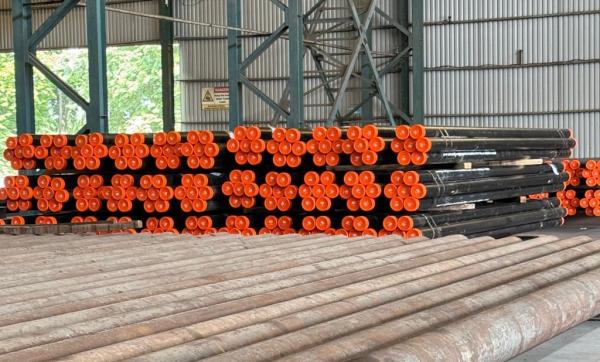
This dramatic reduction in operational efficiency inevitably leads to severe cash flow problems, making it increasingly difficult for companies to service their financial obligations. Industry analysts and corporate executives have highlighted a deeply concerning secondary effect: the high risk of widespread non-performing loans (NPLs) within the national banking sector. Because heavy manufacturing requires substantial capital investments—frequently backed by substantial commercial loans from state-owned and private national banks—any widespread disruption in revenue generation among pipe producers will immediately translate into defaults on banking credit.
Furthermore, the human cost of this crisis cannot be overstated. A wave of plant closures would directly result in the termination of thousands of skilled and semi-skilled industrial workers. In a specialized sector like seamless pipe manufacturing, workers undergo rigorous technical training to handle complex metallurgical processes, precision threading, and stringent quality assurance protocols. Losing these jobs not only devastates the affected families and local communities but also results in an irreversible brain drain and a loss of critical industrial competencies that have taken decades to build within the country.
The Regulatory Debate: Questioning the Logic of Import Facilities for Complete Goods
At the heart of the ongoing dispute is a fundamental disagreement over the application of trade and industrial policies regarding downstream processing and upstream supply inputs. The controversy specifically targets companies operating as threading plants and Heat Treatment Processors. These entities typically import semi-finished or unfinished tubular goods to perform secondary processing before supplying them to end-users, such as upstream oil and gas exploration companies.
However, domestic manufacturers of primary seamless pipes argue that these specialized processors are increasingly importing products that are already fully finished or well within the capabilities of local mills to supply from scratch. Granting import duty exemptions and relaxed quotas to these processors creates an uneven playing field. Instead of encouraging domestic synergy—where local seamless pipe mills supply raw or semi-finished tubes to local processors—the current policy framework inadvertently incentivizes external sourcing, undercutting the very domestic manufacturers who form the backbone of the primary metals industry.

Industry advocates emphasize that trade policies should strictly protect and nurture domestic manufacturing capabilities, particularly for strategic industrial goods. When import facilities are granted for commodities that can be efficiently produced locally, the policy effectively subsidizes foreign competitors at the expense of domestic employment, capital expenditure, and technological advancement. This misalignment discourages future investments in heavy manufacturing, as potential investors weigh the high risks of competing against state-supported or duty-free foreign imports operating within the Indonesian market.
Existing Legal Frameworks and the Call for Strict Enforcement
Rather than demanding the creation of complex new laws or disruptive emergency decrees, industry representatives point out that the regulatory tools necessary to protect domestic producers are already clearly established within the existing legal framework. Specifically, sector advocates frequently reference Peraturan Menteri Keuangan (PMK) Nomor 217/PMK.04/2019, which governs the exemption of import duties and non-collection of value-added taxes on goods imported for upstream oil and gas business activities.
While this regulation was originally designed to streamline operations and reduce exploration costs for vital energy projects, stakeholders argue that its implementation has occasionally lacked adequate alignment with domestic capacity assessments. A strict re-evaluation and enforcement of existing domestic market obligation principles, combined with a rigorous mandatory verification process for goods deemed available locally, could significantly curb unnecessary imports. Under established regulations, if a domestic manufacturer can prove that it can supply goods meeting the necessary technical specifications and delivery schedules, import permits and duty exemptions for those specific items ought to be withheld or strictly restricted.
The challenge, therefore, lies less in a legislative vacuum and more in the coordination, monitoring, and execution of cross-sectoral policies between the Ministry of Industry, the Ministry of Finance, and trade authorities. Effective oversight requires synchronized data sharing regarding actual domestic production capacities versus real-time national consumption demands, ensuring that import quotas are only approved when genuine supply deficits are scientifically verified.

Broader Economic Implications and Strategic Independence
The crisis facing Indonesia’s seamless pipe sector carries profound implications for the nation’s broader industrial master plan and its long-term strategic independence. Seamless pipes are vital components not only in the oil and gas extraction sector—such as in high-pressure drilling, casing, and pipeline infrastructure for major national energy projects like the Blok Masela development—but also across geothermal energy exploration, chemical processing, automotive manufacturing, and general infrastructure utilities.
Relying heavily on foreign imports for such critical industrial inputs exposes the national economy to external supply chain shocks, geopolitical tensions, freight rate volatility, and potential export restrictions imposed by producer nations. Building a self-reliant industrial ecosystem ensures that national energy security and infrastructure development remain insulated from global market disruptions.
As pressure mounts on policymakers to address the grievances of local manufacturers, the coming weeks will likely see intensified dialogue between industry associations, government regulators, and downstream consumers. Finding a balanced resolution that protects national industrial assets, secures high-value employment, prevents banking sector distress, and simultaneously supports efficient energy development will be a critical test for Indonesia’s trade and industrial governance. Without decisive and proactive intervention to curb the flood of avoidable imports, the country risks permanently crippling a foundational pillar of its heavy manufacturing sector.