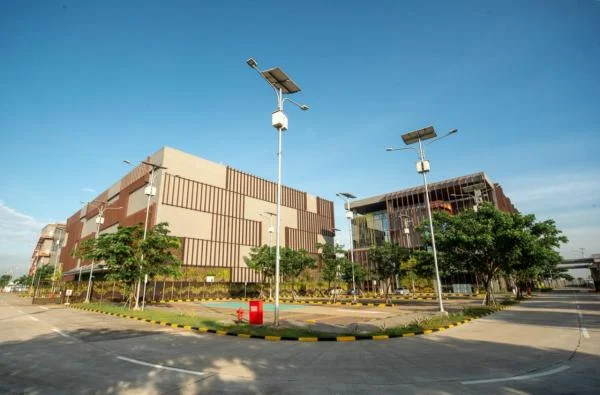
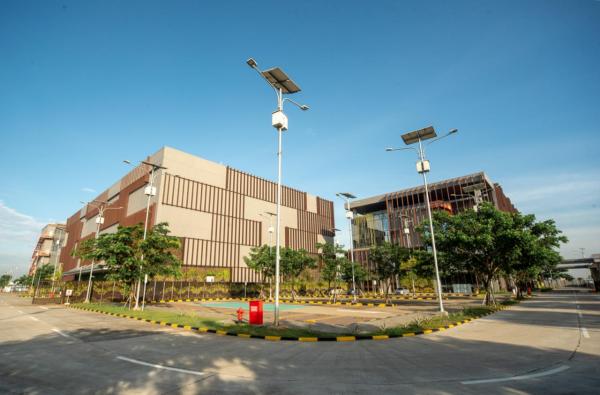
PT Telkom Data Ekosistem, widely recognized as NeutraDC and operating as a key subsidiary of PT Telkom Indonesia (Persero) Tbk, has officially announced a major milestone in Indonesia’s digital infrastructure landscape. The company confirmed that its flagship NeutraDC Hyperscale Data Center (HDC) located in Cikarang, West Java, designated as JKT-1, has achieved full utilization. By the fourth quarter of 2026, the entire IT capacity of 21.5 megawatts (MW) will be fully operational as all contracted enterprise and hyperscale clients successfully bring their digital infrastructures online.
This accomplishment marks a pivotal juncture not only for NeutraDC but also for Indonesia’s broader ambitions to establish itself as a primary digital hub within Southeast Asia. The complete absorption of the 21.5 MW capacity underscores the exponential rise in domestic and regional demand for robust, high-performance data center facilities. Driven by rapid cloud adoption, digital transformation initiatives across traditional sectors, and the surging computational demands of modern applications, the facility’s full utilization validates Telkom Group’s strategic investments in advanced technology infrastructure.
Strategic Expansion and Future Capacity Roadmap
Capitalizing on the successful rollout and full occupancy of the Cikarang JKT-1 facility, NeutraDC is proactively laying the groundwork for its next phases of growth. The company is actively preparing for subsequent capacity expansions in Cikarang and is aggressively evaluating other strategically advantageous locations across the Indonesian archipelago. These forthcoming developments are designed to stay well ahead of the escalating demand for digital infrastructure, ensuring that enterprises operating in Indonesia have unhindered access to top-tier colocation and cloud-enabling facilities.
Looking toward the long-term horizon, NeutraDC has established an ambitious development roadmap. The company targets a phased expansion that will progressively scale its aggregate data center capacity up to 400 megawatts (MW). Ultimately, NeutraDC maintains a long-term strategic aspiration of reaching 1 gigawatt (GW) of total capacity spanning Indonesia and the wider Southeast Asian region. This scalable growth strategy will be executed through a combination of greenfield developments, strategic geographical expansions, and the deep integration of sustainable practices within robust industrial park ecosystems.
The Catalyst: Artificial Intelligence and Compute-Heavy Workloads
The rapid absorption of the 21.5 MW capacity at the Cikarang facility is largely attributed to structural shifts in global and domestic technology trends, most notably the explosive growth of Artificial Intelligence (AI). Modern business environments are increasingly relying on machine learning, deep learning analytics, large language models, and data-intensive automated workflows. These advanced technologies require unprecedented levels of computational power and specialized cooling infrastructure, pushing traditional data centers to their operational limits.

NeutraDC’s hyperscale facilities are specifically engineered to accommodate these high-density workloads. By providing resilient power supplies, advanced thermal management systems, and ultra-low latency network connectivity, the Cikarang JKT-1 facility has enabled major enterprises and hyperscalers to deploy their mission-critical AI applications seamlessly. As businesses across financial services, e-commerce, healthcare, and telecommunications continue to integrate AI into their core operations, the demand for specialized data center capacity is expected to maintain its steep upward trajectory.
Leadership Insights and Corporate Vision
Addressing the milestone, NeutraDC Group CEO Rakhmad Tunggal Afifuddin emphasized that the full occupancy of the facility’s first building reflects a healthy, growing market appetite for reliable digital infrastructure. He noted that the achievement validates the company’s customer-centric approach to infrastructure development, where operational planning is closely aligned with the evolving needs of the market and emerging technological paradigms.
“The full subscription and operationalization of Building 1 in Cikarang clearly demonstrates that the market need for scalable, high-grade digital infrastructure is expanding rapidly,” stated Rakhmad Tunggal Afifuddin. “For NeutraDC, this achievement extends far beyond merely adding numerical capacity. Our primary focus remains rooted in ensuring that the infrastructure we design, build, and deploy is entirely relevant to our clients’ operational requirements while remaining agile enough to adapt to future technological transformations.”
Broader Implications for Indonesia’s Digital Economy
The milestone achieved by NeutraDC carries profound economic and technological implications for Indonesia. As Southeast Asia’s largest digital economy, Indonesia requires a stable, high-capacity foundation of digital infrastructure to support its burgeoning startup ecosystem, digital-native enterprises, and government digitalization programs. Data centers serve as the physical backbone of the internet and cloud computing; without reliable facilities of this scale, the country’s digital transformation could face severe bottlenecks.
Furthermore, the expansion of high-capacity data centers generates significant multiplier effects for the local economy. It attracts foreign direct investment from global technology giants, creates high-skilled employment opportunities in engineering and IT operations, and encourages the development of local supply chains specializing in electrical engineering, cooling technologies, and renewable energy integration.
By scaling its operations toward the 400 MW and eventual 1 GW milestones, NeutraDC is not only solidifying its market leadership within Indonesia but is also positioning the nation as a formidable competitor in the regional data center market. As hyperscalers look beyond traditional Asian data hubs due to land and power constraints, Indonesia’s expanding infrastructure—bolstered by reliable power supply partnerships and strategic industrial estate integration—offers a compelling, future-proof alternative for regional digital expansion.