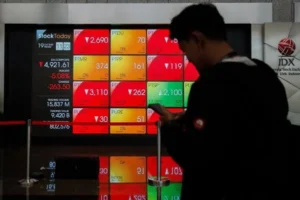

The Indonesia Stock Exchange (BEI) has officially highlighted the superior resilience demonstrated by Shariah-compliant equities during periods of domestic market volatility and downward pressure. According to top exchange officials, this distinct defensive posture is primarily driven by structural portfolio compositions—specifically the exclusion of conventional banking institutions—and the strict adherence to equity financing principles that prohibit interest-bearing margin transactions among retail and institutional investors alike.
Speaking during the Capital Market Journalist Workshop Media Gathering held in Lombok, Nusa Tenggara Barat, BEI Director of Trading and Valuation, Jeffrey Hendrik, elaborated on the intrinsic strengths of Islamic capital market instruments. He emphasized that the Islamic equity framework offers robust safeguards, shielding portfolios from systemic shocks that frequently buffet conventional financial sectors. As global and domestic macroeconomic landscapes face tightening monetary policies, inflationary pressures, and geopolitical uncertainties, understanding the mechanics behind the resilience of Shariah stocks has become increasingly vital for portfolio managers, retail participants, and regulatory bodies monitoring systemic financial stability.
Structural Composition and the Absence of Conventional Banking
The foundational resilience of the Indonesian Shariah stock ecosystem stems from the rigorous screening methodologies applied to companies listed under the Indeks Saham Syariah Indonesia (ISSI) and the Jakarta Islamic Index (JII). Unlike broader composite benchmarks heavily weighted toward conventional banking and financial conglomerates, Shariah-compliant indices systematically filter out institutions engaged in usury (riba) or non-permissible business activities, such as conventional interest-based lending and speculative derivatives.
During market corrections, the conventional banking sector often bears the brunt of negative sentiment, driven by rising non-performing loans (NPLs), compressed net interest margins (NIM), or shifts in macroeconomic liquidity. Because ISSI and other Shariah benchmarks exclude these conventional financial heavyweights, the broader index avoids the direct contagion effects of sector-specific sell-offs. Instead, the index is heavily populated by defensive and growth-oriented sectors, including consumer goods, telecommunications, utilities, infrastructure, and commodity-based industries. These sectors often maintain stable cash flows, inelastic product demand, and lower debt-to-equity ratios, making them inherently better equipped to weather economic downturns.
Jeffrey Hendrik underscored this structural advantage during his address in Lombok, noting that both the underlying products and the investor base contribute to a more stable ecosystem. “If we look at it, yes, both from the product side and the investor side, the resilience of the Shariah segment should be better,” Hendrik stated. This observation aligns with historical performance metrics during past domestic market corrections, where Shariah portfolios frequently experienced shallower drawdowns compared to their conventional counterparts.

The Role of Non-Margin Trading and Risk Mitigation
Beyond sector composition, the mechanics of trading within the Islamic capital market play a critical role in mitigating systemic volatility. Conventional stock trading often relies heavily on margin facilities—borrowing funds from brokerages to purchase larger volumes of shares. While margin trading amplifies purchasing power and potential gains during bull markets, it introduces severe vulnerabilities during bearish trends.
When share prices decline sharply, brokerages issue margin calls, requiring investors to deposit additional capital or collateral. Failure to meet these demands triggers forced liquidations (forced selling), where brokerages unilaterally sell assets to recover outstanding loans, regardless of fundamental value. This cascade of forced selling often creates a vicious cycle, exacerbating downward price spirals and intensifying market panics.
In contrast, Shariah-compliant transactions prohibit borrowing funds on interest to purchase equities. Investors operating within the Islamic capital market framework utilize cash accounts or employ approved alternative Islamic financing structures—such as Bai’ al-Wafa or specialized murabahah-based brokerage facilities—that do not involve compound interest or speculative margin leverage.
Consequently, the Indonesian Shariah stock market features significantly lower levels of leveraged debt. When macroeconomic headwinds trigger temporary market corrections, Shariah investors are rarely subjected to sudden, automated margin calls. This absence of forced selling prevents artificial price depressions, allowing fundamentally sound companies to recover naturally once market sentiment stabilizes.
Background and Evolution of Indonesia’s Islamic Capital Market
To fully grasp the significance of BEI’s recent commentary, it is necessary to examine the evolution of Indonesia’s Islamic capital market. Over the past two decades, Indonesia—home to the world’s largest Muslim-majority population—has systematically transformed from a nascent secondary market into a globally recognized hub for Islamic finance and sustainable investing.

The journey began in earnest with the issuance of the first Shariah-compliant mutual fund in 1997, followed by the launch of the Jakarta Islamic Index (JII) in July 2000, which initially comprised the 30 most liquid Shariah stocks listed on the BEI. In subsequent years, regulatory frameworks matured significantly. A pivotal milestone occurred with the issuance of fatwas by the National Shariah Board of the Indonesian Ulema Council (DSN-MUI), establishing clear legal and religious boundaries for capital market transactions.
In 2007, the Indonesian Financial Services Authority (Otoritas Jasa Keuangan – OJK), formerly operating under Bapepam-LK, introduced comprehensive regulations governing the issuance and management of Shariah securities. By 2011, the BEI officially launched the Indeks Saham Syariah Indonesia (ISSI), encompassing all stocks listed on the exchange that meet Shariah principles, providing a comprehensive barometer of the Islamic equity market.
Over successive strategic master plans, the BEI, in collaboration with the OJK and various financial institutions, launched intensive educational campaigns, such as the "Sekolah Pasar Modal Syariah" (Islamic Capital Market School) and the establishment of Shariah Investment Galleries across major universities nationwide. These initiatives successfully democratized access, transforming retail participation from a niche demographic into a powerful driving force of domestic market liquidity.
Recent Targets and Strategic Growth Trajectory
BEI’s emphasis on the strength of Shariah stocks coincides with an ambitious long-term growth strategy aimed at expanding market capitalization, boosting daily transaction values, and onboarding millions of new investors. In recent strategic planning sessions, the exchange leadership outlined robust targets for the upcoming years, projecting continuous expansion despite global economic uncertainties.
For instance, the exchange has set progressive targets to elevate overall market capitalization toward historic milestones—such as targeting Rp30,000 trillion by the year 2030—while scaling the total investor base to over 35 million participants. Achieving these aggressive expansion goals requires cultivating diverse asset classes and instilling investor confidence, particularly during periods of macroeconomic volatility.
Shariah-compliant products have emerged as a critical pillar in achieving these targets. By offering a stable, ethical, and resilient investment alternative, the BEI successfully attracts risk-averse domestic retail investors as well as institutional funds seeking environmental, social, and governance (ESG) alignment—since Islamic finance principles naturally overlap with sustainable investing frameworks through the prohibition of harmful industries, excessive leverage, and predatory financial practices.

Implications for Investors and Market Stability
The official acknowledgment of Shariah stock resilience by BEI leadership carries several important implications for market participants, regulators, and the broader financial industry.
First, for individual retail investors, the findings reinforce the value of portfolio diversification and risk management. Incorporating Shariah-compliant assets into a broader investment portfolio can serve as an effective defensive buffer during periods of macroeconomic stress, dampening overall portfolio volatility without necessarily sacrificing long-term growth potential.
Second, for asset management firms and institutional funds, the structural stability of Islamic indices presents a compelling case for the expansion of Shariah-based exchange-traded funds (ETFs), mutual funds, and structured products. As institutional mandates increasingly prioritize resilience and ethical governance, Shariah assets offer a readymade framework that satisfies both religious compliance and rigorous risk-adjusted return metrics.
Third, from a regulatory standpoint, the lower reliance on leveraged margin trading within the Shariah segment highlights a blueprint for systemic risk reduction. While conventional margin trading remains a vital tool for market liquidity, understanding how non-leveraged ecosystems absorb shocks offers regulatory insights into potential enhancements for broader market stability rules, cooling-off mechanisms, and leverage caps.
As the Indonesian capital market continues its upward trajectory toward its 2030 strategic visions, the dual focus on market expansion and systemic resilience will remain paramount. By leveraging the inherent structural strengths of Shariah-compliant equities—free from the vulnerabilities of conventional banking exposure and speculative margin debt—the Indonesia Stock Exchange demonstrates its commitment to fostering a stable, transparent, and sustainable financial marketplace for investors of all backgrounds.