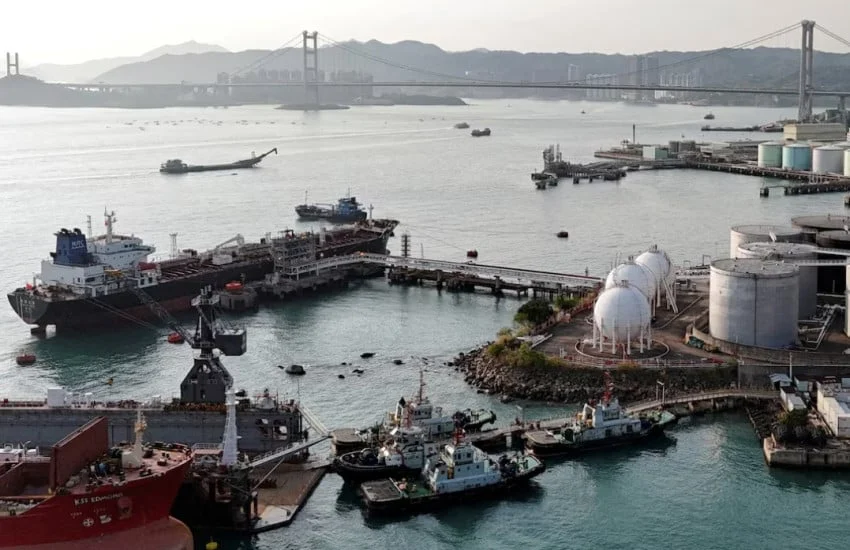
The global energy landscape is witnessing a significant shift in logistics as the collapse of tanker freight rates from historic peaks has revitalized Asian demand for long-haul crude oil imports. Refineries across China and South Korea are aggressively securing supplies from West Africa and Brazil, capitalizing on a roughly 50% correction in shipping costs compared to the record-breaking figures observed just a month ago. This logistical pivot is reshaping trade flows, moving the market away from the short-haul reliance that defined the period of high shipping volatility, and re-establishing the economic viability of Atlantic Basin crude in the Asian refining hub.
The Anatomy of the Freight Rate Correction
To understand the current surge in procurement, one must look at the unprecedented volatility that gripped the tanker market throughout the third quarter and into October. At the height of the market disruption, freight rates—measured in Worldscale (WS) points—soared to levels that made long-haul shipments from the Atlantic Basin to Asia prohibitively expensive. These spikes were largely driven by a combination of geopolitical tensions, floating storage demand, and a localized shortage of available tonnage.
However, the market has undergone a structural cooling phase. By early November, the premium attached to shipping crude oil over long distances began to evaporate. The correction of approximately 50% from the October peaks has transformed the cost-benefit analysis for major Asian refiners. When freight rates represent a significant percentage of the landed cost of a barrel of oil, refineries naturally favor suppliers in the Middle East. With the cost of chartering Very Large Crude Carriers (VLCCs) and Suezmax tankers plummeting, the "all-in" cost of West African and Brazilian crude has become highly competitive, even when factoring in the increased time-at-sea.
Chronology of Recent Chartering Activity
The shift in market sentiment is best illustrated by the flurry of activity recorded in the second week of November. Following the stabilization of freight rates, major players moved quickly to lock in tonnage for December loading schedules.
In the last week of October and moving into early November, Unipec, the trading arm of the Chinese energy giant Sinopec, emerged as the most prominent actor in the market. Traders and shipping brokers confirm that Unipec secured multiple cargoes of West African crude. This procurement strategy was not limited to spot purchases; it was integrated with strategic chartering. Specifically, Unipec chartered two Suezmax tankers at rates of 475 and 410 Worldscale points, respectively, for transport to Asia. These charters were finalized during the transition between late November and early December, signaling a medium-term commitment to Atlantic Basin supplies.
Furthermore, Unipec’s engagement with larger tonnage was equally notable. The company secured a VLCC for the West Africa-to-Asia route, with loading scheduled for early December, at a rate of W500. Simultaneously, in South Korea, SK Energy—the nation’s largest refiner—demonstrated similar tactical agility. SK Energy chartered a Suezmax tanker to transport crude from Gabon to the port of Ulsan, South Korea, for a December delivery at a rate of W380. These specific transactions highlight a synchronized movement among Asian refiners to capitalize on the cooling freight environment.
Strategic Procurement and Pricing Dynamics
The economic logic behind these purchases is rooted in the discount levels offered by producers in the Atlantic Basin. Unipec’s acquisition of two cargoes of Djeno crude from the Republic of the Congo serves as a case study. These cargoes were secured at a discount of approximately $22 per barrel against the dated Brent benchmark on a Free on Board (FOB) basis.
When a refiner can combine a deep discount on the commodity price with a normalized freight rate, the net-back value significantly exceeds that of regional benchmarks. Analysts at Energy Aspects noted in their November 9 research bulletin that the reduction in VLCC freight rates for long-haul routes has effectively moved the "economic boundary" of Asian crude procurement. The result is that oil from the west of the Suez Canal is once again landing in Chinese and Korean ports at prices that challenge the dominance of Middle Eastern grades, which had previously enjoyed a near-monopoly during the peak freight crisis.
Implications for Global Shipping Markets
The current situation presents a complex picture for the shipping industry. While the decline in rates is a boon for refiners, it reflects a broader normalization of the tanker market after a period of extreme stress. The "Worldscale" system, which functions as a standardized index for calculating freight costs, provides a clear lens through which to view this volatility.
For shipowners, the challenge is now managing a landscape where supply and demand are rebalancing. During the period of record-high rates, the incentive was to keep vessels in service as long as possible, often in floating storage. As rates decline, the opportunity cost of floating storage increases, potentially leading to a release of oil into the market and further pressuring crude prices. This feedback loop—lower freight rates leading to increased long-haul procurement, which in turn necessitates more active vessel deployment—is likely to sustain a floor for freight rates in the coming months, preventing a total collapse to pre-pandemic lows.
Analytical Perspectives on Future Trends
The resurgence of Atlantic Basin crude in the Asian market is likely to be sustained as long as the freight cost-spread remains favorable. However, several factors could disrupt this trajectory:
- Geopolitical Stability: Any escalation in conflict near key maritime chokepoints would likely re-introduce a "risk premium" into insurance and freight costs, potentially triggering another spike in Worldscale points.
- OPEC+ Production Policy: If major producers in the Middle East decide to adjust their official selling prices (OSPs) to compete more aggressively with African and Brazilian grades, the current cost advantage of long-haul imports could diminish.
- Refinery Maintenance Cycles: Asian refineries operate on complex turnaround schedules. The current buying spree may be partially motivated by a need to replenish inventories ahead of the winter demand peak, rather than a permanent structural shift in sourcing.
Industry observers suggest that while the current correction is significant, it is a return to a "new normal" rather than a return to the past. The increased complexity of global trade routes—influenced by sanctions, changing environmental regulations, and the shifting geography of oil production—means that freight rates will likely remain more volatile than they were in the previous decade.
Official Responses and Market Sentiment
While major oil companies rarely comment on specific chartering strategies, the collective behavior of firms like Sinopec and SK Energy speaks volumes. Representatives from the maritime logistics sector have observed that the speed at which these companies moved to secure tonnage suggests that they were monitoring the freight market with unprecedented granularity.
"The market is moving faster than it was two years ago," noted an independent shipping consultant based in Singapore. "Refiners are no longer just looking at the price of the barrel; they are calculating the cost of the voyage in real-time and adjusting their procurement tenders accordingly. When you see a major player like Unipec move on Suezmax and VLCC tonnage simultaneously, it is a clear signal that the window of opportunity is perceived as significant."
Conclusion: A Realigned Market
The sharp reduction in tanker freight rates has acted as a catalyst, effectively shrinking the world of oil trade. By lowering the logistical barriers between the Atlantic Basin and the Asian industrial core, the market has regained a degree of efficiency that was lost during the recent period of supply-chain friction.
For the short term, Asian refiners are positioned to benefit from a diversified supply chain, allowing them to balance their crude slates with a mix of African, Brazilian, and Middle Eastern grades. As the calendar turns toward the end of the year, the stability of freight rates will remain the single most critical indicator of whether this trend toward long-haul imports will continue. For now, the narrative is one of logistical normalization, enabling a more competitive and fluid global crude oil market that benefits the end-users in the world’s most significant refining hubs. As regional players continue to optimize their procurement, the global shipping industry remains at the epicenter of this dynamic shift, balancing the demands of a volatile but increasingly interconnected energy economy.