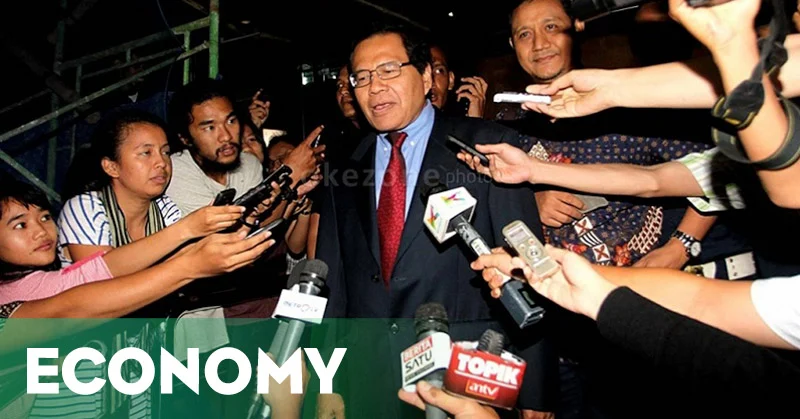
The Coordinating Minister for Maritime and Resource Affairs, Rizal Ramli, maintained a notable silence on Monday, November 9, 2015, when questioned regarding the ongoing liquidation process and the controversial audit findings of Pertamina Energy Trading Limited, better known as Petral. Despite his reputation for being an outspoken critic of inefficiencies within the state’s energy sector, the minister chose to avoid providing a detailed response to the press following a high-level meeting at his office in Jakarta. The encounter occurred shortly after the Ministry of Energy and Mineral Resources (ESDM) had publicized a forensic audit revealing that third-party entities had significantly interfered in the procurement of crude oil and fuel (BBM) through Petral’s subsidiary, Pertamina Energy Service Pte Ltd (PES).
Throughout the day, Rizal Ramli appeared to evade journalists who sought his perspective on the government’s progress in dismantling the long-standing oil trading arm. Following a session where he led discussions on energy diversification and decentralization, the minister emerged from his office but declined to engage in a formal interview. When pressed for comments on the Petral scandal, he simply raised both hands while offering a brief smile before heading toward his vehicle. Staff members later clarified that the minister was on a tight schedule, needing to depart for the Presidential Palace to assist President Joko Widodo in receiving the President of the Italian Republic, Sergio Mattarella, who was on an official state visit to Indonesia.
The Context of Petral’s Dissolution
The silence from the Coordinating Minister comes at a pivotal moment in Indonesia’s energy history. Petral, a Singapore-based subsidiary of the state-owned oil giant Pertamina, had for decades been the primary vehicle for the nation’s oil imports. However, it had also become a symbol of the so-called "oil and gas mafia," a term used by activists and reformers to describe a network of middlemen who allegedly manipulated prices and procurement processes to extract illicit profits at the expense of the Indonesian state and its citizens.
The decision to dissolve Petral was a cornerstone of President Joko Widodo’s early administration goals. In May 2015, the government officially announced its intention to liquidate the subsidiary as part of a broader effort to improve transparency and efficiency in the energy sector. The move was spearheaded by the then-Minister of Energy and Mineral Resources, Sudirman Said, and the President Director of Pertamina, Dwi Soetjipto. The transition involved moving Petral’s procurement functions back to Indonesia under Pertamina’s Integrated Supply Chain (ISC) unit.
The Forensic Audit and Findings of Interference
The impetus for the final stages of Petral’s liquidation was a comprehensive forensic audit conducted by the independent firm KordaMentha. The audit covered the period from 2012 to 2015 and was commissioned to identify irregularities that had long been suspected but never officially proven. In early November 2015, just days before Rizal Ramli was questioned, the findings were presented to the public, confirming several alarming practices.
According to the audit, "third parties" outside the formal organizational structure of Pertamina and Petral had exerted undue influence over the procurement process. This interference ranged from leaking confidential information regarding tender prices to ensuring that specific suppliers were favored during the bidding process. The audit revealed that this lack of transparency resulted in Indonesia paying higher-than-market prices for its fuel imports. Estimates suggested that the inefficiencies and mark-ups orchestrated by these intermediaries cost the Indonesian government hundreds of millions of dollars annually.
The report specifically highlighted that the "mafia" did not always consist of external actors; rather, it was a sophisticated network that included internal collaborators who facilitated the manipulation of oil specifications and delivery schedules. By controlling the information flow, these entities could effectively bypass competitive market rates, forcing Pertamina to accept terms that were unfavorable to the national interest.
Chronology of the Reform Movement
The path to Petral’s dissolution began shortly after the inauguration of President Joko Widodo in October 2014. Recognizing that energy costs were a major drain on the state budget, the administration formed the Oil and Gas Governance Reform Team, led by prominent economist Faisal Basri.
- November 2014: The Reform Team is established to review the operations of Petral and the overall transparency of the oil and gas sector.
- December 2014: The team recommends the immediate cessation of Petral’s trading activities and the transfer of its functions to the Integrated Supply Chain (ISC) in Jakarta.
- May 2015: The Ministry of State-Owned Enterprises and the Ministry of ESDM officially announce the start of the liquidation process for Petral and its subsidiaries, PES and Pertamina Energy Trading.
- June – October 2015: KordaMentha conducts a deep-dive forensic audit into the financial and operational records of Petral.
- November 2015: The results of the audit are made public, revealing systemic interference by third parties. This is the period during which Rizal Ramli was approached by the media.
The Role of Rizal Ramli in the Energy Debate
Rizal Ramli’s reluctance to comment on November 9 was viewed as uncharacteristic by many political observers. Since being appointed to the cabinet in August 2015, Ramli had gained a reputation for his "Kepret" (slap) style of politics, where he openly criticized government policies and even fellow ministers if he believed they were not acting in the public’s best interest.
Historically, Ramli had been one of the most vocal critics of the lack of transparency in Pertamina. However, the Petral issue was complex, involving deep-seated political and economic interests. His silence on that specific Monday could be interpreted in several ways: a desire to avoid overshadowing the diplomatic visit of the Italian President, a tactical move to allow the Ministry of ESDM to lead the narrative, or a reflection of the internal cabinet sensitivities regarding the fallout from the audit.
Despite his silence on that particular day, Ramli had previously advocated for a complete overhaul of the energy supply chain, suggesting that the dissolution of Petral was only the first step in a much larger battle against corruption in the resource sector.
Supporting Data: Indonesia’s Oil Import Dependency
The significance of Petral’s operations cannot be overstated when looking at Indonesia’s economic data from that period. In 2015, Indonesia was importing approximately 800,000 to 900,000 barrels of oil and refined products per day to meet domestic demand. At an average price of $50 to $60 per barrel, the daily transaction value managed by Petral was immense.
The forensic audit suggested that even a 1% to 2% "leakage" or mark-up caused by third-party interference could result in an annual loss of nearly $150 million to $300 million for the state. By eliminating the middleman and bringing procurement back to the ISC in Jakarta, the government claimed it could save upwards of $250 million per year through better negotiation and direct purchasing from national oil companies (NOCs) of producing nations.
Reaction from Related Parties and Stakeholders
The disclosure of the audit findings sparked a flurry of reactions across the political and economic landscape.
- Sudirman Said (Minister of ESDM): He emphasized that the audit was "not a witch hunt" but a necessary step to professionalize the energy sector. He called for legal action against those identified in the report who had violated Indonesian law.
- Faisal Basri (Reform Team Lead): Basri noted that while the dissolution of Petral was a victory, the "mafia" was adaptive. He warned that simply moving the office from Singapore to Jakarta would not solve the problem if the same individuals and practices remained within the ISC.
- Pertamina Leadership: Dwi Soetjipto, as the President Director of Pertamina, expressed commitment to the audit’s recommendations. He stated that the company would implement a new, digitized procurement system to minimize human intervention and increase transparency.
- The House of Representatives (DPR): Members of Commission VII, which oversees energy, called for the Attorney General’s Office (AGO) to follow up on the forensic findings. There were demands for the names of the "third parties" to be made public, though the government remained cautious about releasing specific names during the initial phase of the investigation.
Broader Implications and Future Outlook
The dissolution of Petral and the subsequent silence or measured responses from officials like Rizal Ramli highlight the high stakes involved in reforming Indonesia’s energy sector. The implications of this event extend far beyond the closure of a Singaporean office.
First, the move was a signal to international investors that Indonesia was serious about improving its "ease of doing business" by tackling corruption. For years, the lack of transparency in oil procurement had been a red flag for foreign direct investment. By demonstrating that even a powerful entity like Petral could be held accountable, the Jokowi administration sought to boost national credibility.
Second, the shift to the Integrated Supply Chain (ISC) represented a move toward "energy sovereignty." By conducting trades directly in Jakarta, the government gained better oversight of its foreign exchange outflows and could better manage the impact of global oil price volatility on the state budget.
However, the challenges remain. Analysts argue that the "mafia" in the oil and gas sector is not a single entity but a systemic culture of rent-seeking. The silence of Rizal Ramli on that November day serves as a reminder that the political environment surrounding these reforms is often fraught with tension. While the physical structure of Petral has been dismantled, the process of ensuring that its replacement remains free from the same "third-party interference" is an ongoing struggle for the Indonesian government.
In the years following 2015, the ISC has managed to report significant savings, often cited in Pertamina’s annual performance reviews. Yet, the ghost of Petral continues to haunt the discourse on energy policy, appearing whenever fuel prices rise or procurement irregularities are suspected. The event involving Rizal Ramli in late 2015 remains a snapshot of a government in transition—balancing the need for aggressive reform with the complexities of high-level diplomacy and internal political dynamics.