The Indonesian Ministry of Finance has expressed firm confidence in the capability of State-Owned Enterprises (BUMN) to take over and manage the operations of PT Freeport Indonesia (PTFI) as the divestment process continues to unfold. This sentiment was underscored by Sonny Loho, the Director General of State Assets at the Ministry of Finance, who emphasized that Indonesia’s domestic mining entities possess the necessary expertise, human resources, and operational maturity to handle the complexities of the Grasberg mine in Papua. The two primary state-backed candidates positioned to spearhead this transition are PT Aneka Tambang (Persero) Tbk, known as Antam, and PT Inalum (Persero).
Speaking at the Ministry of Finance headquarters in Jakarta, Sonny Loho dismissed concerns regarding the technical or managerial readiness of local firms. He asserted that the track record of Indonesian mining companies has reached a level of excellence that should inspire national pride rather than hesitation. According to Loho, the narrative of doubt surrounding BUMN’s ability to manage high-tier assets like Freeport is unfounded, urging stakeholders and the public to adopt a more courageous and optimistic stance toward national resource sovereignty.
The Context of the PT Freeport Indonesia Divestment
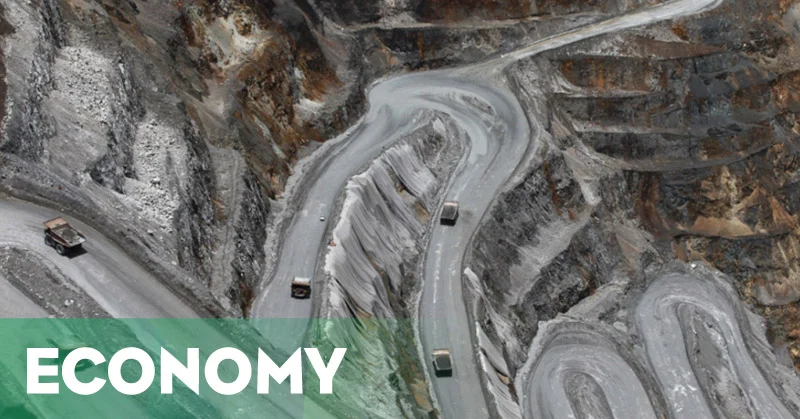
The divestment of PT Freeport Indonesia is a central pillar of the Indonesian government’s strategy to increase national ownership of its vast mineral resources. PTFI, a subsidiary of the American mining giant Freeport-McMoRan (FCX), operates the Grasberg mine, which is one of the world’s largest gold and copper deposits. For decades, the relationship between the Indonesian government and Freeport has been governed by a Contract of Work (CoW) that has undergone various iterations, most notably the 1967 and 1991 agreements.
By 2015, the regulatory landscape in Indonesia had shifted significantly with the enactment of the 2009 Mining Law (Law No. 4/2009) and its subsequent implementing regulations, such as Government Regulation (PP) No. 77 of 2014. These regulations mandated that foreign mining companies gradually divest their shares to Indonesian participants—the central government, regional governments, or BUMNs—to ensure that the state maintains a majority stake in its natural wealth. Specifically, for companies engaged in underground mining like Freeport, the divestment requirement was set at 30% by the end of 2019.
The discussions in late 2015 were particularly critical because they centered on the valuation of a 10.64% stake that Freeport was required to offer to the Indonesian government. This tranche was part of a larger roadmap to reach the mandated ownership levels. The involvement of Antam and Inalum was seen as a strategic move to consolidate the nation’s mining power under a single, coordinated state umbrella.
A Chronology of Resource Sovereignty and Contractual Tensions
The journey toward BUMN involvement in Freeport has been marked by long-standing legal and economic negotiations. To understand the current confidence expressed by the Ministry of Finance, it is essential to look at the timeline of events that led to the 2015 divestment push:
- 1967: The first Contract of Work is signed under the New Order administration, making Freeport the first foreign investor in Indonesia.
- 1991: A second Contract of Work is signed, extending the operations for 30 years with options for further extensions, subject to government approval.
- 2009: The Indonesian Parliament passes the Law on Mineral and Coal Mining (UU Minerba), requiring all mining companies to process raw minerals domestically and shift from a "Contract of Work" system to a "Special Mining Business License" (IUPK).
- 2014: Government Regulation No. 77 is issued, detailing the specific percentages and timelines for divestment based on the type of mining activity.
- 2015 (Current Period): The government enters intense negotiations regarding the valuation of the 10.64% share offer. PT Inalum and Antam are officially identified as the vehicles for state acquisition.
During this period, the government’s insistence on divestment was met with various technical and legal counter-arguments from Freeport-McMoRan, primarily concerning the valuation methods and the certainty of contract extensions beyond 2021. However, the Indonesian government maintained that any extension of operations must be contingent upon the fulfillment of divestment obligations and the commitment to build domestic smelting facilities.
The Strategic Role of Inalum and Antam
The selection of PT Inalum and PT Antam as the designated buyers is not incidental. PT Inalum (Industri Asahan Aluminium) had recently transitioned back to full Indonesian ownership from Japanese investors in late 2013, making it the perfect candidate for a state mining holding company. Its strong cash flow and experience in aluminum smelting provided a solid financial foundation.
On the other hand, PT Aneka Tambang (Antam) brought decades of diversified mining experience in nickel, gold, and bauxite. Antam’s technical expertise in exploration and refinery was viewed as a vital asset in managing the operational side of the Grasberg mine. The synergy between Inalum’s financial holding capabilities and Antam’s technical proficiency was designed to create a "Mining BUMN Holding" that could rival global mining conglomerates.
Sonny Loho’s comments reflect a broader government philosophy: that the wealth of Papua should be managed by Indonesians for Indonesians. By utilizing BUMNs, the government ensures that dividends and profits from the mine flow directly back into the state treasury, which can then be used for infrastructure development and social welfare programs across the archipelago.
Supporting Data: The Magnitude of the Grasberg Asset
The confidence expressed by the Ministry of Finance is backed by the sheer economic value of the asset in question. According to data from the Ministry of Energy and Mineral Resources (ESDM), the Grasberg district contains:
- Copper Reserves: Approximately 25 billion to 30 billion pounds.
- Gold Reserves: Approximately 25 million to 30 million ounces.
- Production Capacity: At its peak, the mine has the capacity to produce over 1 billion pounds of copper and 1 million ounces of gold annually.
Managing such an asset requires immense capital expenditure (CAPEX), particularly as the mine transitions from an open-pit operation to a massive underground "block caving" operation. Critics in 2015 argued that BUMNs might lack the billions of dollars required for this transition. However, the Ministry of Finance countered this by highlighting the ability of state firms to leverage sovereign guarantees and form consortiums with domestic and international banks.
Furthermore, statistics show that the vast majority of the workforce at PT Freeport Indonesia—over 95%—is already comprised of Indonesian nationals, many of whom are highly skilled engineers and geologists. This data supports Sonny Loho’s assertion that "Indonesians must be brave" and that the technical talent already exists within the country; the primary shift would be in ownership and high-level strategic management.
Official Responses and Public Sentiment
The push for BUMN management of Freeport has received mixed but largely supportive reactions from various political and economic sectors. Supporters of "resource nationalism" argue that for too long, Indonesia has received a disproportionately small share of the profits from its own soil.
"We have the schools, we have the experience in other major mines like those managed by Antam and Bukit Asam, and we have the sovereign right," stated a representative from the Indonesian Mining Association (IMA) in response to the Ministry’s stance. "The transition might have a learning curve, but it is a necessary step for our maturity as a G20 economy."
Conversely, some market analysts cautioned that while BUMNs are capable, the transition must be handled with transparency to avoid "political interference" that could hamper operational efficiency. The Ministry of Finance addressed these concerns by promising a professional, corporate-led approach under the supervision of the Ministry of BUMN, then led by Rini Soemarno.
Sonny Loho’s specific plea for Indonesians to stop being "too worried" was a direct response to the skepticism often found in local media. He emphasized that the psychological barrier—the belief that foreign entities are inherently more capable—is one of the biggest hurdles to national development.
Broader Impact and Future Implications
The successful involvement of BUMNs in the Freeport divestment has implications that reach far beyond the borders of Papua. First, it sets a precedent for other multinational mining contracts in Indonesia, such as those involving Newmont (which later became Amman Mineral) and Vale Indonesia. It signals that the Indonesian government is serious about enforcing the 2009 Mining Law and the "downstreaming" (hilirisasi) policy.
Secondly, the move is expected to boost the regional economy of Papua. As part of the divestment agreement, the provincial government of Papua and the regency government of Mimika are slated to receive a portion of the shares (typically 10% of the total 51% eventually targeted). This ensures that local communities have a direct stake in the success of the mine, potentially leading to better environmental oversight and more robust community development programs.
Thirdly, the financial impact on the state budget is significant. With a majority or significant minority stake, the Indonesian government gains more than just taxes and royalties; it gains a share of the net profits. In an era of fluctuating commodity prices, having a direct hand in one of the world’s most profitable mines provides a buffer for the national economy.
In conclusion, the statements made by Sonny Loho in November 2015 represent a pivotal moment in Indonesia’s economic history. By asserting the capability of BUMNs like Antam and Inalum to manage Freeport, the Ministry of Finance was not just discussing a business transaction, but rather affirming a vision of national self-reliance. As the divestment process moves forward, the focus remains on ensuring a smooth technical transition, securing the necessary financing, and maintaining the high operational standards that have made the Grasberg mine a global icon of the mining industry. The message from Jakarta is clear: Indonesia is no longer just a host to foreign investment; it is ready to be a leader in its own right.