In a strategic move to strengthen Indonesia’s domestic energy production, President Joko Widodo, accompanied by a high-level ministerial delegation, conducted a comprehensive inspection of the PT Trans Pacific Petrochemical Indotama (TPPI) refinery in Tuban, East Java, on Wednesday, November 11, 2015. This visit marked a significant milestone in the government’s efforts to revitalize dormant industrial assets and reduce the nation’s heavy reliance on imported fuel. The delegation included Minister of State-Owned Enterprises (BUMN) Rini Soemarno, President Director of Pertamina Dwi Soetijpto, Vice President of Corporate Communication for Pertamina Wianda Pusponegoro, and the Director General of Oil and Gas at the Ministry of Energy and Mineral Resources, IGN Wiratmaja.
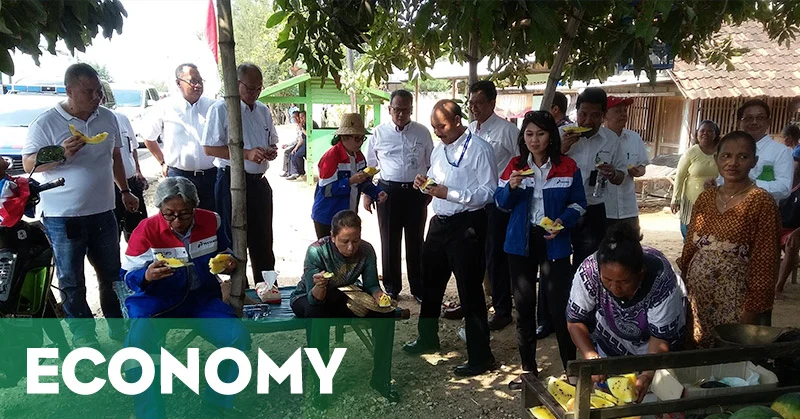
The visit was characterized by a blend of formal industrial oversight and informal grassroots interaction, a hallmark of President Widodo’s "blusukan" leadership style. Before reaching the core facility of the TPPI refinery, which had faced years of operational uncertainty and financial turmoil, the group took an unexpected detour that highlighted the local agricultural potential of the Tuban Regency. As the motorcade traversed the coastal roads of East Java, the officials were greeted by crowds of local residents. In a moment of spontaneous engagement, the President and his ministers stopped at a local residence where a vendor was selling freshly harvested watermelons.
Minister Rini Soemarno, alongside Dwi Soetijpto, was seen interacting warmly with the villagers, sampling the local produce while discussing the importance of the refinery to the local economy. "Come on, try the watermelon first. This watermelon is delicious," Minister Soemarno remarked to the members of the press and the surrounding entourage. This brief stop was not merely a social gesture; it served to underscore the administration’s narrative that large-scale industrial projects like the TPPI refinery must coexist with and support the livelihoods of the local community. After enjoying the refreshments provided by the local farmers, the delegation proceeded to the refinery complex to address the technical and strategic hurdles facing the facility.
The Strategic Significance of the TPPI Refinery
The PT Trans Pacific Petrochemical Indotama (TPPI) refinery is one of Indonesia’s most critical energy assets, yet it has historically been mired in complex legal, financial, and ownership disputes. Located in the Jenu District of Tuban, the facility has the capacity to process approximately 100,000 barrels of condensate per day. In the context of 2015, when Indonesia was grappling with a widening current account deficit and high fuel subsidies, the reactivation of TPPI was viewed as a "national emergency" priority by the Jokowi administration.
The refinery is designed to produce high-value petroleum products, including Gasoline (RON 92), Liquefied Petroleum Gas (LPG), Solar (Diesel), and various aromatic products such as paraxylene and benzene. By operating at full capacity, the TPPI refinery is estimated to be capable of reducing the nation’s fuel imports by up to 20 percent. For a country that had become a net oil importer, the ability to process domestic condensate into usable fuel was a vital step toward achieving "Nawa Cita," the President’s nine-point development agenda, which emphasizes energy sovereignty.
A History of Turmoil and Revitalization
To understand the weight of the November 2015 visit, one must look at the turbulent history of the TPPI facility. Established in the mid-1990s, the refinery was intended to be a crown jewel of the Indonesian petrochemical industry. However, the 1997-1998 Asian Financial Crisis left the company with massive debts. Over the following decade, the refinery’s operations were intermittent, often hampered by supply chain issues and disputes between its private shareholders and the Indonesian government.
The situation was further complicated by a high-profile legal case involving the sale of condensate by the upstream regulator (then BPMigas) to TPPI, which allegedly resulted in significant state losses. Despite these legal shadows, the Jokowi administration made the pragmatic decision to prioritize the facility’s operational status. The logic was clear: the physical infrastructure of the refinery was too valuable to remain idle while the state spent billions of dollars on imported refined products.
Under the leadership of Minister Rini Soemarno and Pertamina’s Dwi Soetijpto, a roadmap was established in early 2015 to integrate TPPI into Pertamina’s national refinery system. This involved complex negotiations to restructure the company’s debt and secure a steady supply of feedstock. The visit on November 11 served as a progress report on these efforts, signaling to the market and the public that the government was fully committed to the refinery’s long-term viability.
Technical Capabilities and Economic Impact
During the inspection, Pertamina officials detailed the technical milestones achieved during the "restart" phase of the refinery. The facility’s ability to produce Aromatics is particularly important for the domestic textile and plastic industries, which previously had to source these raw materials from overseas.

From an economic perspective, the full operation of TPPI was projected to save the Indonesian government approximately $2.2 billion per year in foreign exchange reserves. This saving is derived from the difference between importing expensive finished fuel products and processing cheaper domestic condensate. Furthermore, the refinery’s production of LPG was expected to support the government’s energy conversion program, reducing the reliance on kerosene and expensive imported gas.
For the Tuban region, the refinery represents a major source of employment and infrastructure development. During the visit, local leaders expressed hope that the revitalization of TPPI would lead to the expansion of the "Tuban Petrochemical Cluster," turning the regency into an industrial hub similar to those found in neighboring Southeast Asian nations. The interaction between the ministers and the watermelon farmers earlier in the day served as a symbolic reminder that the "macro" benefits of energy policy must translate into "micro" benefits for the local population through jobs, CSR programs, and increased demand for local goods.
The Role of Pertamina in National Reform
The involvement of Pertamina’s top brass in this visit also highlighted the ongoing reforms within the state-owned oil company. In late 2014 and early 2015, the government disbanded Petral, the controversial trading arm of Pertamina, in an effort to eliminate "oil mafias" and increase transparency in fuel procurement. The push to maximize domestic refinery capacity, including at TPPI and the proposed New Grass Root Refinery (NGRR) in Tuban, was a direct consequence of this reform.
Dwi Soetijpto, as the President Director of Pertamina at the time, emphasized that TPPI was a "quick win" for the company. While building a new refinery from scratch could take seven to ten years, optimizing an existing facility like TPPI provided immediate relief to the national fuel supply. He noted that the synergy between Pertamina’s existing refineries in Cilacap and Balikpapan with the TPPI facility in Tuban would create a more resilient energy grid for Java, Indonesia’s most populous island.
Challenges and Future Outlook
Despite the optimism surrounding the 2015 visit, the road ahead for TPPI remained fraught with challenges. Analysts at the time pointed out that while the technical restart was successful, the long-term ownership structure needed to be permanently resolved to attract further investment. There were also concerns regarding the volatility of global oil prices, which could affect the margins of refinery operations.
However, the presence of the Director General of Oil and Gas, IGN Wiratmaja, underscored the regulatory support the project enjoyed. The government promised to streamline permits and provide the necessary legal framework to ensure that TPPI could operate without the constant threat of being shut down due to administrative or legal disputes.
The visit concluded with a closed-door meeting at the refinery’s administrative building, where President Jokowi reportedly gave strict instructions to ensure that the facility reached its maximum production capacity by the end of the year. The President’s focus remained steadfast on the "big picture": reducing the trade deficit and ensuring that the Indonesian people could benefit from the country’s own natural resources.
Conclusion
The events of November 11, 2015, in Tuban were more than just a routine ministerial inspection. They represented a synthesis of the Indonesian government’s dual priorities: the high-level pursuit of energy independence and the ground-level commitment to social engagement. By stopping to share a simple meal of watermelon with the residents of Tuban, the nation’s leaders sent a message of accessibility and shared prosperity.
The revitalization of the PT Trans Pacific Petrochemical Indotama refinery stands as a testament to the power of political will in overcoming industrial stagnation. As the refinery’s chimneys began to smoke once more and the gears of production turned, the visit served as a beacon of hope for Indonesia’s industrial future. The legacy of this visit continues to be felt in Tuban today, as the area evolves into a central pillar of Indonesia’s petrochemical strategy, proving that even the most complex industrial challenges can be addressed with a combination of technical expertise, strategic planning, and a touch of local hospitality.